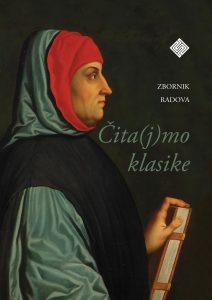
Papers by students Laura Jaković and Luka Grbavac published
We seek to promote the POLIREG project by mentoring student papers related to the project topic, while at the same time enhancing students’ knowledge of academic writing standards. This has resulted in two papers on the Osijek writer Vilma Vukelić. Under the mentorship of Marica Liović, Laura Jaković published the paper “Girls Always and Everywhere Want to Have Fun: Representations of the Everyday Lives of Girls and Young Women in Vilma Vukelić’s Autobiographical Novel Tragovi prošlosti”, in which she examined representations of everyday life and various aspects of the private and public lives of girls and young women. Under the mentorship of Dubravka Brunčić, Luka Grbavac prepared the paper “Memory of the Osijek Bourgeoisie in the Prose of Vilma Vukelić”, in which he analysed strategies of memory and representations of the lives of different strata of the Osijek bourgeoisie in the late 19th and early 20th centuries in the novel U stiješnjenim granicama and the memoirs Tragovi prošlosti. The papers were published in the Proceedings of the International Student Scientific and Professional Conference Čita(j)mo klasike (2026), edited by Marica Liović.
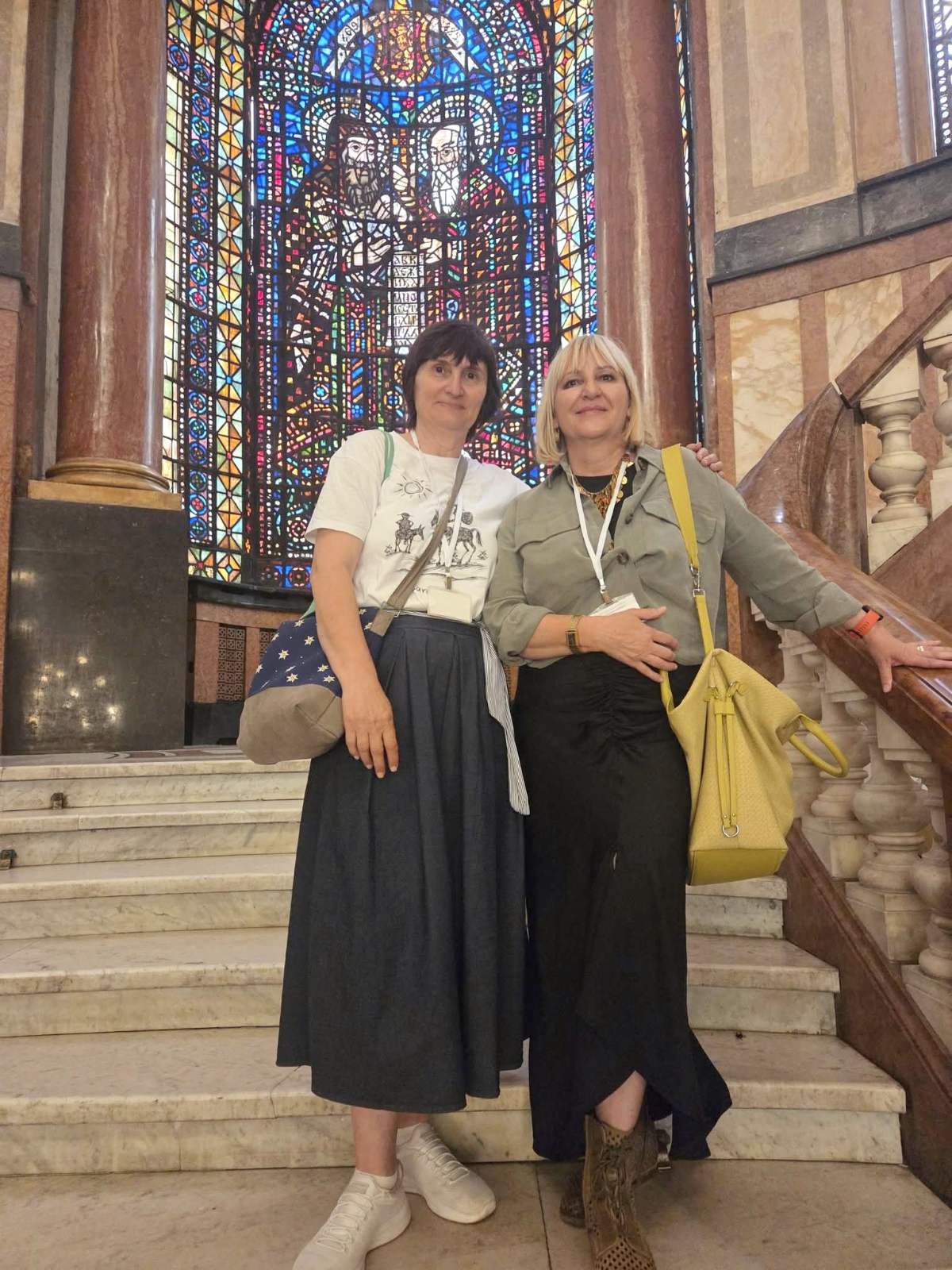
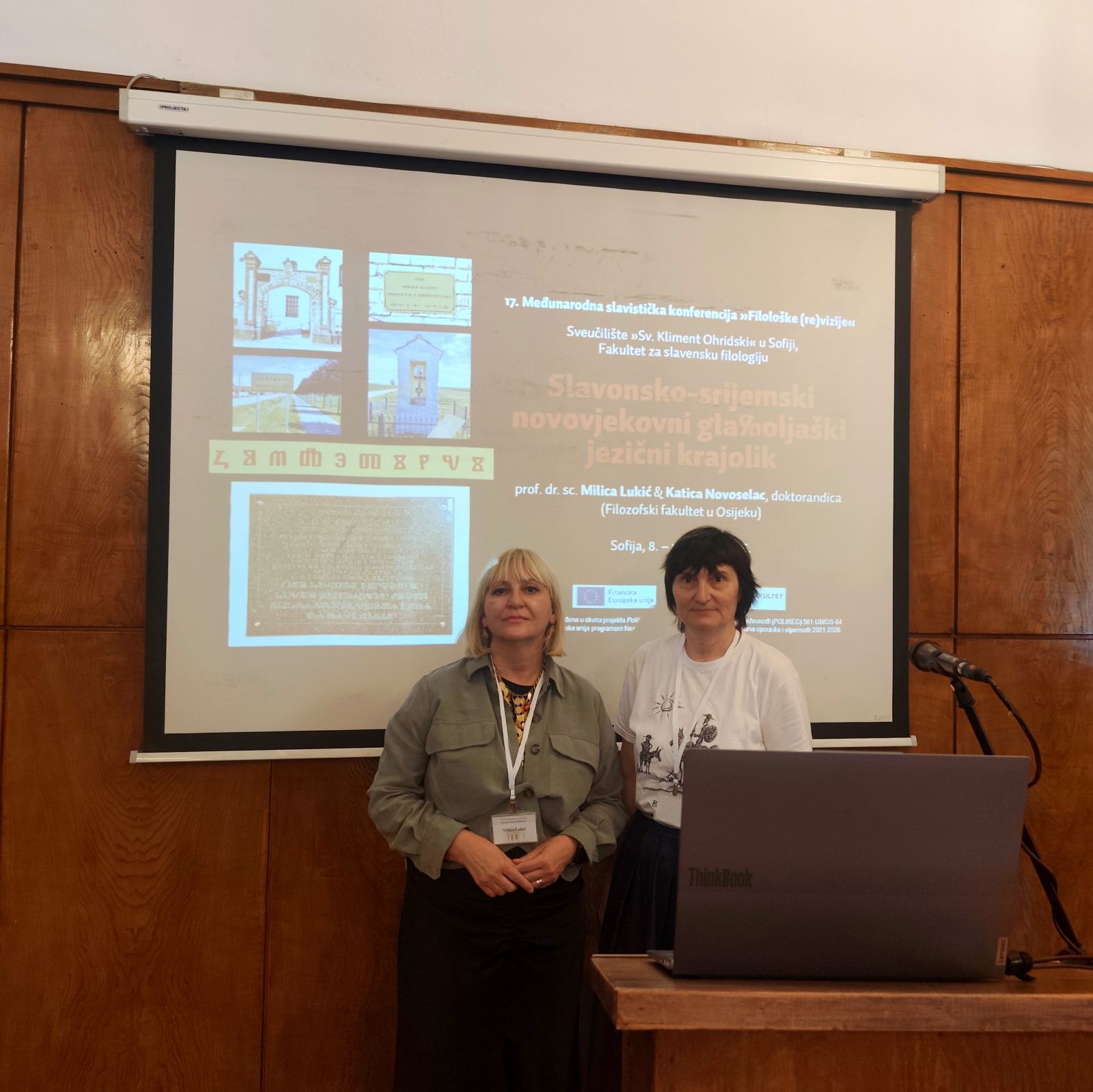
Milica Lukić and Katica Novoselac participated in an international scientific conference at Sofia University “St. Kliment Ohridski”
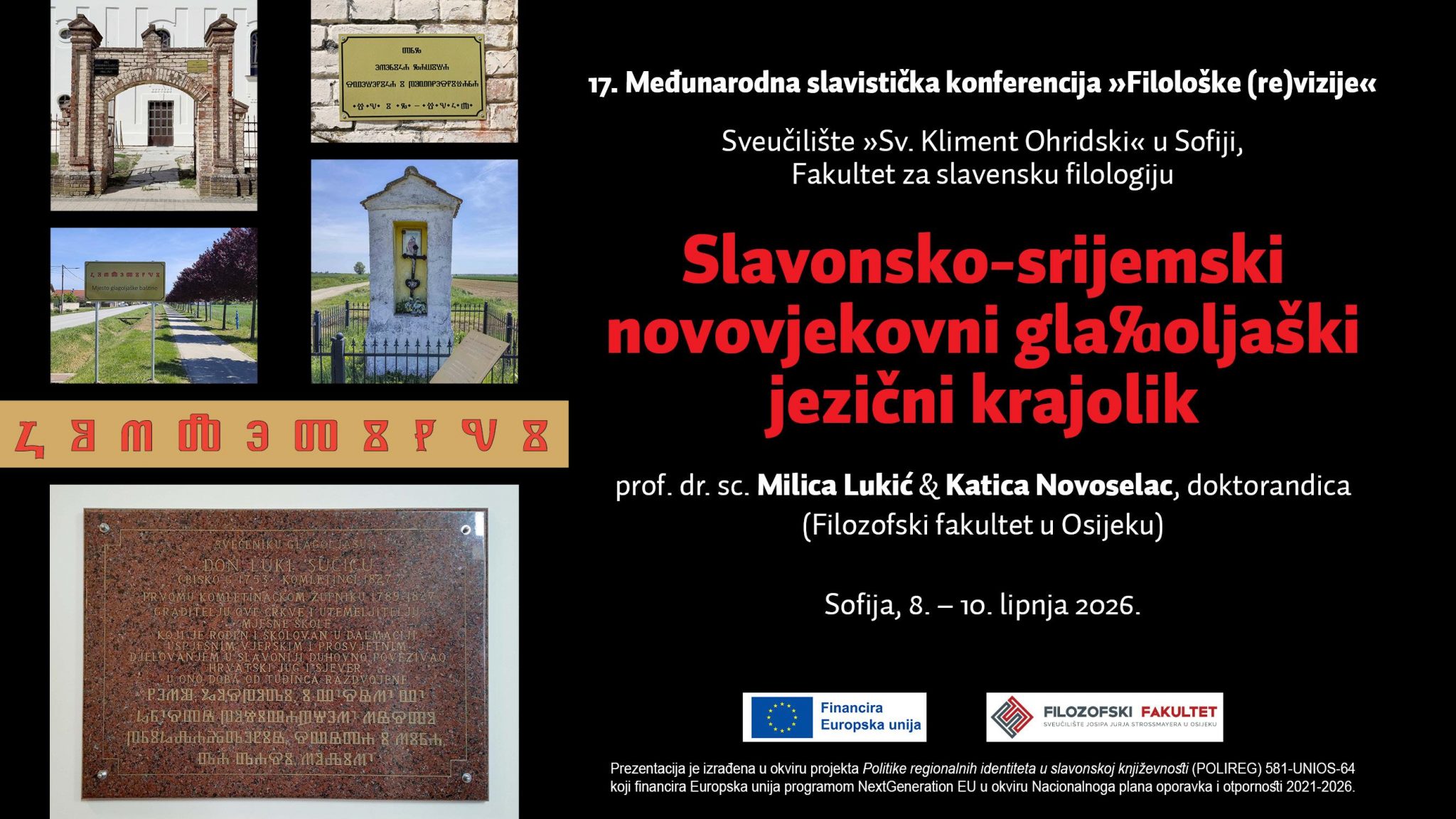
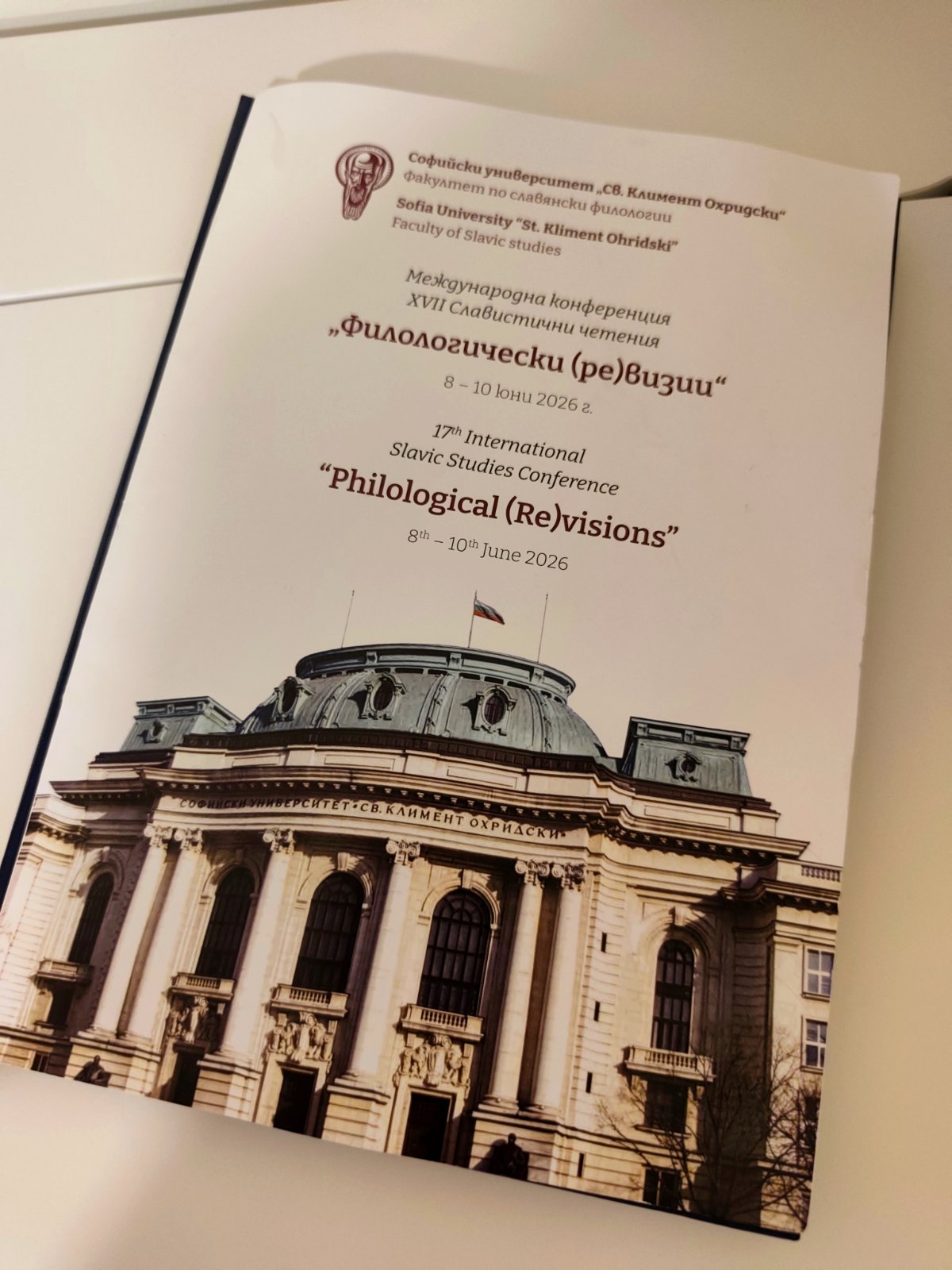
Project team member Milica Lukić and doctoral student Katica Novoselac participated in the 17th International Slavic Studies Conference “Philological (Re)Visions”, held at the Faculty of Slavic Studies of Sofia University “St. Kliment Ohridski” in Sofia (Bulgaria) from 8 to 10 June 2026. At the conference, they delivered a joint presentation entitled The Modern-Era Slavonian-Syrmian Glagolitic Linguistic Landscape. The sociolinguistic subdiscipline of the linguistic landscape, understood as the totality of linguistic signs visible in the public space of a city or geographical area, served as the theoretical and methodological framework for a qualitative and quantitative analysis of 17 signs in Komletinci (street names, traffic signs, memorial plaques, official signs, murals, etc.) displayed bilingually and biscriptally: in standard Croatian and Croatian Church Slavonic, and in Croatian angular Glagolitic and Latin script. These signs, which carry cultural and national identity meanings, preserve the memory of the Glagolitic heritage of the village and of the Glagolitic priests who worked there from the final decades of the 18th century until the 20th century. They also demonstrate the level of awareness and knowledge among those who create and maintain the regional linguistic landscape (local government, the local Church and the school).
Kristina Peternai Andrić published a scientific paper in the journal Lingua Montenegrina
Kristina Peternai Andrić published the scientific paper “Life Is a Hard Stone: The Formation of Regional Identity at the Intersection of Class, Gender and Everyday Practices” in the journal Lingua Montenegrina. The paper analyses the novel Na njivama by Croatian writer Mila Miholjević, which focuses on life in a Slavonian village at the beginning of the 20th century. She concludes that the novel does not portray the region as a stable space of community and belonging, but rather as a socially produced and hierarchically structured space in which class, gender and age differences are shaped through work, customs, institutions and everyday practices.
The full paper is available at the following link: https://linguamontenegrina.me/index.php/lm/article/view/1183/1144.
Jakov Sabljić published a scientific paper in the journal Lingua Montenegrina
Jakov Sabljić published the scientific paper entitled “Internal Colonisation and the Ethnoperiphery: An Imagological and Postcolonial Analysis of Slavonia in Slavko Vampovac’s Novel Slavonac” in the journal Lingua Montenegrina. The paper explores how identities are shaped in the novel through the experience of migration. He concludes that Slavonia is not represented merely as a geographical region, but as a symbolically constructed space of internal colonisation and economic dependence, marked by a strong emotional attachment to the past that is manifested in the novel through nostalgia, collective memory and a (de)idealised image of the homeland.
The full paper is available at the following link: https://linguamontenegrina.me/index.php/lm/article/view/1178/1139.
Dubravka Brunčić and Teuta Kraljević published a scientific paper in the journal Lingua Montenegrina
Dubravka Brunčić and Teuta Kraljević published the scientific paper “Representations of the Space and Identity of Ottoman Women in Ivana Šojat’s Novel Ezan” in the journal Lingua Montenegrina. The paper analyses how the identities of Ottoman women are represented in the historical novel Ezan, set in the 16th-century Ottoman Empire, how women’s destinies and spatial experiences are viewed, and how different spaces are gender-coded.
The full paper is available at the following link: https://linguamontenegrina.me/index.php/lm/article/view/1186/1147.
Tina Varga Oswald held a workshop for doctoral students at the Faculty of Humanities and Social Sciences in Osijek
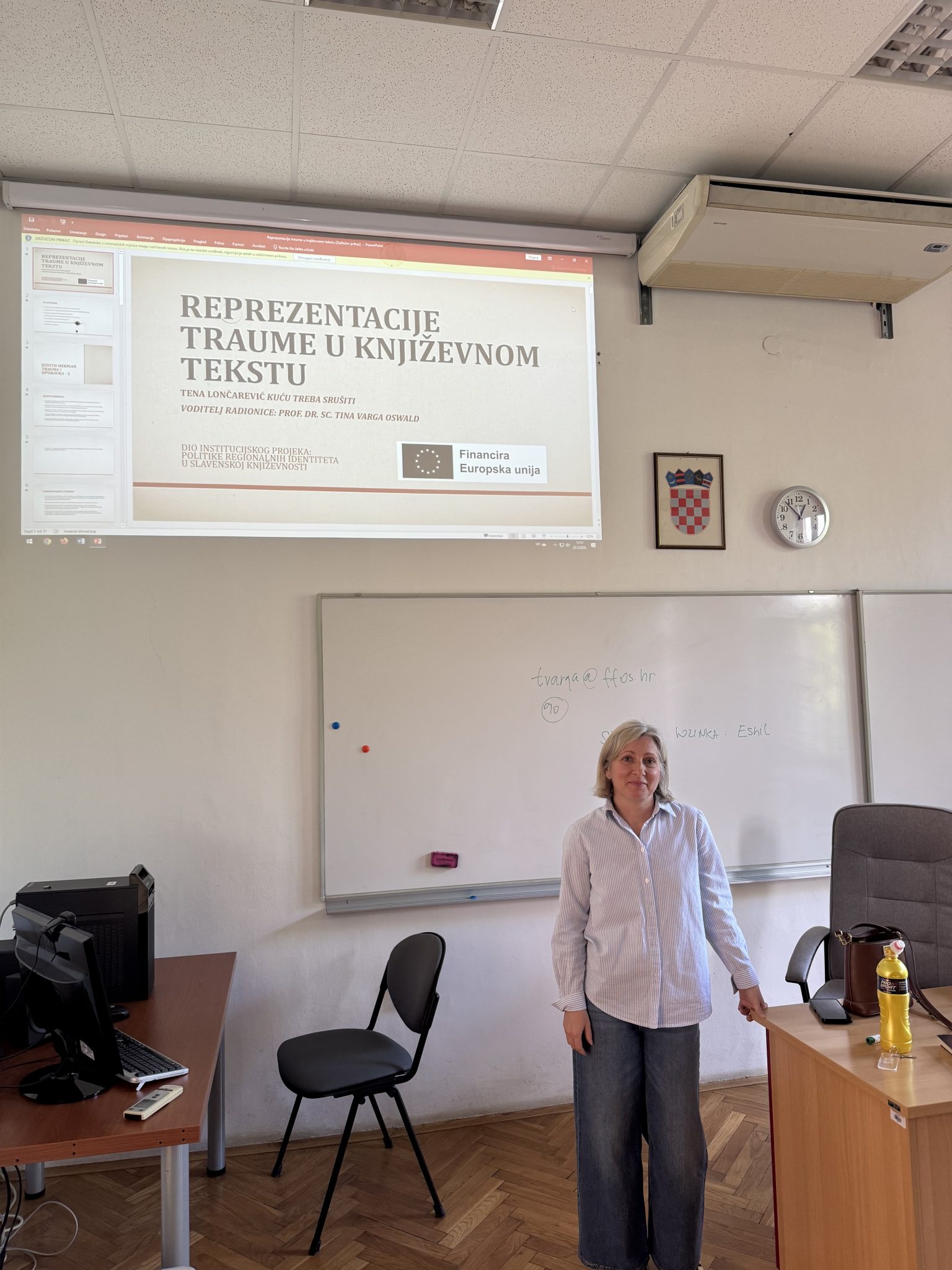
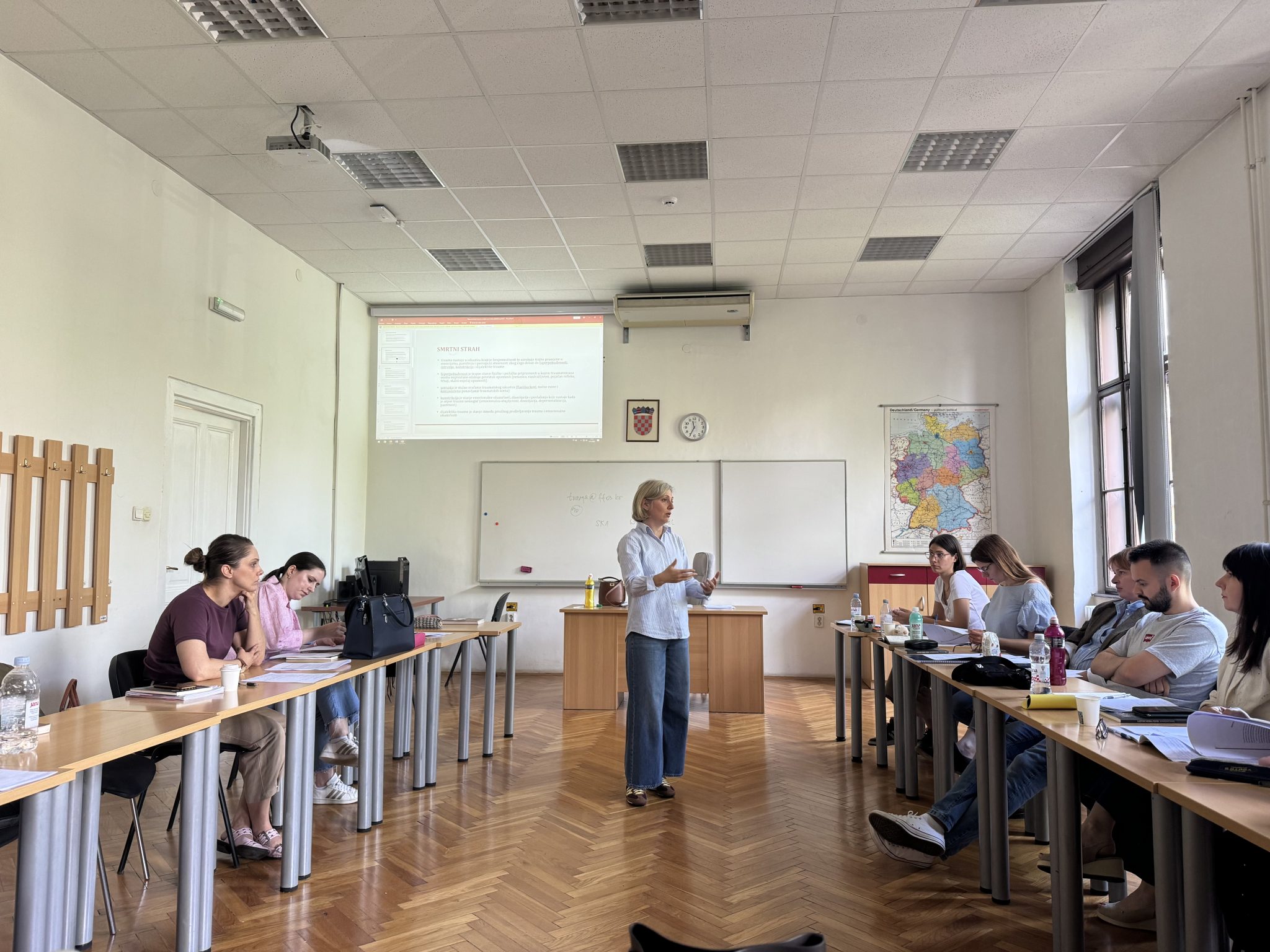
On 23 May 2026, Tina Varga Oswald held a workshop entitled Representations of Trauma in Literary Texts for students of the Doctoral Study Programme in Literature and Cultural Identity at the Faculty of Humanities and Social Sciences in Osijek. During the workshop, she introduced the students to the fundamental principles of Judith Herman’s trauma theory and discussed representations of traumatic experiences (familial, social, existential, intimate, etc.) in selected stories from Tena Lončarević’s collection Kuću treba srušiti. The aim of the workshop was to familiarise students with the possibilities of applying trauma theory to the analysis of literary texts and to encourage them to develop independent interpretations of literary works. Particular emphasis was placed on exploring the relationship between the psychological dynamics of trauma and narrative strategies, as well as on considering the ways in which literary texts may elicit readers’ emotional responses and ethical judgements.
Milica Lukić delivered a lecture in Sombor
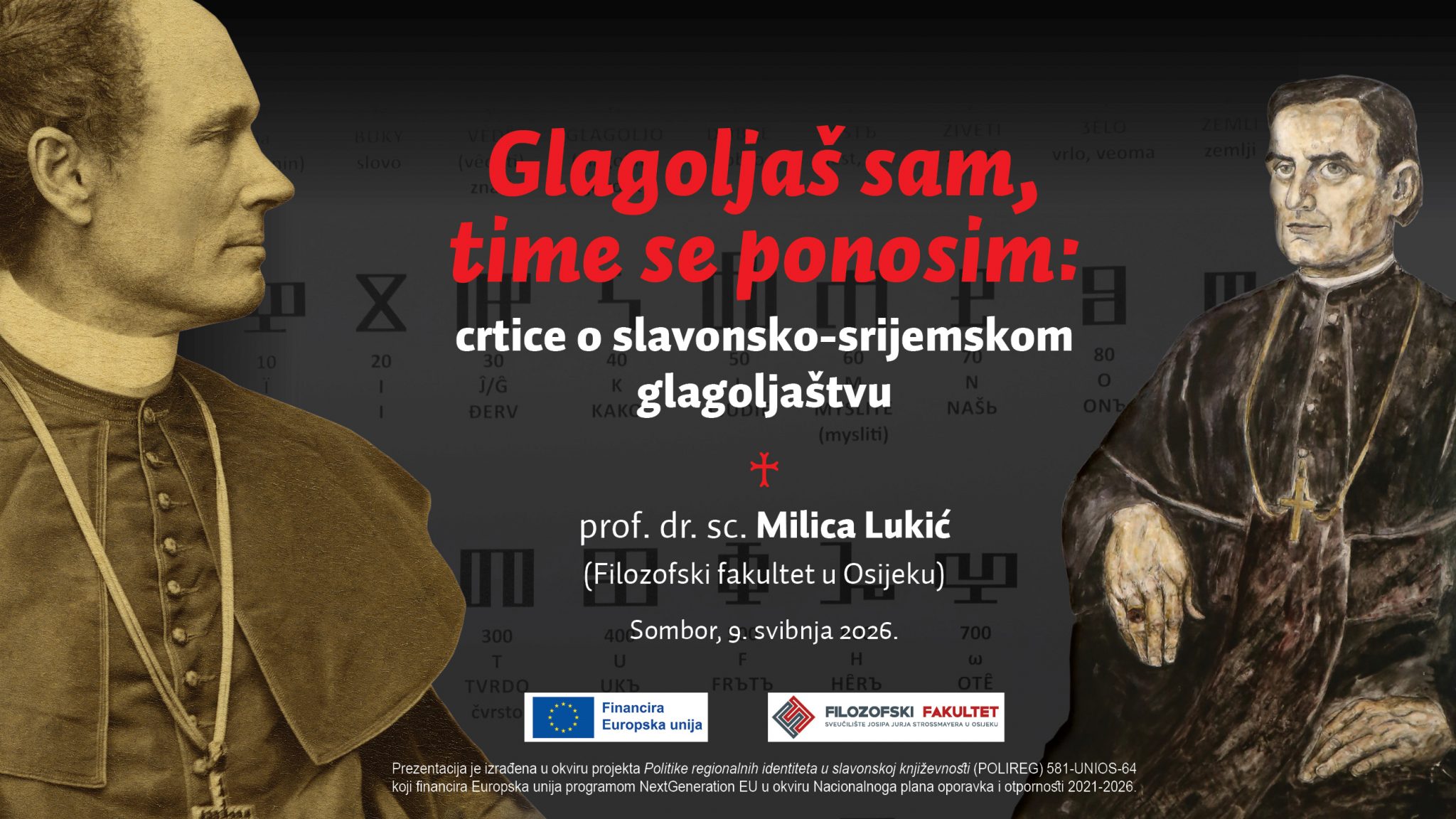
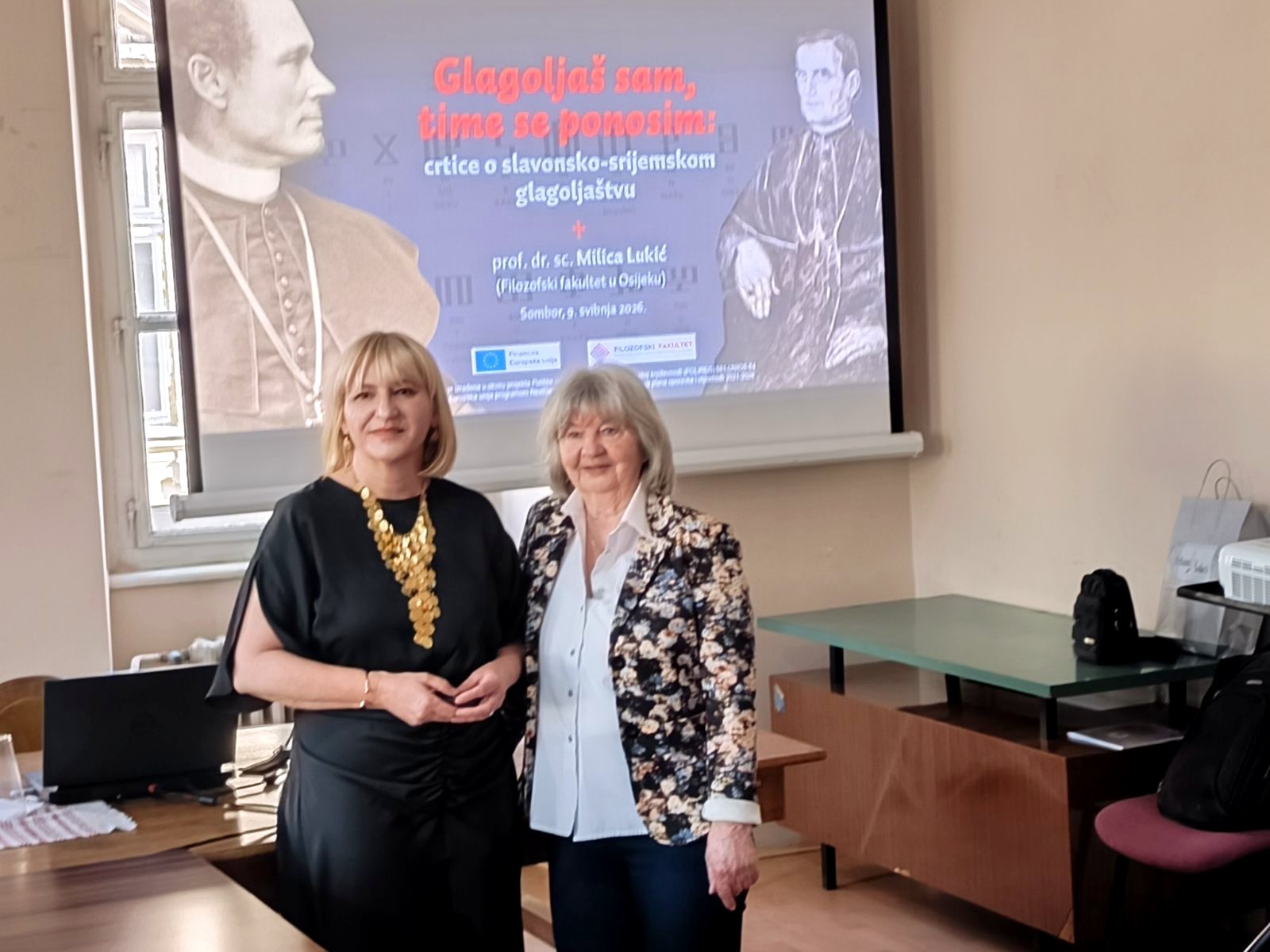
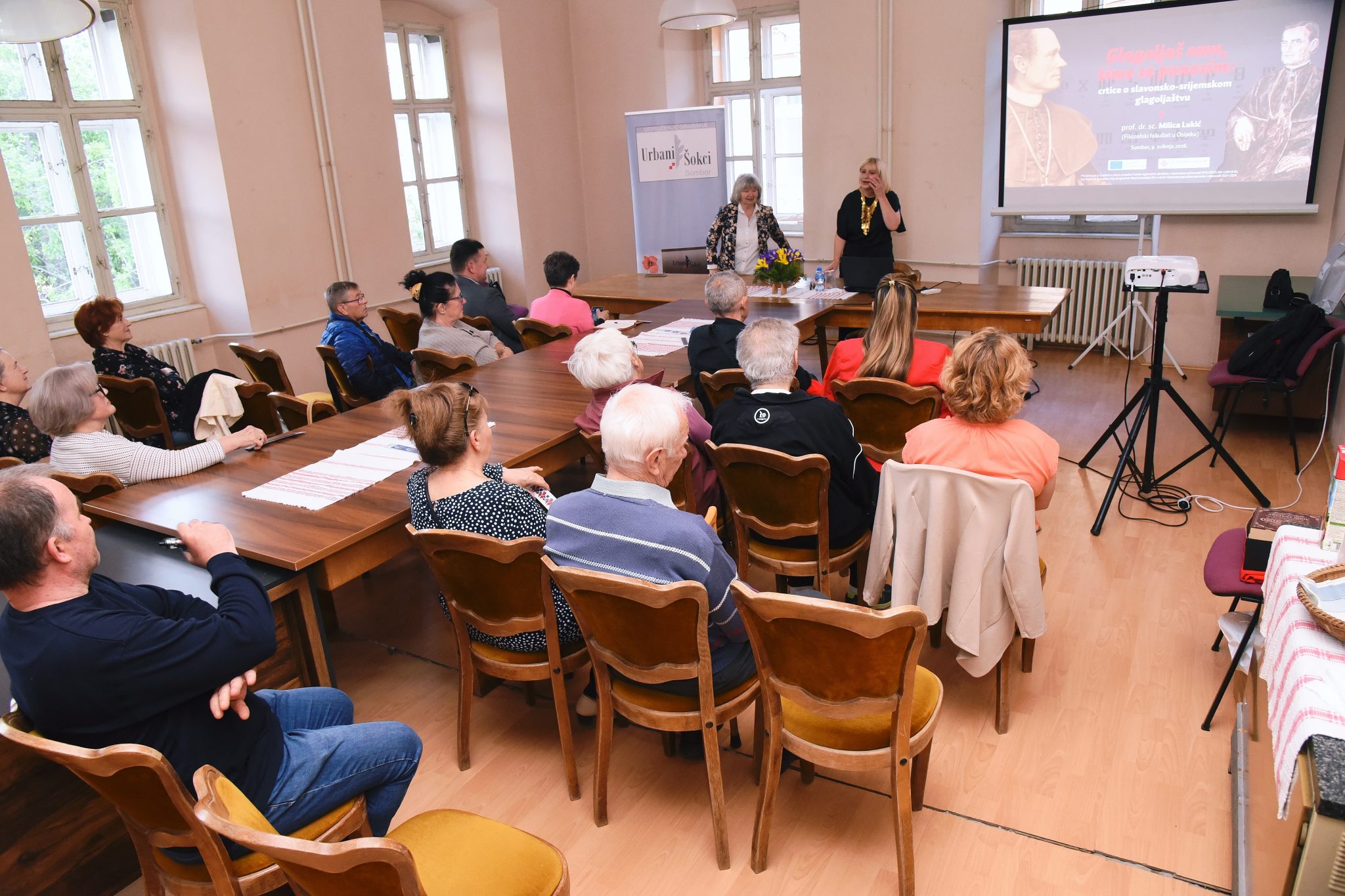
On 9 May 2026, Milica Lukić delivered a popular-science lecture entitled “I Am a Glagolite, and Proud of It: Notes on Slavonian-Syrmian Glagolitism” at the City Hall in Sombor (Republic of Serbia). The lecture was held as part of this year’s Croatian Culture Days, organised by the Sombor cultural association Urbani Šokci, at the invitation of the association’s president, Marija Šeremešić.
The lecture placed particular emphasis on the role of Ivan Antunović (1815–1888), canon of Kalocsa and titular bishop of Bosnia, and Ilija Okrugić Srijemac (1827–1897), priest, writer and national revivalist, in the renewal of modern-era Glagolitism, i.e. the Cyrillo-Methodian heritage, in the 19th century. Both were friends and followers of the Cyrillo-Methodian ideas of Bishop J. J. Strossmayer. Antunović’s prayer Na čast Sv. Apostola, from his theological work Bog s’ čoviekom na zemlji (1879) and prayer book Čovik s’ Bogom (1884), became a symbol of the popularisation of the cult of the Holy Brothers promoted by Bishop Strossmayer in the Diocese of Đakovo and Syrmia. Cyrillo-Methodian issues were also discussed in the correspondence between these two Slavic revivalists (1872–1875). In 1885, Ilija Okrugić published two important Cyrillo-Methodian studies in Katolički list: Nĕšto o Moroviću and Sudbina nĕkadašnje staroslavne biskupije srĕmske. He also incorporated his Cyrillo-Methodian views into the allegorical poem Sastanak vila na Velebitu, u Trnavi i Đakovu prilikom pedesetljetnog slavja Zlatne Mise preuzvišenoga i presvietloga gospodina Josipa Jurja Strossmayera, biskupa bosansko-srijemskoga, najvećega dobrotvora hrvatskoga naroda, o Josipovu kao imendanu istoga godine from 1888, as well as into numerous occasional poems dedicated to Bishop Strossmayer.
On the occasion of this lecture, an article was published in the Subotica weekly Hrvatska riječ, providing additional visibility both to Milica Lukić’s lecture and to the project itself.
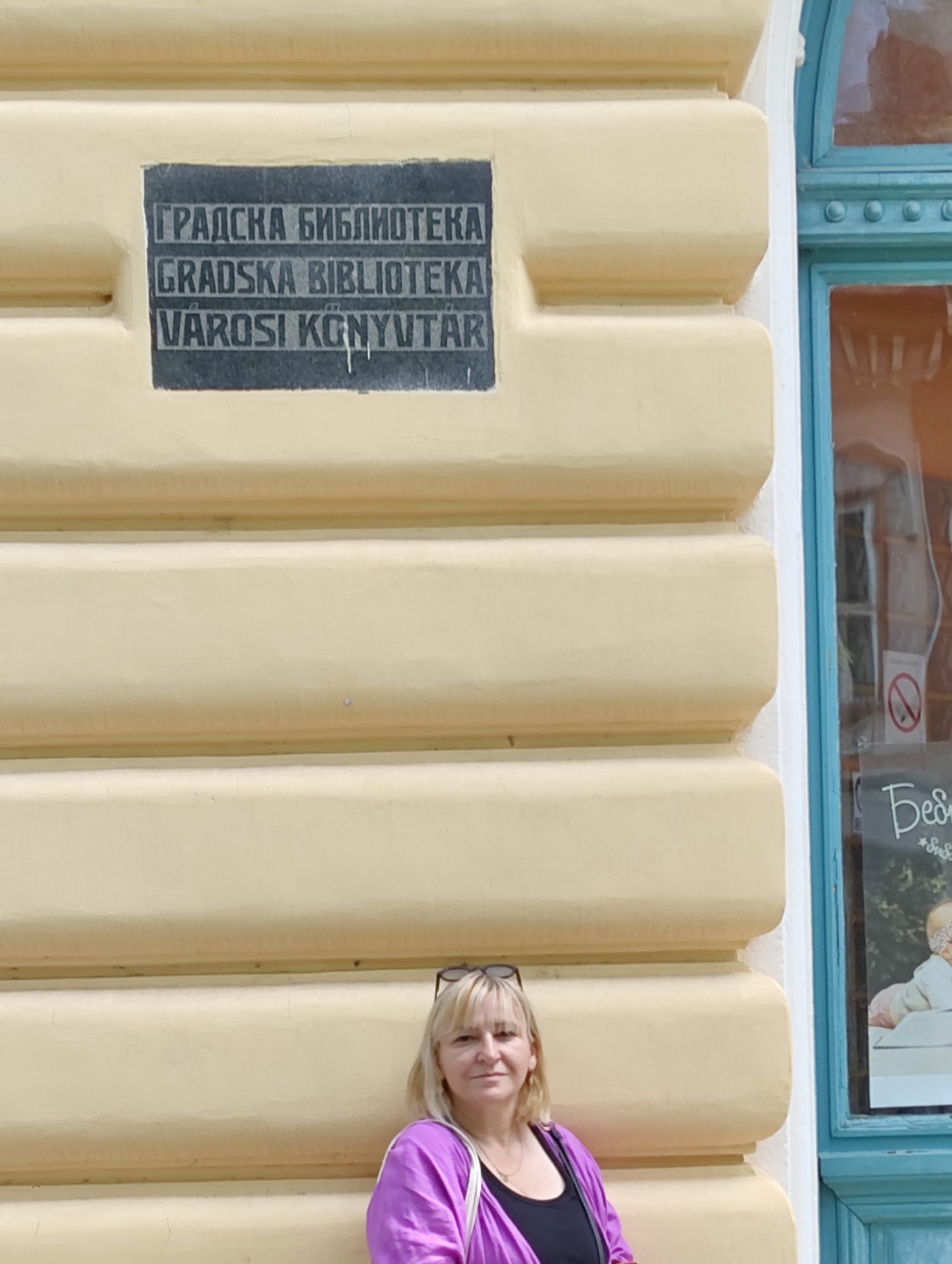
Milica Lukić conducted research at the City Library in Sombor
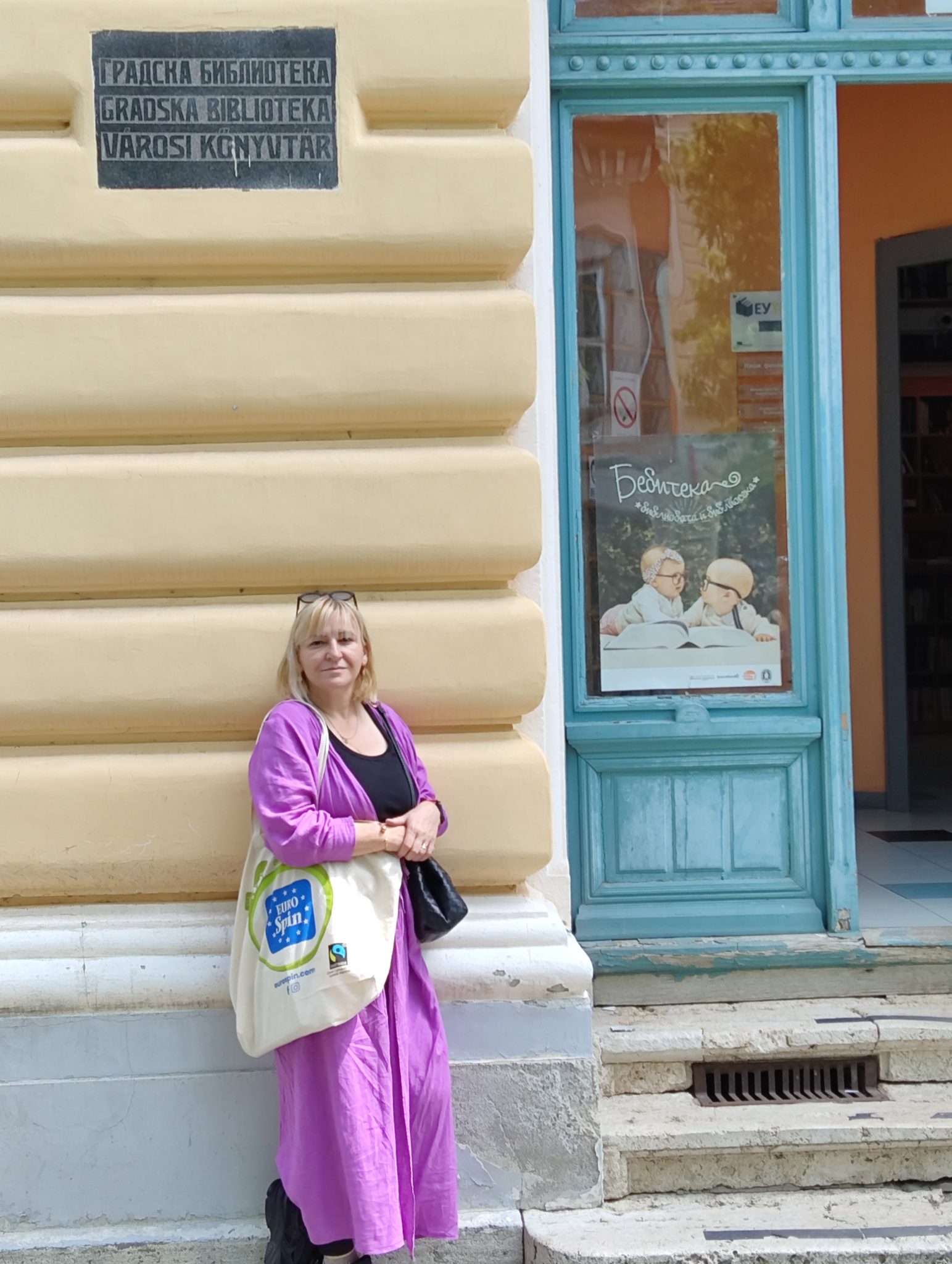
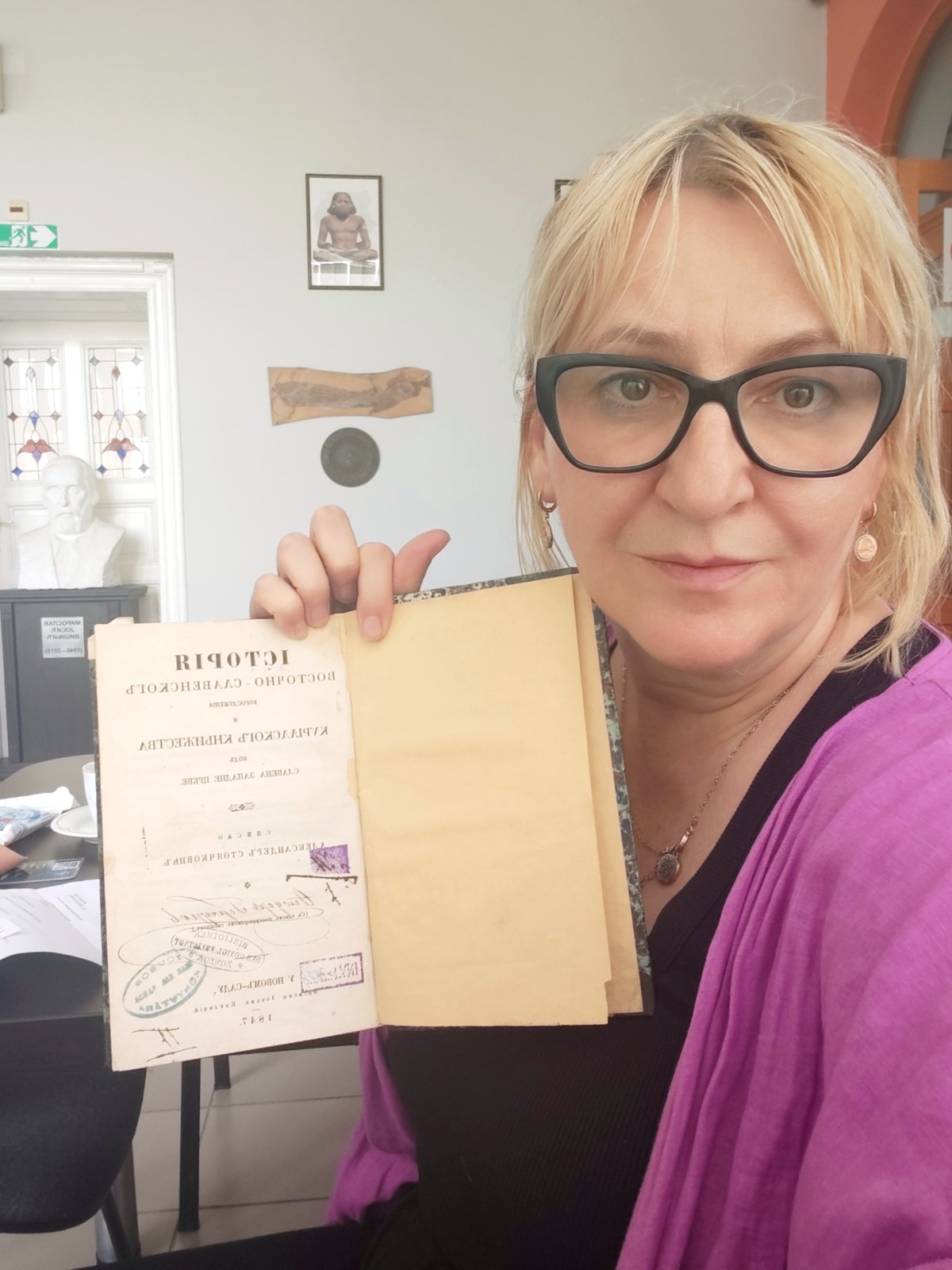
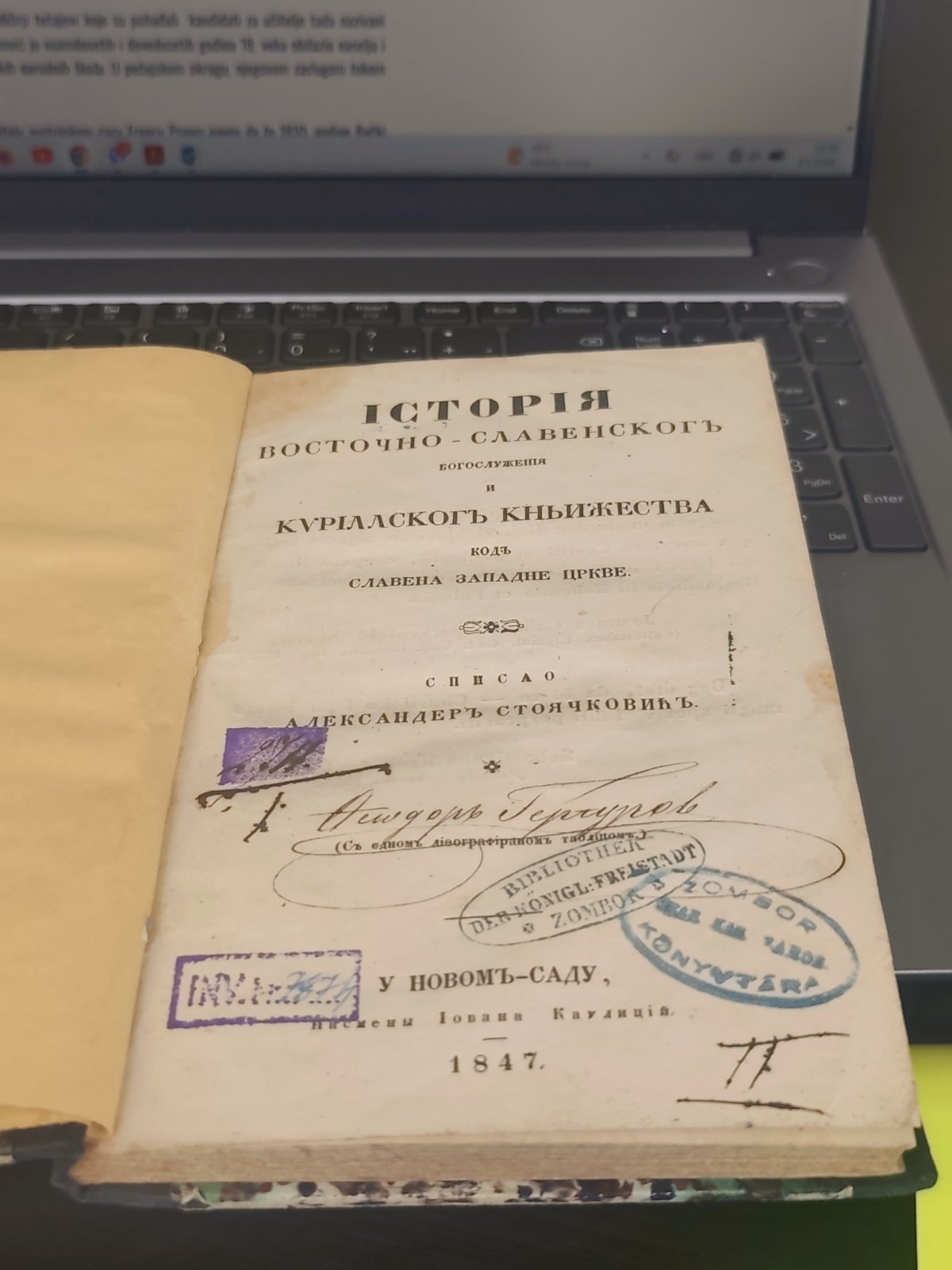
Milica Lukić conducted two days of research (8 and 9 May 2026) on protected library material dating from the first half of the 19th century at the Scientific Department of the City Library in Sombor. The material concerns modern-era Slavonian Glagolitism, specifically the book Istorija vostočno-slavenskog bogosluženja i kirilskog književstva kod Slavena Zapadne crkve (1847) by historian Aleksandar Stojačković, which served as the basis for a Cyrillo-Methodian scholarly and professional publication by the modern-era Slavonian Glagolite and writer Adam Filipović Heldentalski. The research carried out on this material will be used for a comparative analysis with Filipović’s study.
The POLIREG project at the Science Festival at the Faculty of Humanities and Social Sciences in Osijek
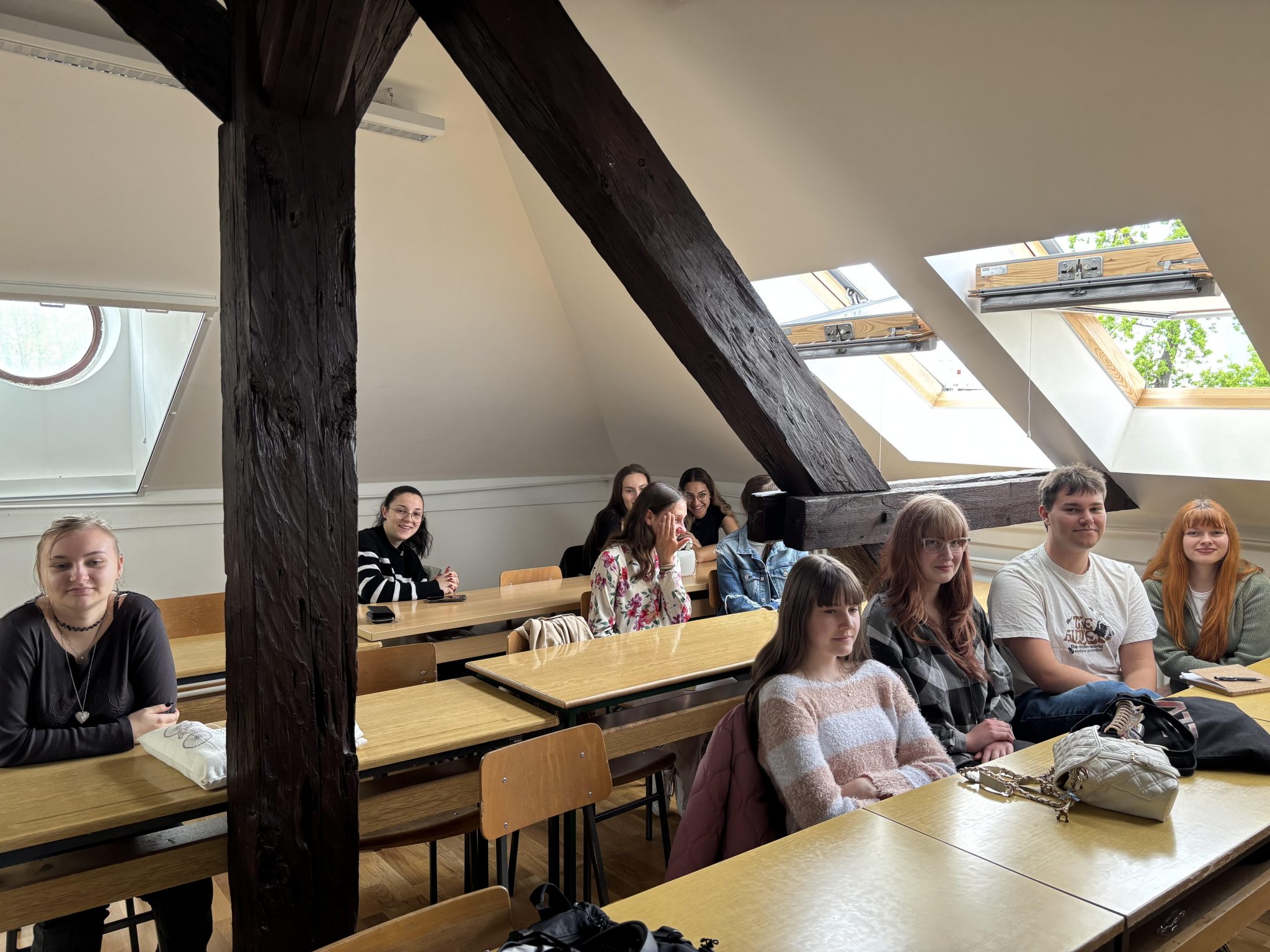
Project team members Milica Lukić, Kristina Peternai Andrić and Dubravka Brunčić participated in the Science Festival, held from 20 to 25 April 2026.
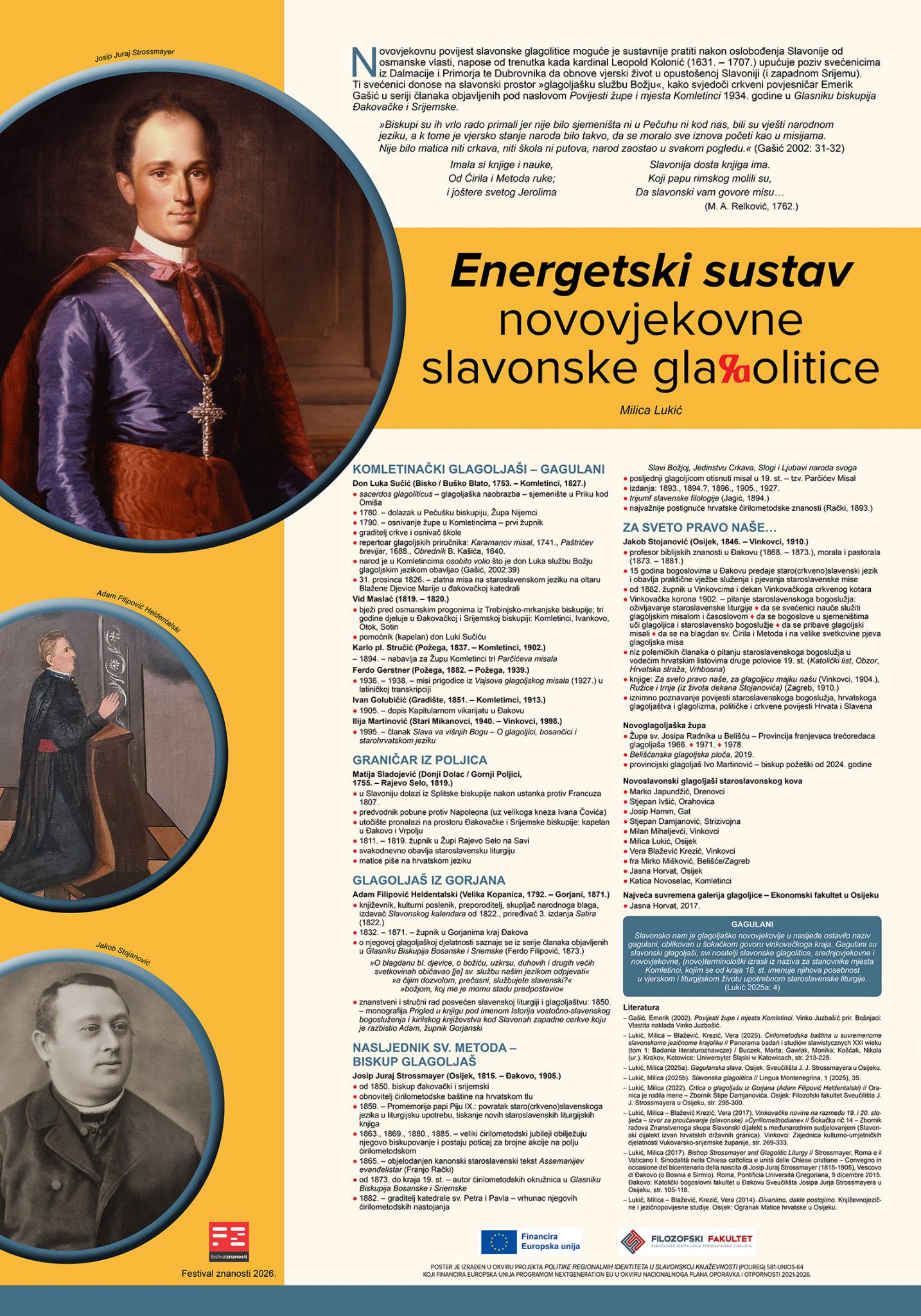
Milica Lukić prepared a poster entitled The Energy System of Modern-Era Slavonian Glagolitism, in which she presented the work of priests who, from the end of the 18th to the 20th century, brought “the Glagolitic divine service to the Slavonian region”. Particular emphasis was placed on the broad cultural role of the clergy, who, in addition to reviving the Old Church Slavonic liturgy, fostered Croatian Glagolitic heritage through their scholarly and teaching work, cultural patronage and support for the printing of Glagolitic publications (Don Luka Sučić, Matija Sladojević, Adam Filipović Heldentalski, Josip Juraj Strossmayer, Jakob Stojanović and many others).
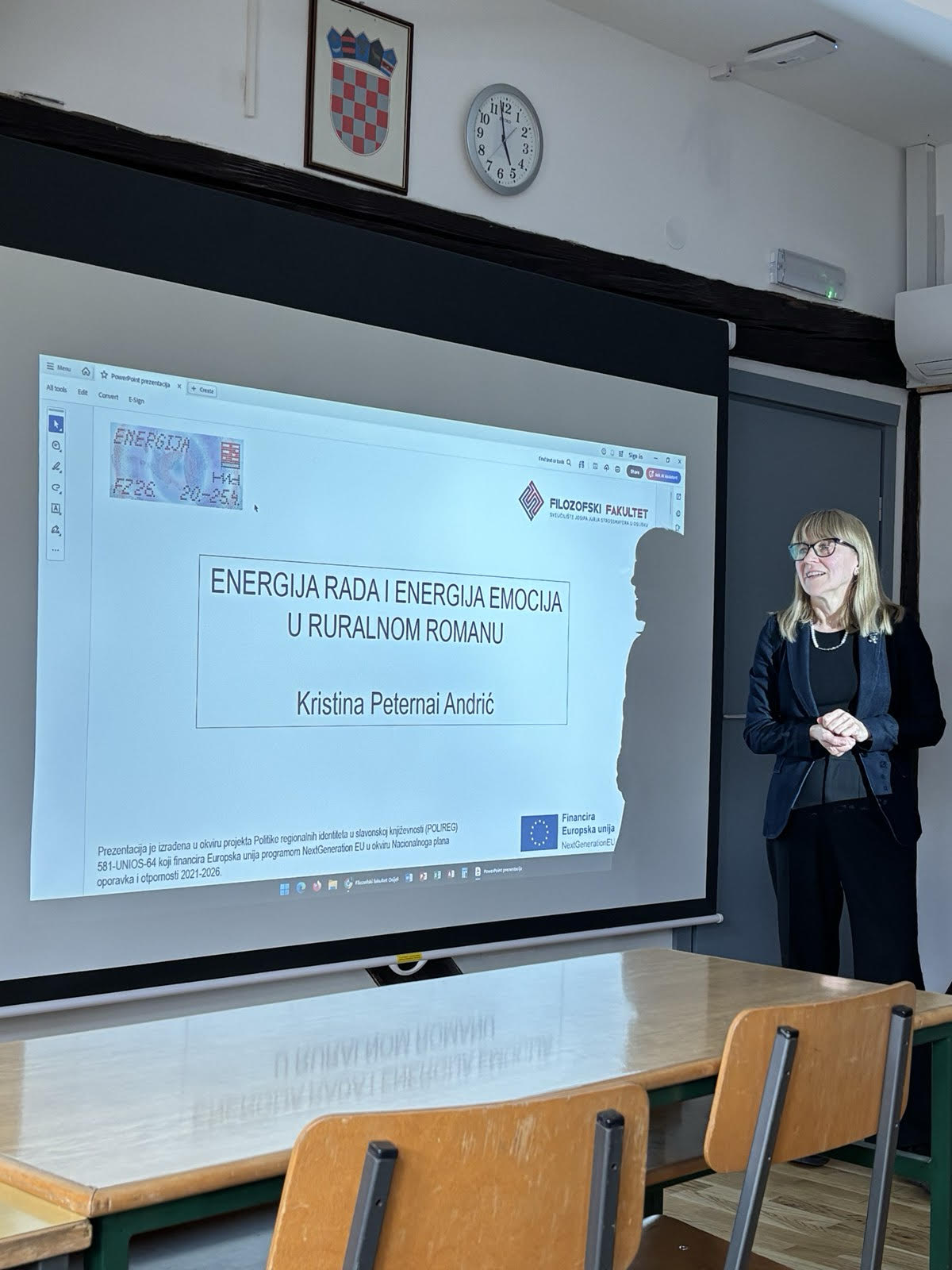
On 21 April 2026, Kristina Peternai Andrić delivered a lecture entitled The Energy of Labour and the Energy of Emotions in the Rural Novel. The lecture discussed Mila Miholjević’s novel Na njivama, set in a Slavonian village at the beginning of the 20th century. The novel was interpreted as a text in which labour and emotions are inseparable, that is, as a representation of rural everyday life marked by exhausting work, poverty, violence and social inequality. Particular emphasis was placed on how female characters, class relations and the emotional dimension of everyday life reveal the village economy of survival, demonstrating that vital energy is depleted not only through labour but also through emotions.
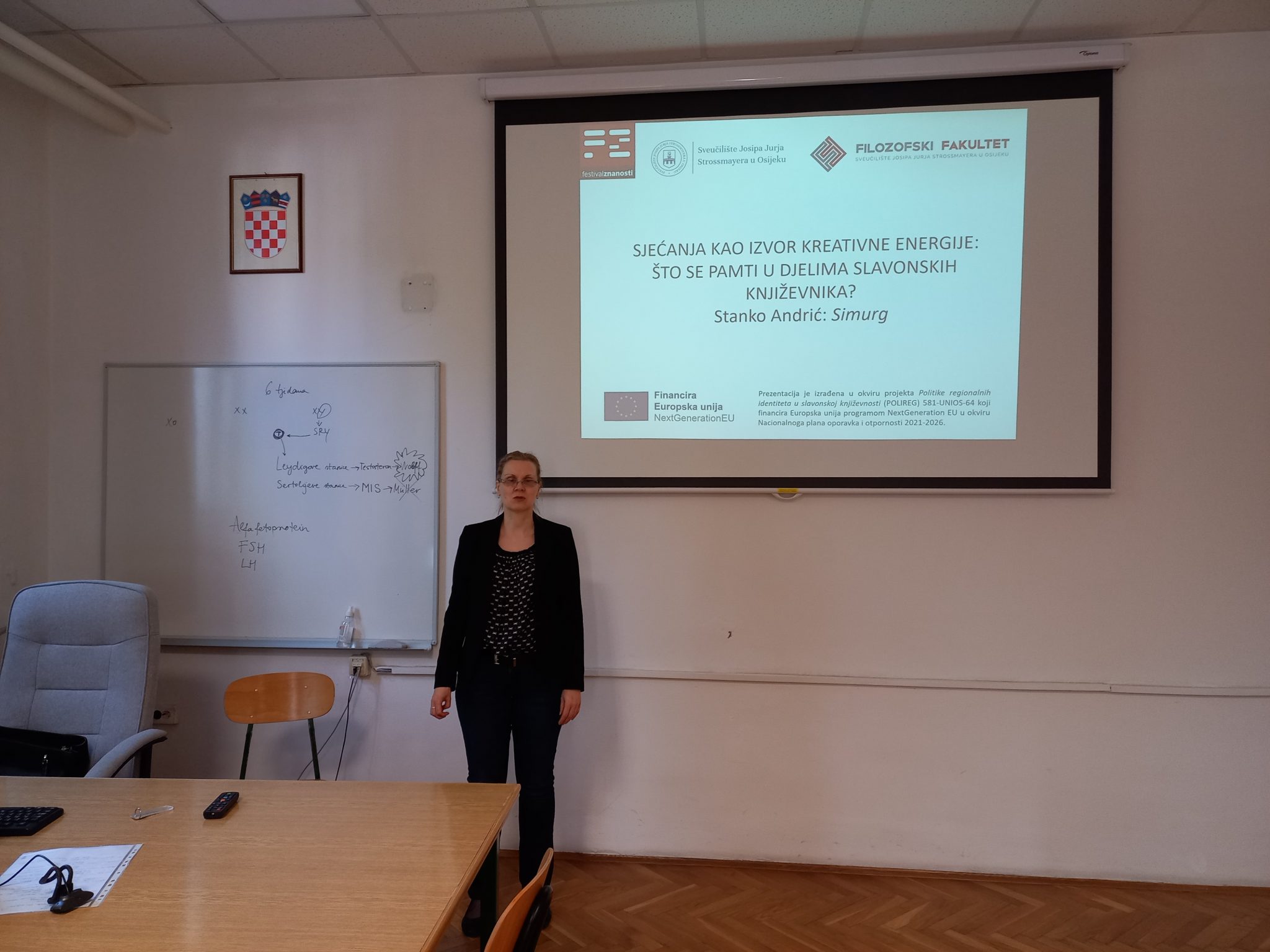
On 23 April 2026, Dubravka Brunčić delivered a lecture entitled Memories as a Source of Creative Energy: What Is Remembered in the Works of Slavonian Writers? She focused in particular on Stanko Andrić’s novel Simurg, which depicts the narrator’s autobiographical memories of his Slavonian homeland. She discussed strategies of spatialising memory, particularly the representation of the narrator’s native village of Strizivojna and other parts of Slavonia as landscapes of memory that play an important role in processes of cultural identification.
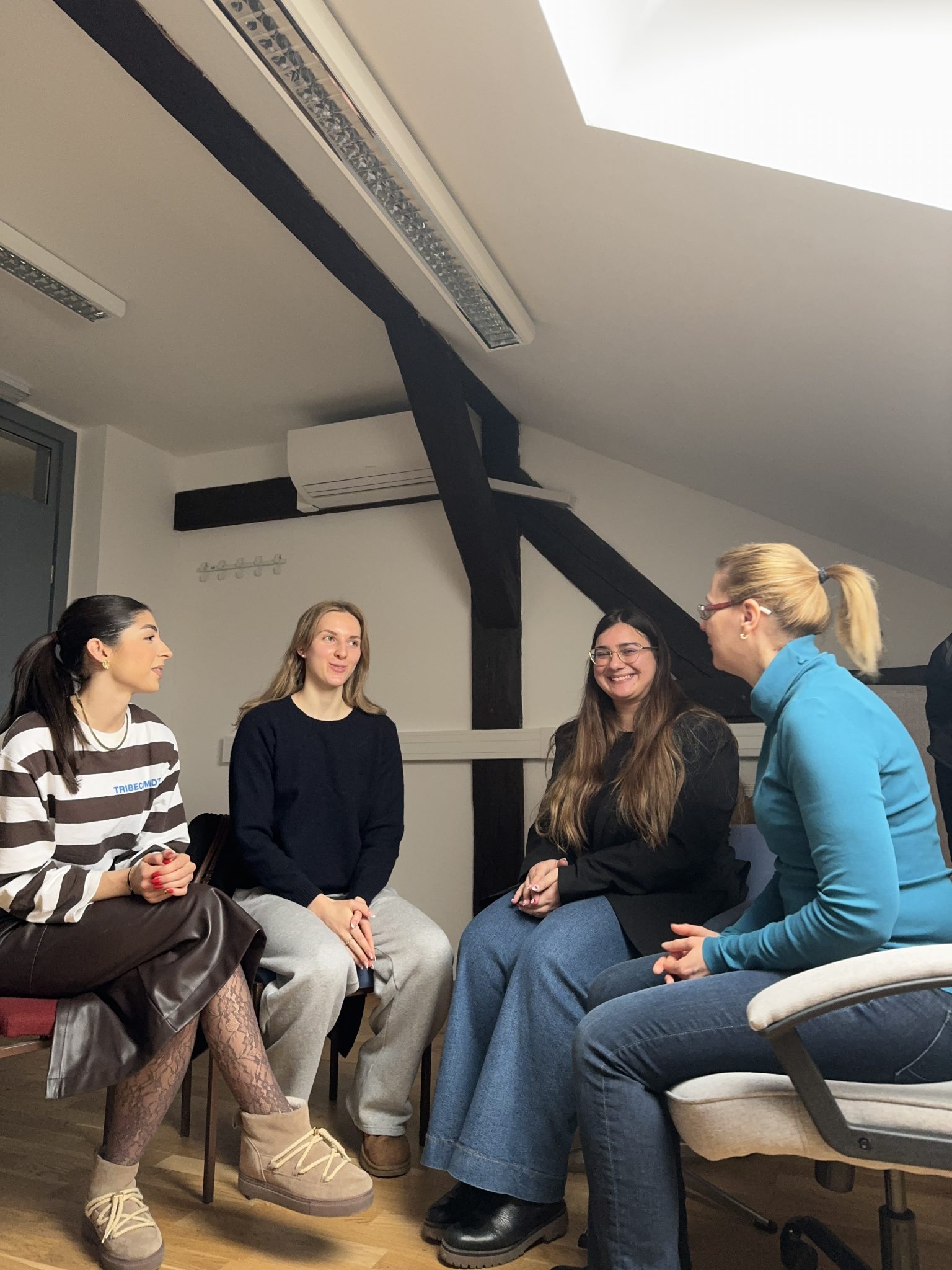
Ivana Žužul, Dubravka Brunčić and Teuta Kraljević appeared on the radio programme Filozofski u eteru
Ivana Žužul, Dubravka Brunčić and Teuta Kraljević appeared on the radio programme Filozofski u eteru on UNIOS Student Radio, where they presented the project Politics of Regional Identities in Slavonian Literature (POLIREG). The programme was broadcast on Thursday, 2 April 2026, and was prepared by Ina Delić and Ariana Zajkić, students of the Graduate Double-Major Study Programme in Croatian Language and Literature at the Faculty of Humanities and Social Sciences in Osijek, under the mentorship and editorial guidance of Jakov Sabljić. During the programme, the project team members discussed the relevance of research into Slavonian literary heritage and the expected contributions of the POLIREG project in broadening interpretative frameworks and providing new readings of Slavonian women and men writers through the application of contemporary theoretical insights from memory studies, trauma theory, gender studies, affect theory and literary geography.
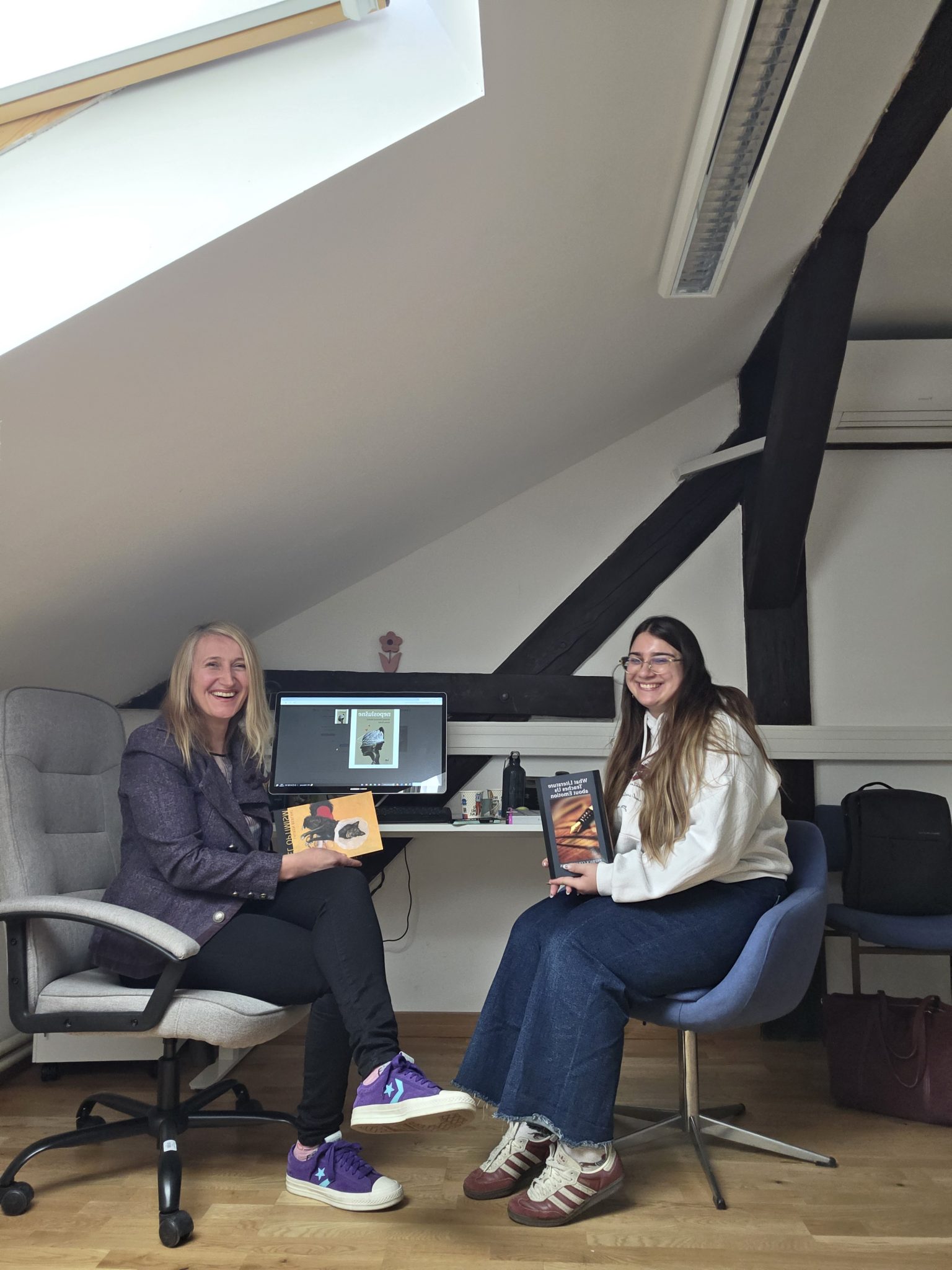
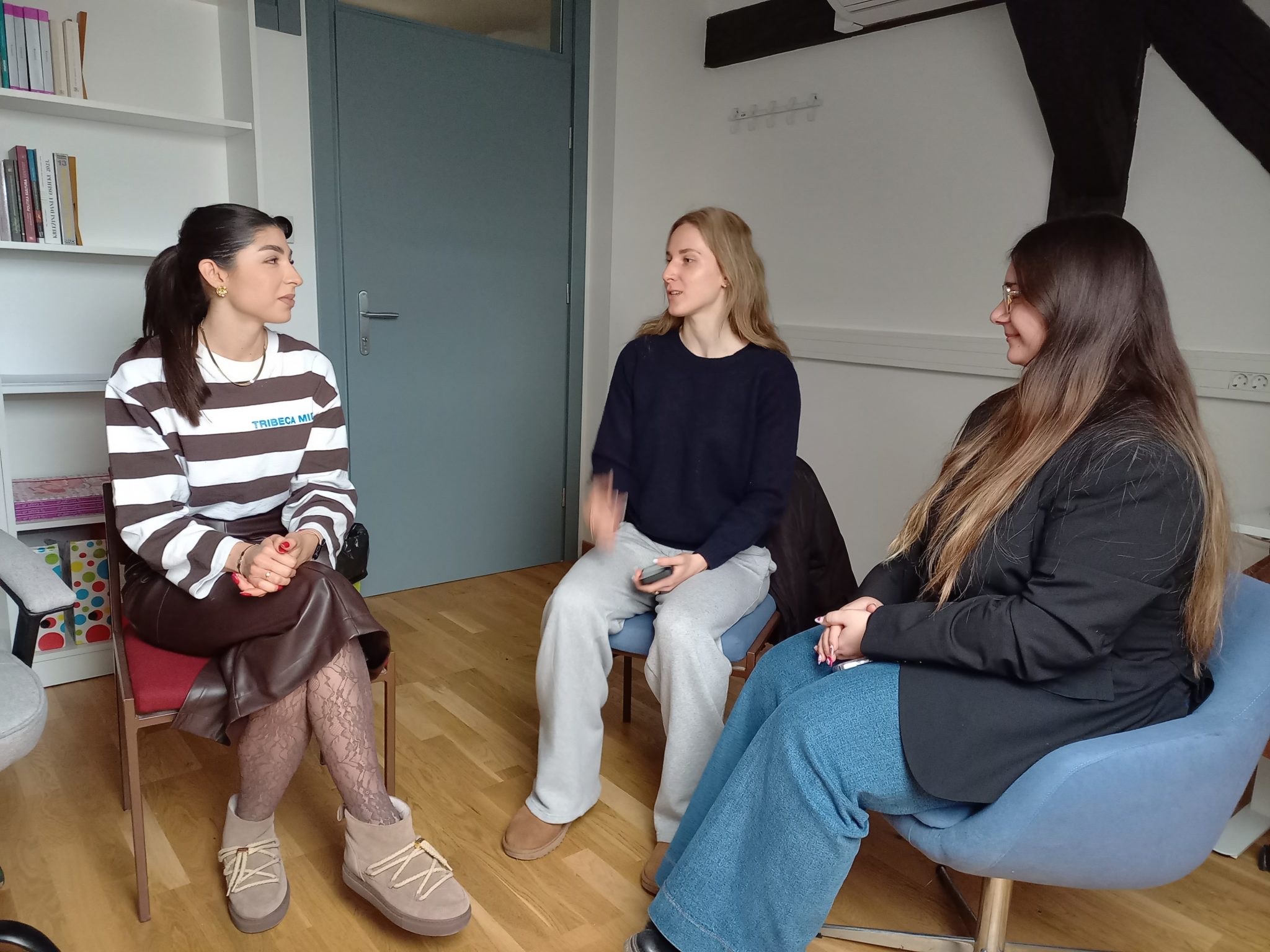
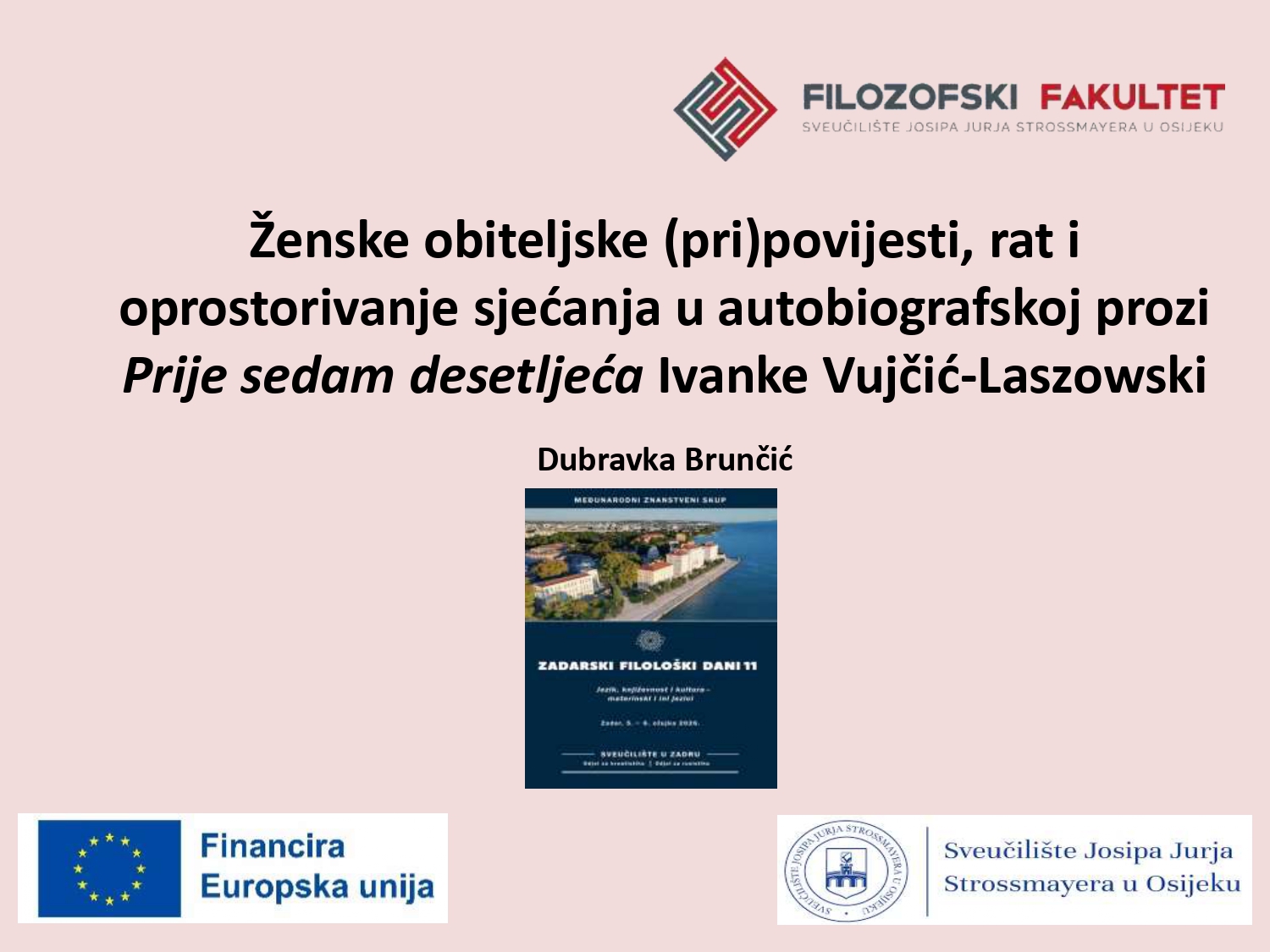
Dubravka Brunčić delivered a presentation at the Zadar Philological Days
Dubravka Brunčić participated in the 11th International Scientific Conference Zadar Philological Days, held at the University of Zadar on 5 and 6 March 2026. At the conference, she delivered a presentation entitled Women’s Family (Hi)Stories, War and the Spatialisation of Memory in Ivanka Vujčić-Laszowski’s Autobiographical Prose “Prije sedam desetljeća”. Drawing on the theoretical premises of memory studies, she examined how the identities of the narrator and female members of her family are shaped through the prism of memory, and how family relationships and experiences of the First World War in Slavonia are represented. The presentation also emphasised that space plays an important role in the analysed work in the construction of female identities and in depicting the mechanisms through which memories are stored and evoked.
Milica Lukić delivered a lecture at Vladimir Nazor Primary School in Komletinci
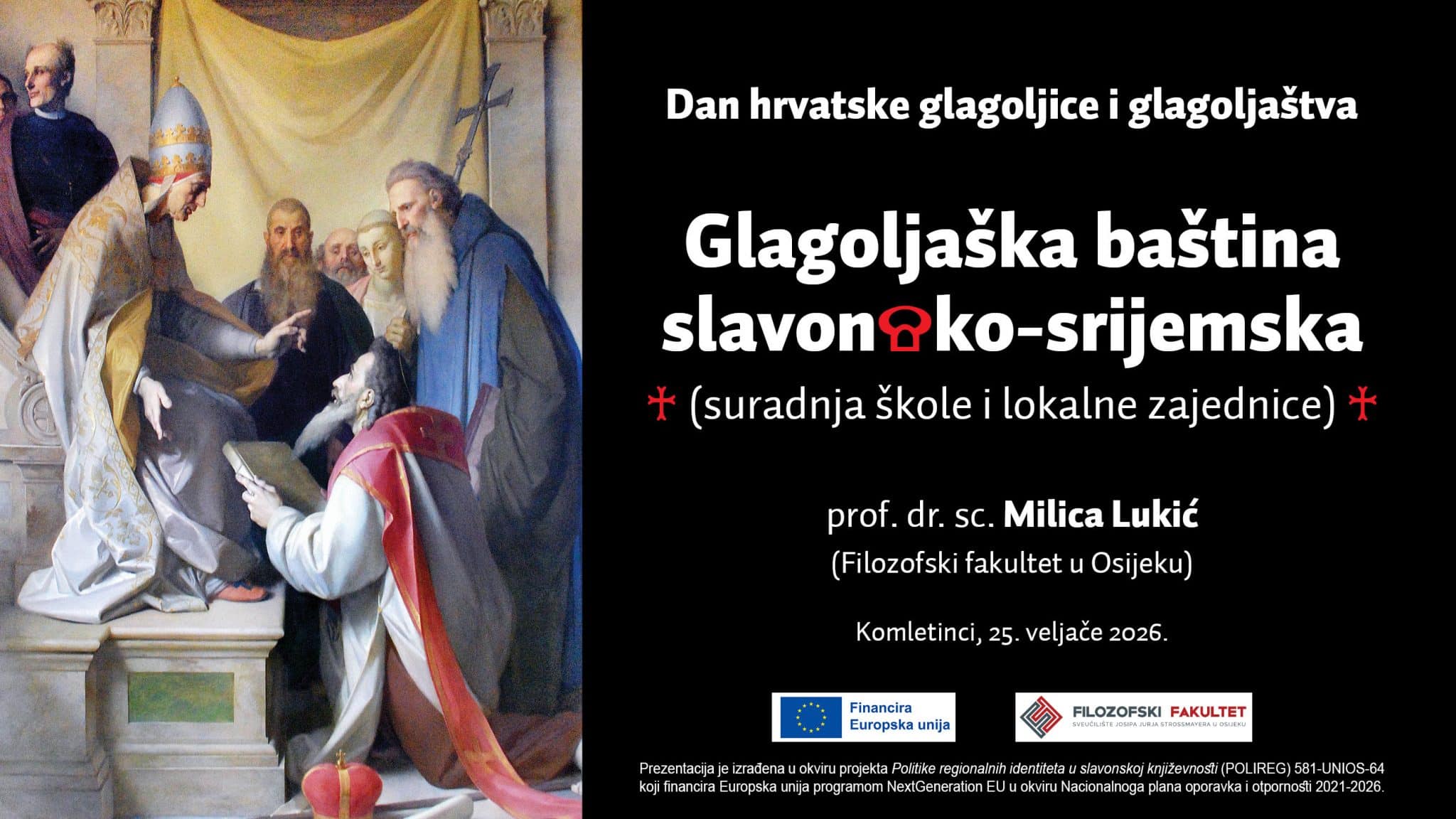
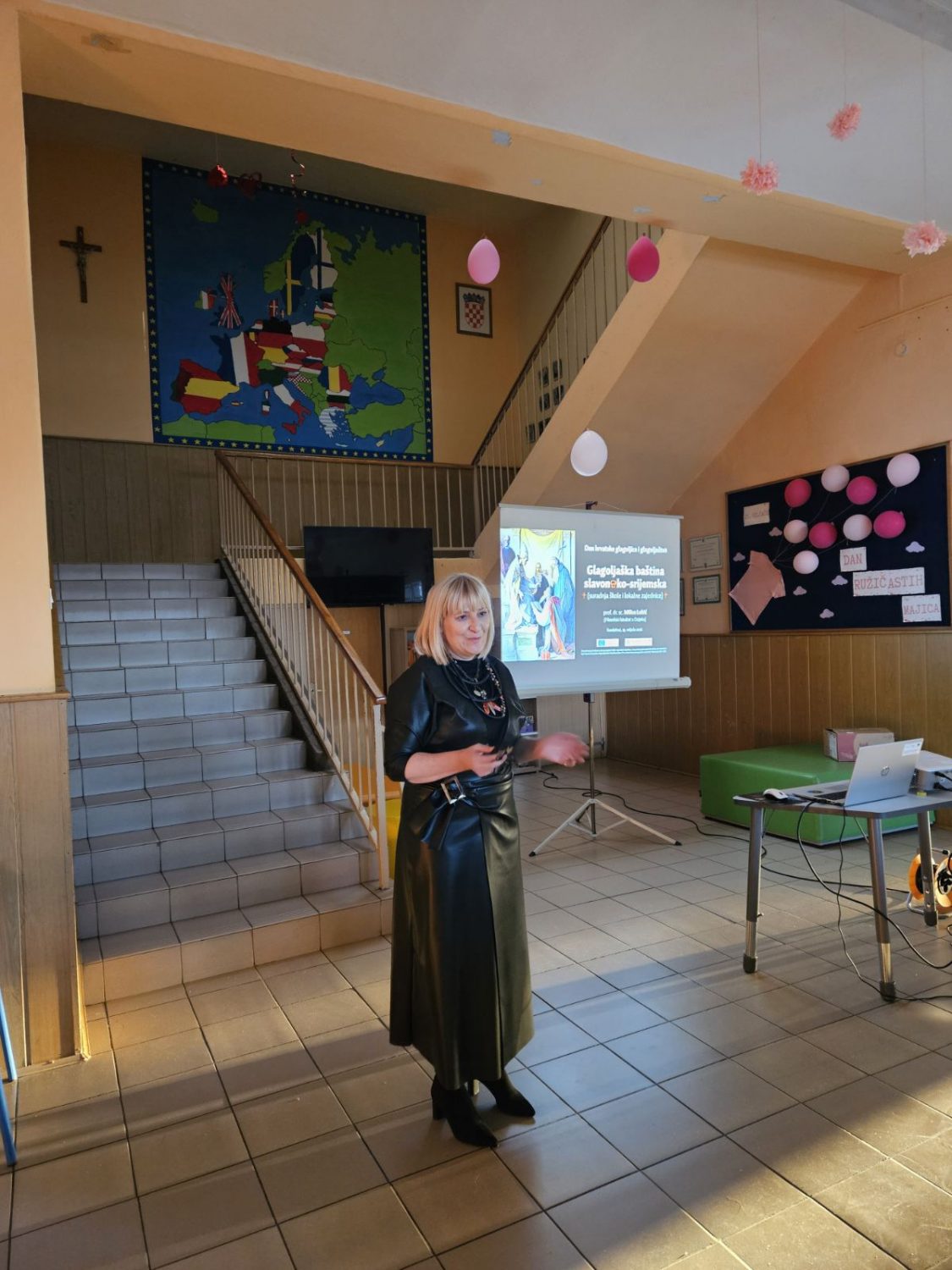
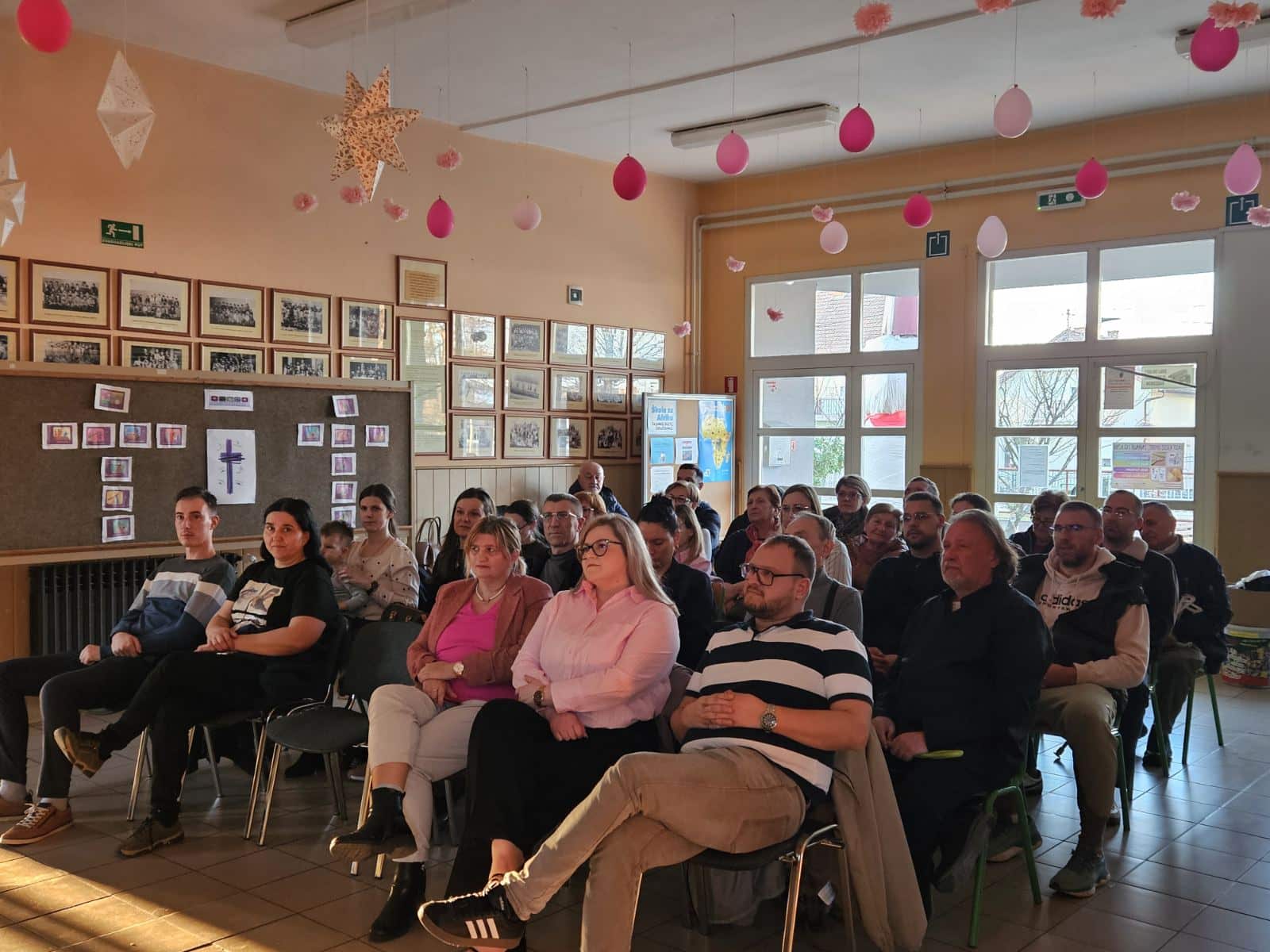
Prof. Milica Lukić, PhD, delivered a popular-science lecture entitled “The Slavonian-Syrmian Glagolitic Heritage (Cooperation between the School and the Local Community)” at Vladimir Nazor Primary School in Komletinci on 25 February 2026. The lecture was held to mark Croatian Glagolitic Script and Glagolitism Day and was organised by Katica Novoselac, a doctoral student in the Doctoral Study Programme in Literature and Cultural Identity and an external associate on the POLIREG project.
The lecture focused particularly on the modern-era Slavonian-Syrmian Glagolitic heritage, since Komletinci itself represents the starting point for its interpretation. The Glagolitic activity of Don Luka Sučić, a Dalmatian priest who arrived in the Slavonian-Syrmian region in 1780, marked almost 40 years of his service as parish priest in Komletinci (until his death in 1827), following a decade spent as a chaplain in Nijemci. Alongside him, Vid Maslać, another Glagolitic priest from Dalmatia, served for a period in Komletinci as the first parish priest of the newly established parish. Their successors in the Glagolitic tradition included other parish priests of Komletinci who occasionally celebrated the Glagolitic liturgy or cared for the Old Church Slavonic liturgical tradition in scholarly and professional terms (Karlo pl. Stručić, Ferdo Gerstner, Ivan Golubičić, Ilija Martinović).
Building on this rich Glagolitic tradition, various features have been created in present-day Komletinci to preserve the memory of this important element of Croatian cultural identity (alternative traffic signs written in Croatian angular Glagolitic script, including the settlement name sign, street-name signs, a memorial plaque dedicated to Don Luka Sučić, the name of the school, etc.), thus becoming components of the local Glagolitic linguistic landscape. These initiatives were implemented through cooperation between the school (Katica Novoselac) and the local community (with M. Lukić serving as consultant).
The lecture also addressed other modern-era Slavonian-Syrmian Glagolites, together with the necessary connections to medieval Slavonian Glagolitism. The lecture was reported on the School’s website, contributing to the visibility and popularisation of the project itself.
Kristina Peternai Andrić conducted research at the National and University Library in Zagreb
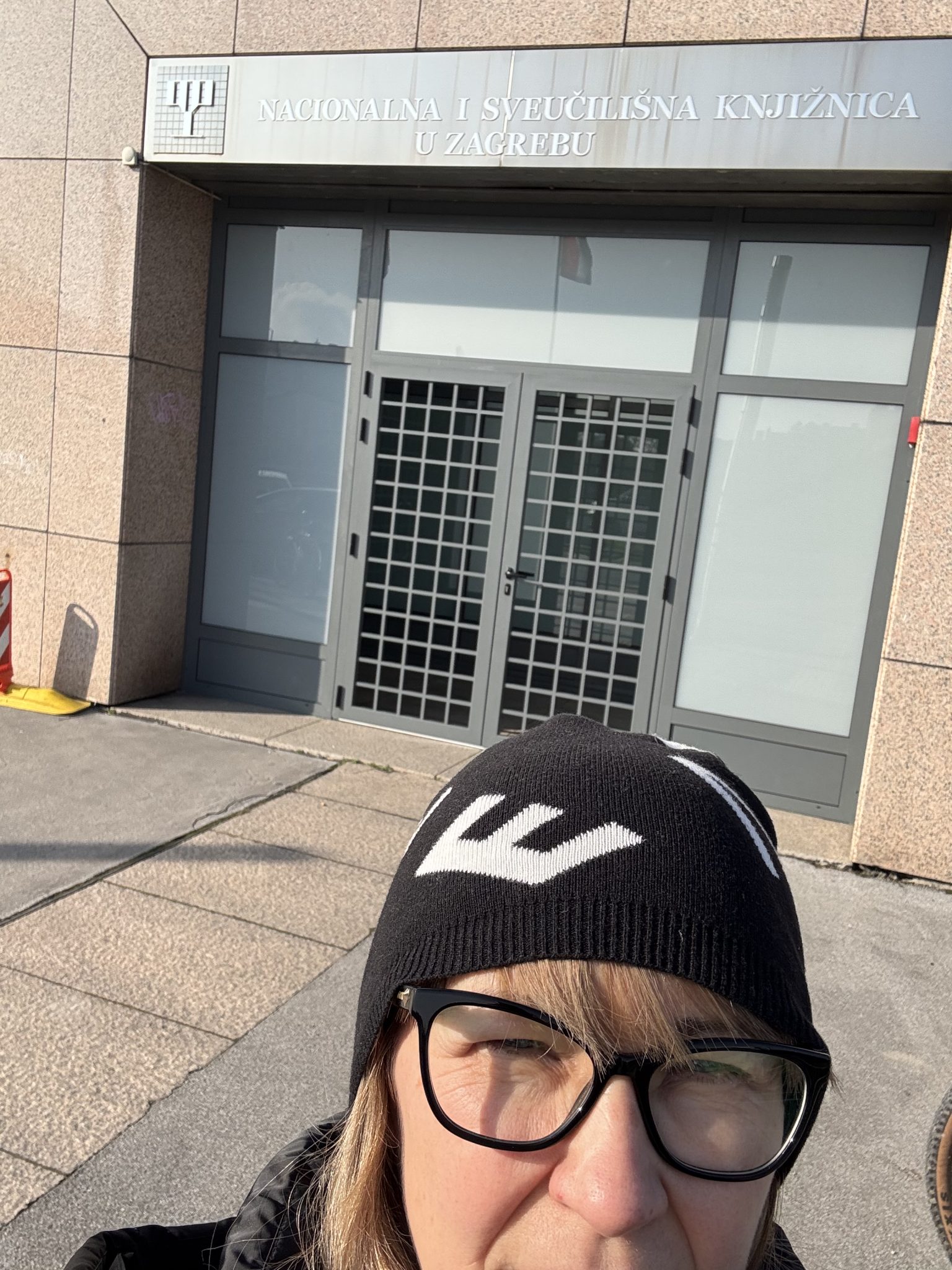
From 16 to 18 February 2026, Kristina Peternai Andrić stayed in Zagreb, where she conducted research in the Collection of Old Newspapers and Journals of the National and University Library on the literary and journalistic production and literary reception of Slavonian women writers published in Croatian periodicals during the first half of the 20th century. She focused particularly on the literary work of Mara Švel-Gamiršek and additionally examined Slavonian themes and the construction of regional identities in the works of Mila Miholjević.
Project team working meeting
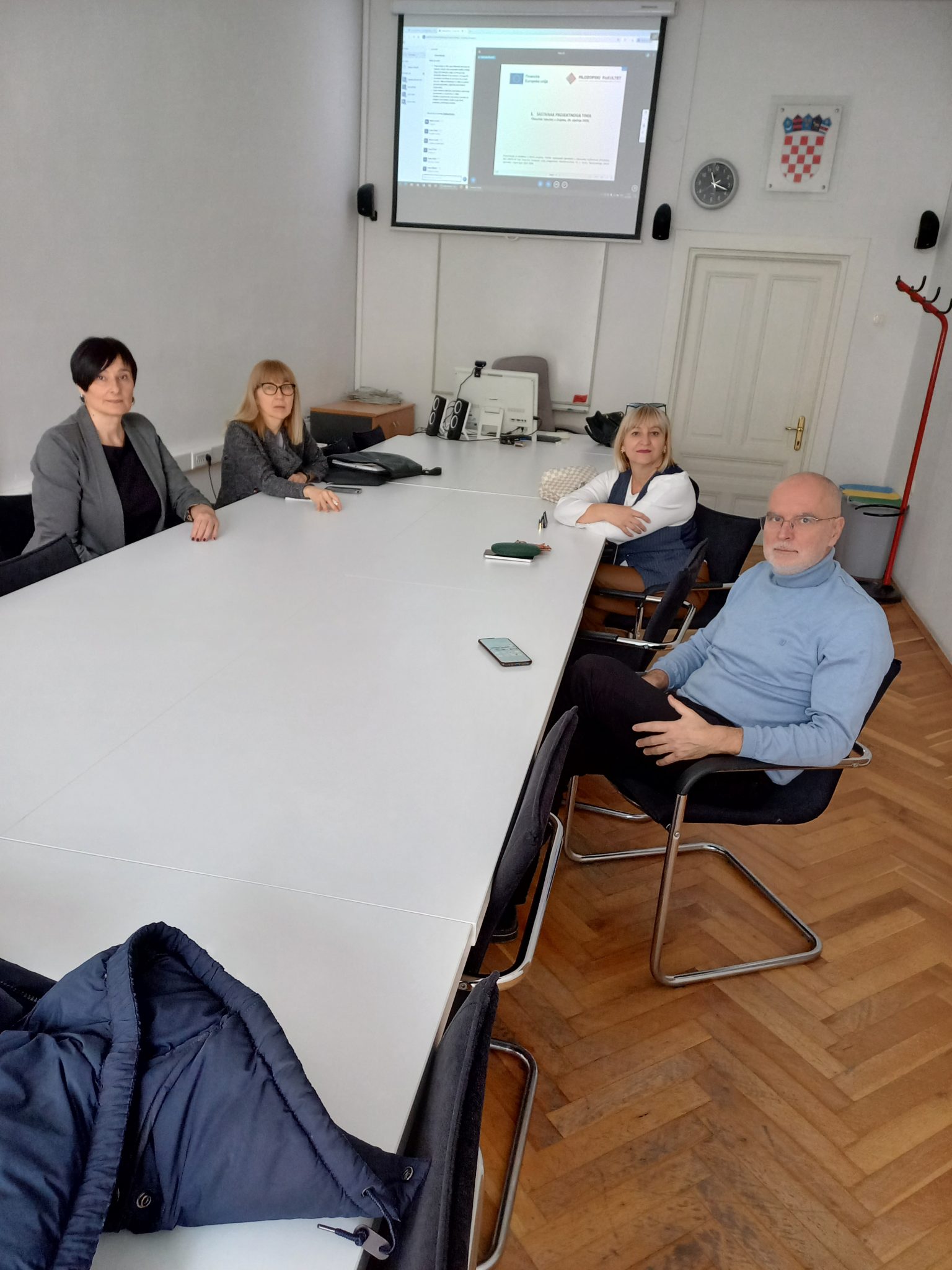
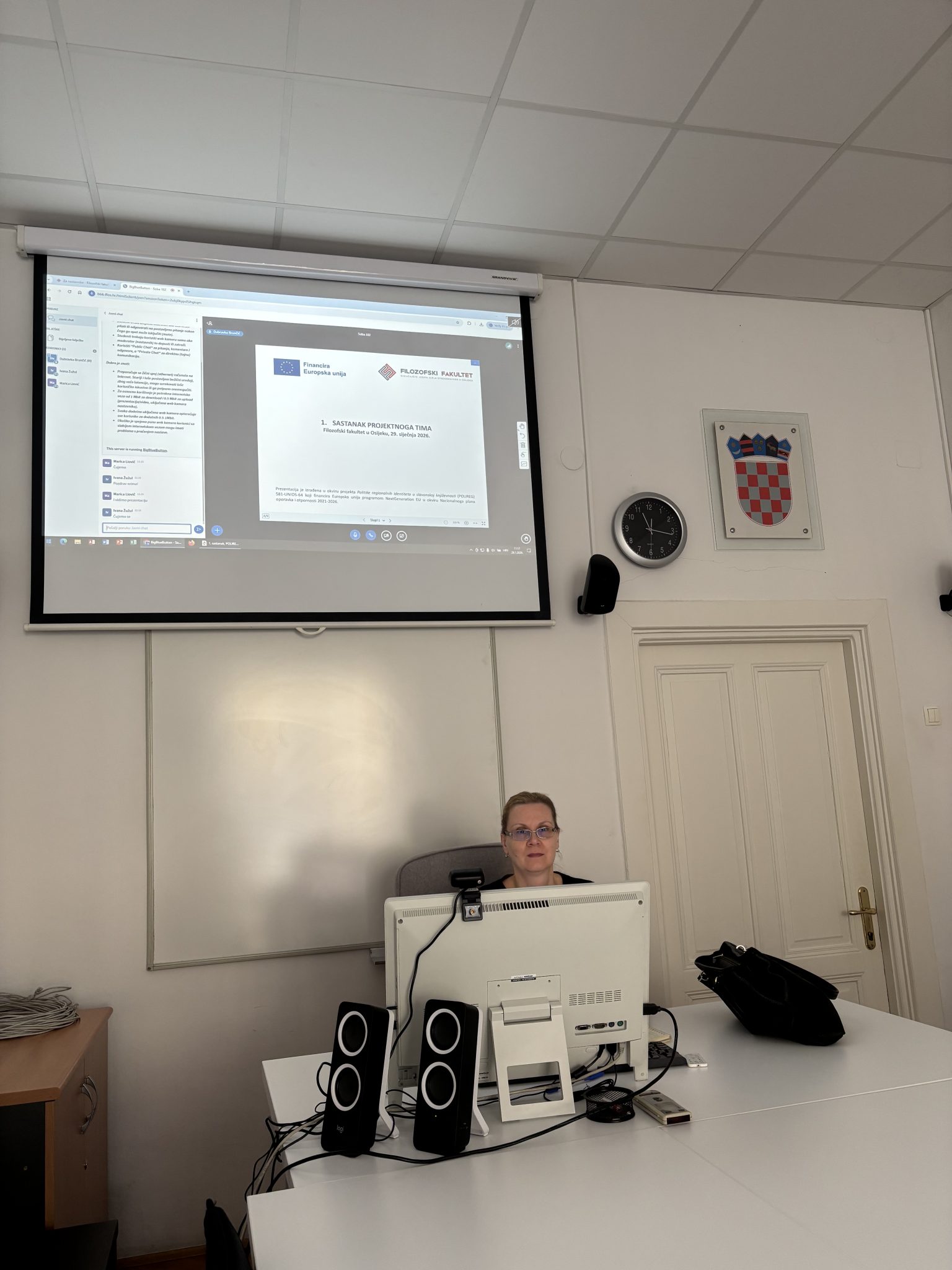
On 29 January 2026, members of the project team held a hybrid working meeting at the Faculty of Humanities and Social Sciences in Osijek to discuss planned project activities. A work plan and schedule of activities for the first project period were agreed upon. The discussion covered the theoretical and methodological framework of project activities, the acquisition of specialised literature, planned research activities at various cultural institutions, participation in scientific conferences, public presentations and other science communication activities through which the project will be presented to the public.
Milica Lukić delivered a lecture at the Archdiocesan Vicariate in Osijek
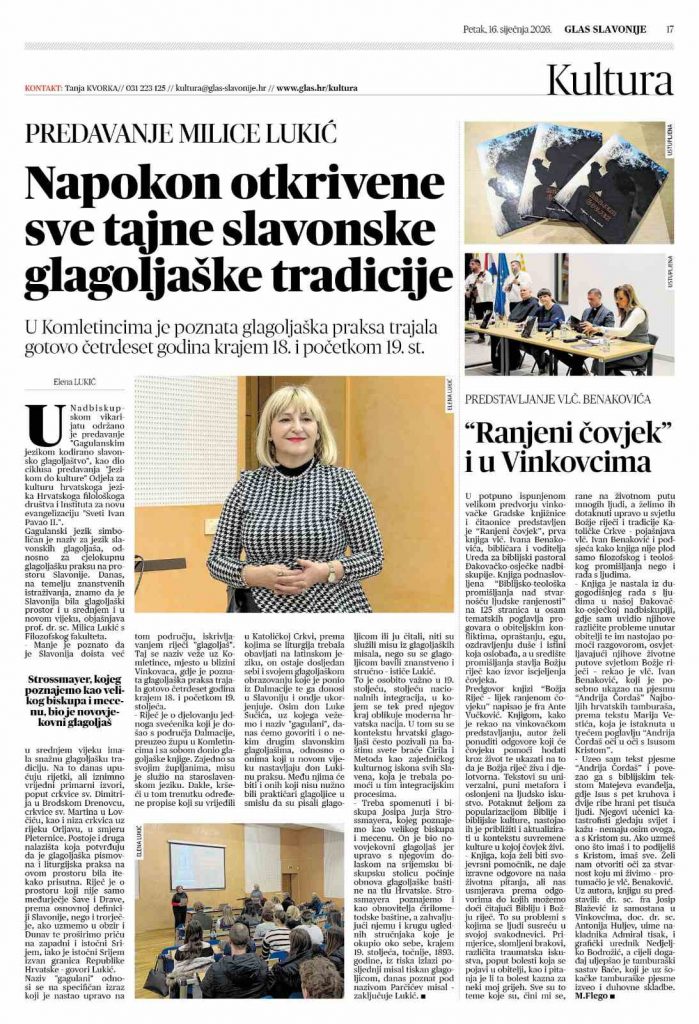
Prof. Milica Lukić, PhD, delivered a popular-science lecture entitled “Slavonian Glagolitism Encoded in the Gagulan Language” at the Archdiocesan Vicariate in Osijek on 14 January 2026. The lecture was held as part of the lecture series From Language to Culture, organised by the Department for the Culture of the Croatian Language of the Croatian Philological Society and the Institute for the New Evangelisation “St John Paul II”.
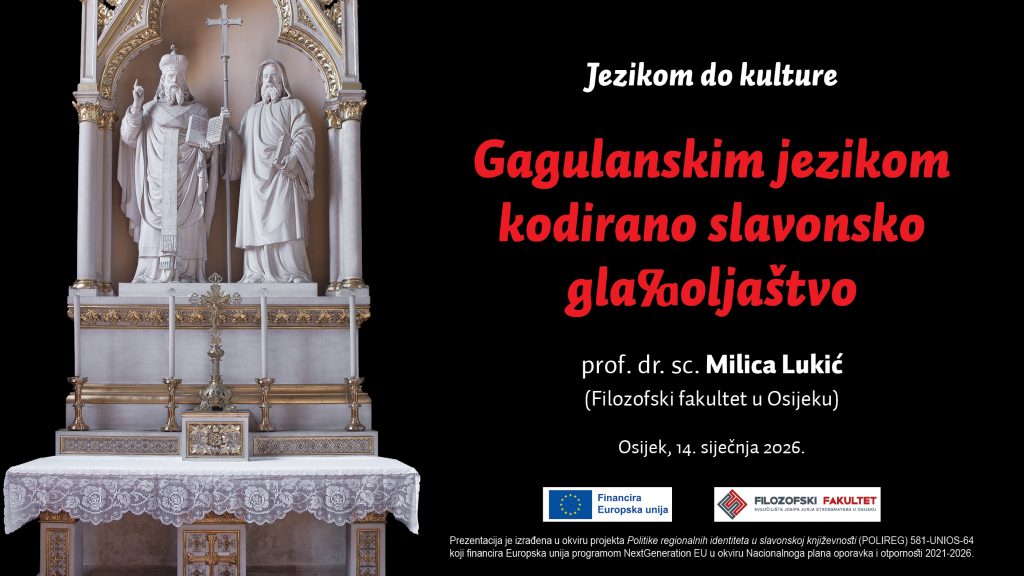
Situated within the thematic framework of the project Politics of Regional Identities in Slavonian Literature, which is being implemented at the Faculty of Humanities and Social Sciences in Osijek, the lecture drew attention to the earliest period of the literary, linguistic, script and cultural history of Slavonia, more specifically to Glagolitic culture in the Middle Ages. It also presented the latest findings on modern-era Slavonian Glagolitism and its representatives up to the present day.
Using the newly coined term “philological forensics” (a term introduced by Milica Lukić), referring to a research procedure based on scarce traces scattered across secondary sources (providing grounds for “reasonable suspicion”) and primary sources (evidence), the lecturer presented relevant evidence demonstrating that medieval Slavonia, before it came under Ottoman rule in 1526, had an established Glagolitic tradition (Glagolitic graffiti in churches in Brodski Drenovac, Lovčić, Srednji Lipovac and other places along the River Orljava, a brick from Rudina, a Cyrillic graffito in Martin near Našice, etc.). In other words, the evidence points to the rooted presence of Glagolitic script in the region rather than to Glagolitic tourism from the southern regions.
Although research into modern-era Slavonian Glagolitism is also largely based on the method of “philological forensics”, primary and secondary sources are nevertheless more numerous and informative. We therefore know with certainty today that, from the late 18th and first decades of the 19th century, the Glagolitic liturgy was celebrated in Komletinci near Vinkovci (and occasionally until the mid-20th century; the term gagulani/gagulanski from the title of the lecture is specifically associated with this village), as well as in Rajevo Selo, Drenovci, Gorjani, Đakovo and Vinkovci. We also know the names of numerous figures involved in modern-era Glagolitic practice, including Josip Juraj Strossmayer, Bishop of Đakovo and Syrmia. The lecture also addressed the “new life of the Glagolitic script” in Slavonia through artistic practices and presented contemporary Slavonian Glagolites and Cyrillo-Methodians.
The lecture concluded that the conditions have been met for the textbook definition of Croatian Glagolitism, which geographically encompasses Istria, Kvarner, the Croatian Littoral, Lika, Krbava, Dalmatia and the Dubrovnik area, to be extended to include Slavonia (and western Syrmia) within its geographical boundaries between the Sava, Drava and Danube rivers. This is particularly relevant when taking into account the historical circumstances surrounding the ancient Pannonian-Moravian Archdiocese, with its seat in ancient Sirmium, i.e. the Cyrillo-Methodian foundations from which Croatian Glagolitism developed.
Marica Liović delivered a presentation at the Knjiški Krnjaš X Scientific and Professional Conference in Vinkovci
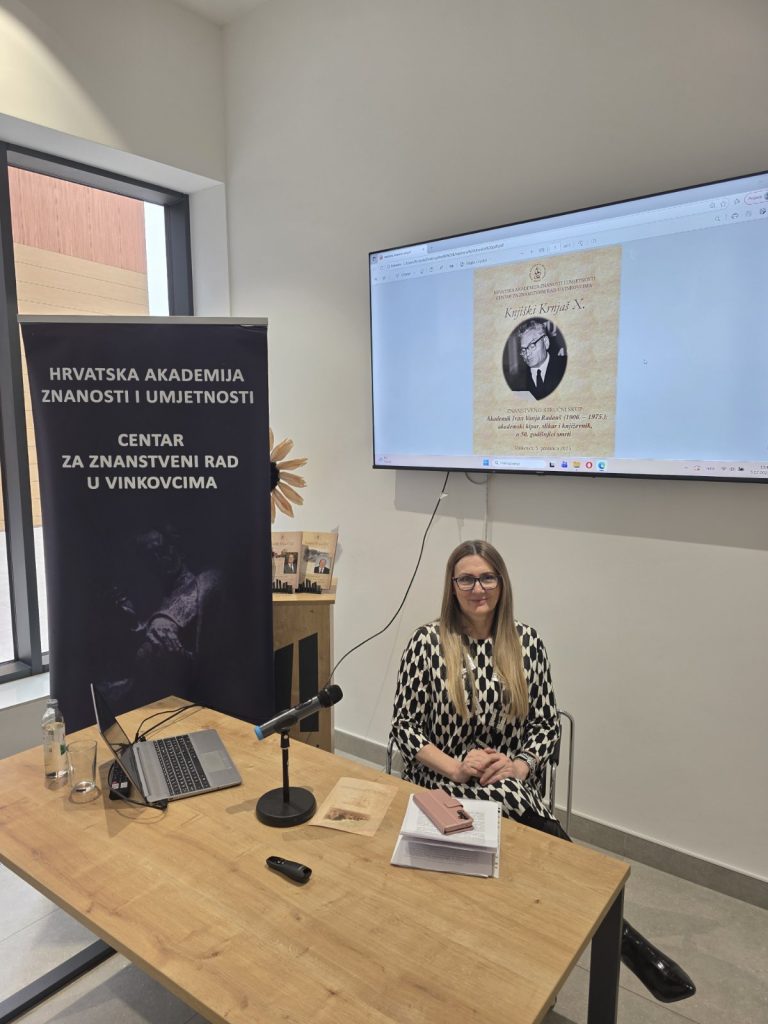
Marica Liović participated in the scientific and professional conference “Knjiški Krnjaš X: Academician Ivan Vanja Radauš (1906–1975), Academic Sculptor, Painter and Writer, on the 50th Anniversary of His Death”. The conference was organised by the Centre for Scientific Work of the Croatian Academy of Sciences and Arts in Vinkovci and was held at the City Library and Reading Room in Vinkovci on 5 December 2025. On that occasion, she presented a paper entitled Nausicaa from the Shores of the Adriatic and Pannonian Seas.
Lana Šuster successfully defended her doctoral dissertation proposal
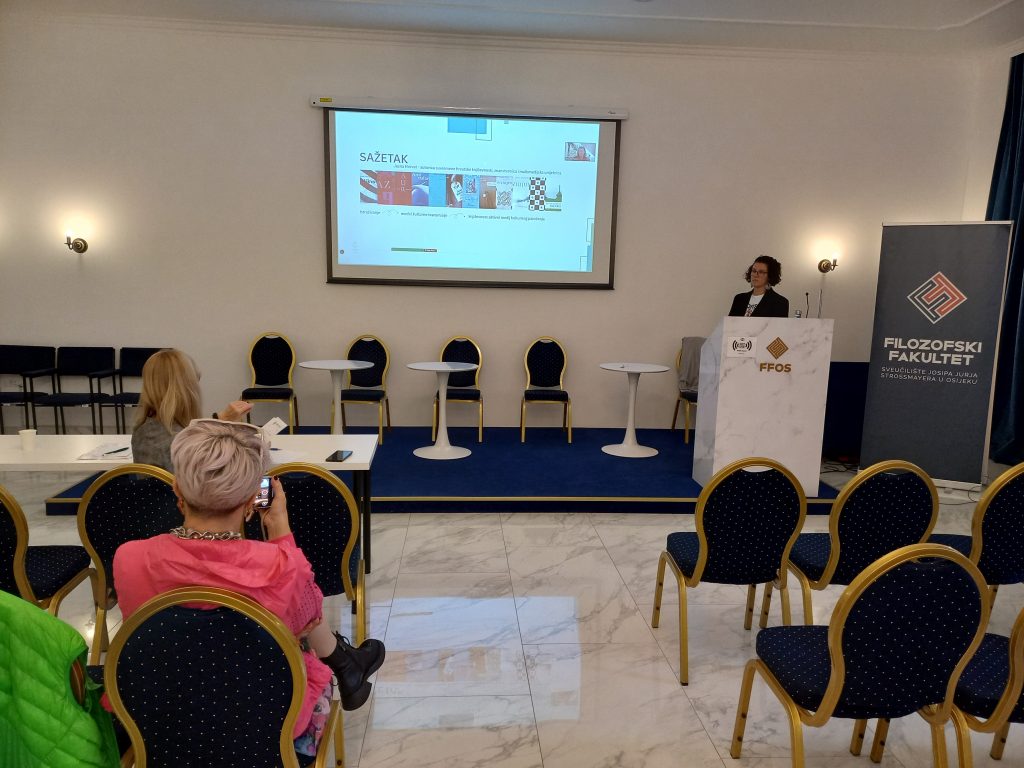
On 3 November 2025, doctoral student Lana Šuster successfully defended her doctoral dissertation proposal at the Faculty of Humanities and Social Sciences in Osijek, entitled Strategies and Models for the Popularisation and Promotion of Croatian Heritage Culture through Literature: The Novels of Jasna Horvat (2009–2025). In presenting the theoretical and methodological foundations of her future doctoral dissertation, Lana Šuster focused particularly on the important role of literature as a medium for constructing a culture of memory and emphasised its potential for promoting Croatian heritage.
Tina Varga Oswald and Jakov Sabljić delivered presentations at an international scientific conference in Wrocław
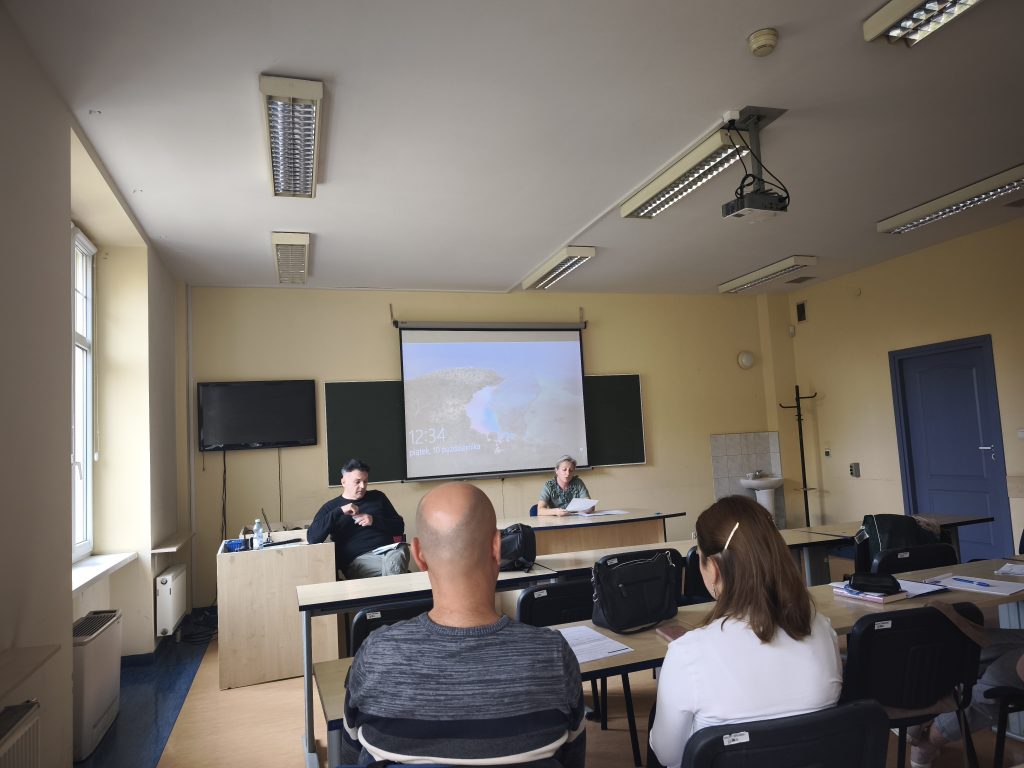
Tina Varga Oswald and Jakov Sabljić participated in the 16th International Slavic Studies Conference Great Themes of Culture in Slavic Literatures, held at the Faculty of Neophilology of the University of Wrocław in Poland on 9 and 10 October 2025. This year’s conference theme was Childhood and Youth. Tina Varga Oswald delivered a presentation entitled Trauma, Dissociation and Childhood in Julijana Adamović’s “Divlje guske”, while Jakov Sabljić delivered a presentation entitled The Figure of the Child in Dubravka Oraić Tolić’s “Doživljaji Karla Maloga”.