
On 29 April, Ena Štrk, MA in Psychology, and Maja Matković, MA in Psychology, staff members of the Office for Psychological Counselling of Students, delivered a lecture on the types and prevention of anxiety in the Small Ceremonial Hall of the Faculty of Humanities and Social Sciences.
Normal Worry or a Disorder?
Psychologist Ena Štrk presented the differences between anxiety as a normal form of worry and anxiety as a disorder, based on its intensity, duration and specific characteristics. She explained that anxiety is normal and even desirable to a certain degree, as it encourages caution in everyday situations and helps with problem-solving. However, when anxiety takes the form of excessive and uncontrollable worry, crosses a certain threshold and begins to interfere with everyday functioning, spreading over a prolonged period to different areas of life without a clear or logical cause, it should be treated as a disorder.
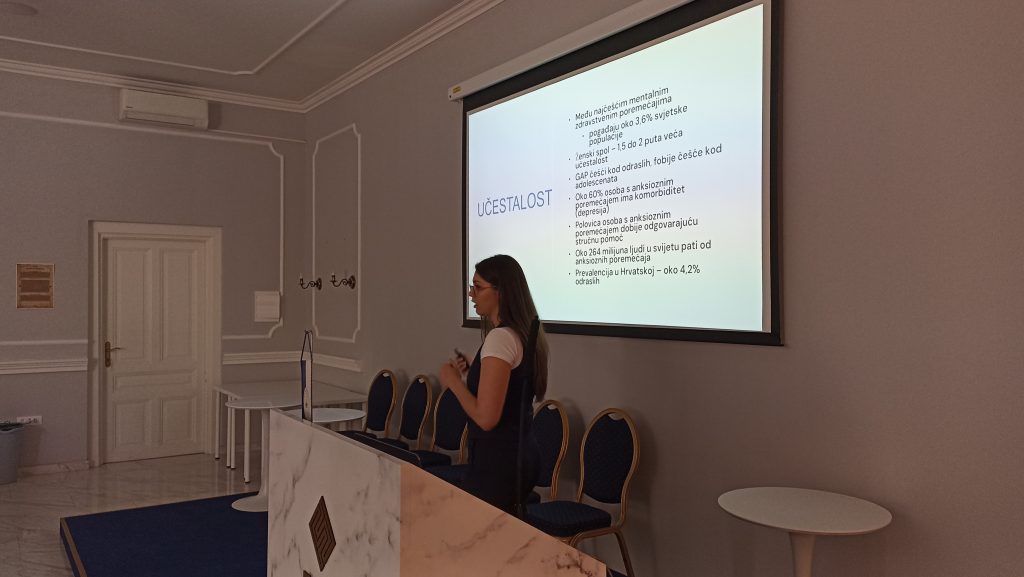
Štrk added that anxiety disorders are among the most common mental health disorders, affecting 264 million people worldwide, and that they occur 1.5 to 2 times more frequently in women. She noted that anxiety manifests through physical, cognitive, emotional and behavioural symptoms, while the factors influencing its development range from genetics and cognitive factors to traumatic experiences and the social environment.
How Can You Help Yourself?
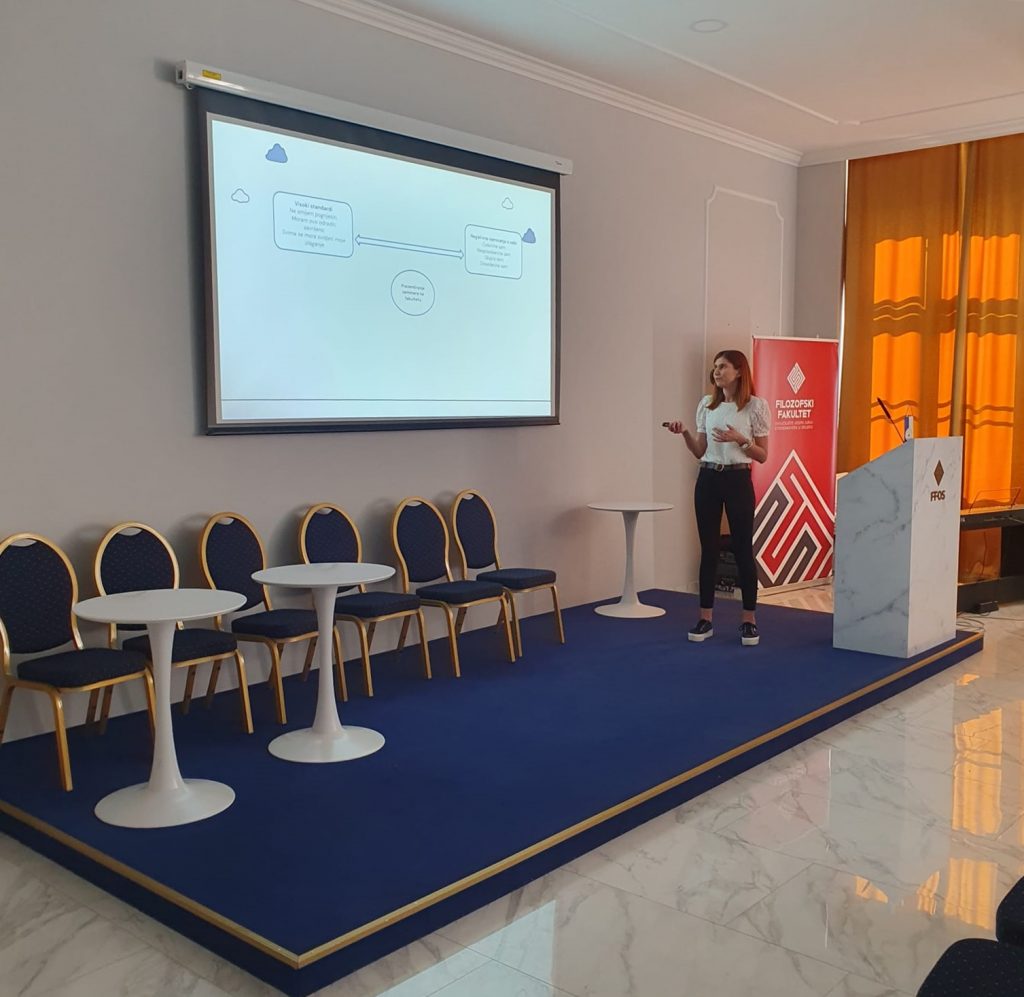
Part of the lecture was devoted to self-help guidance for managing symptoms of anxiety. The approach used by the psychologists in cognitive behavioural therapy at the psychological counselling office is based on the cognitive triangle, which connects thoughts, feelings and behaviours. It can help individuals become more aware of negative automatic thoughts, while progressive muscle relaxation exercises have also proved useful. Anxiety disorders are common among students and most frequently appear in the form of test anxiety or social anxiety, which psychologist Maja Matković discussed in the next part of the lecture.
Other Forms of Anxiety
Social anxiety is associated with situations involving interpersonal interactions and the performance of various activities. It is often triggered by high standards and negative beliefs about oneself. The psychologists noted that exposure to stressful situations is unavoidable, but for people struggling with anxiety, gradual exposure progressing from simpler to more complex situations can lead to better results and reduce social anxiety. Panic attacks, generalised anxiety disorder, obsessive-compulsive disorder, post-traumatic stress disorder and phobias also belong to the group of anxiety disorders. Psychologists Matković and Štrk emphasised the need to monitor changes in mental health and seek help promptly.
The lecture concluded with questions from students, who showed great interest in the topic and shared their own experiences of coping with anxiety.
Beatriz Brkić