
From 15 to 21 March 2026, a study trip to the Netherlands and Belgium was organised for 166 students of the Faculty of Humanities and Social Sciences in Osijek. The trip was organised by the Student Council of the Faculty of Humanities and Social Sciences in Osijek in cooperation with the Azimut Travel agency. The journey began on Sunday, 15 March, with departure from Osijek around noon. After an overnight drive through Slovenia, Austria and Germany, with several short stops along the way, we arrived in Amsterdam in the morning. This was followed by our first tour of the city, during which we became acquainted with its most famous sights. We had the opportunity to visit the Royal Palace in the city centre, the Basilica of Saint Nicholas and the Oude Kerk, the oldest church in the city, located at the entrance to the Red Light District. After a short walk through the city centre, we visited the Diamond Museum and in the evening headed towards our accommodation in a forest near the town of Epe in the north-eastern Netherlands.
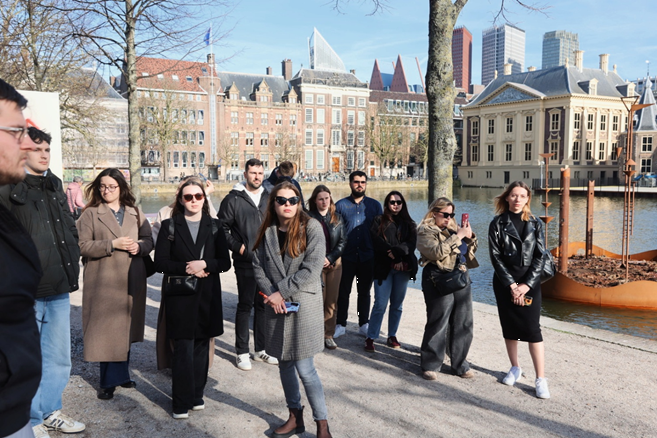
On the third day, a full-day excursion was organised during which we visited some of the best-known cities in the Netherlands. We first visited Rotterdam, the country’s business centre, where we had the opportunity to see impressive modern architecture. The pencil-shaped building, the Cube Houses and the Markthal market are just some of the many photogenic locations that students used for individual and group photographs. After touring Rotterdam, we continued to the historic town of Delft, which also impressed us. In addition to its many historic buildings, Delft is also known as the city where William of Orange, the father of the Dutch state, and the famous painter Johannes Vermeer, whose best-known work is Girl with a Pearl Earring, once lived. We took a lunch break in Scheveningen, the Netherlands’ best-known seaside resort on the North Sea coast. The final destination we visited that day was The Hague, the country’s political capital. The city is known for the International Court of Justice, numerous foreign embassies and its contemporary architecture, characterised by many tall and impressive skyscrapers. The Dutch often describe their cities in a colourful way, saying that Amsterdam is a city of entertainment and lively nightlife, Rotterdam a centre of business opportunities and modern development, while The Hague is an ideal place for a peaceful and high-quality life.
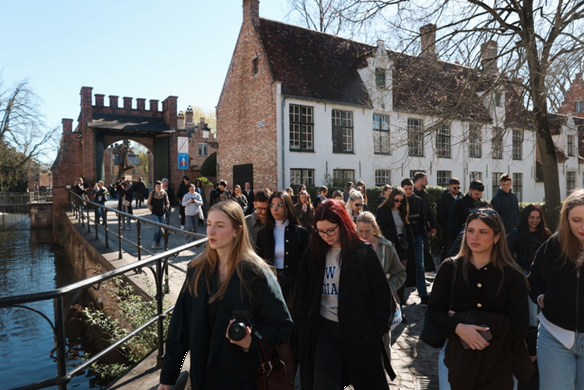
After visiting the major Dutch cities, the following day it was Belgium’s turn. We first headed to Bruges, a city that quite literally feels as though one has stepped into the Middle Ages. At every turn, we encountered imposing Gothic towers and richly decorated, gilded buildings that further emphasised the city’s magnificent appearance. It did not take long for our students to declare it “the happiest city in the world”. During our walk, we also had the opportunity to try the famous Belgian waffles, whose flavour perfectly complemented the entire experience. Arriving in Ghent was a refreshing change after Bruges – a city of similar historic beauty, but with a somewhat livelier and more urban atmosphere. As soon as we entered the city centre, we could feel the special energy of a place where the past and present blend seamlessly. During the tour, we also heard an interesting local story – the legend of the so-called “beer war”. According to tradition, students in Ghent rebelled against a beer tax in the 16th century, leading to a conflict with the authorities. Although the story has more symbolic than historical significance, the legend particularly caught our interest, and a discussion soon developed about which Belgian beer was the best. We continued our walk along the river, where we were greeted by the famous guild houses, whose façades are built of stone and brick and feature rich details and varied forms. After a full day of exploring Belgium, we headed back to our accommodation late in the evening. Tired but full of impressions, we slowly brought the day to a close, aware that we had left behind the most beautiful day of the trip, one that we would remember for a long time.
The fifth day presented us with a somewhat different side of the Netherlands – quieter, more traditional and closer to nature. Our first stop was the picturesque Zaanse Schans, a place known for its many traditional windmills and wooden houses. Surrounded by beautiful scenery and authentic views, we enjoyed the panorama before us, while Instagram quickly filled with “postcards” of our students from this picturesque location. We also had the opportunity to taste traditional cheeses in a variety of flavours and local wine, while learning about the making of wooden clogs, one of the most recognisable symbols of Dutch tradition, was a particularly memorable experience. We then visited Giethoorn, a place that has rightly earned the nickname “the Venice of the Netherlands”. This unique village, where roads have been completely replaced by canals, delighted us with its tranquillity and beautiful landscape. We spent our time taking boat rides through canals that literally pass through the “gardens” of Dutch houses, observing the everyday life of local residents and taking in every moment of the enchanting surroundings. We spent the evening in the nearby town of Zwolle, which left a strong impression on us thanks to its combination of rich history and a simple, relaxed way of life that can be felt at every turn.
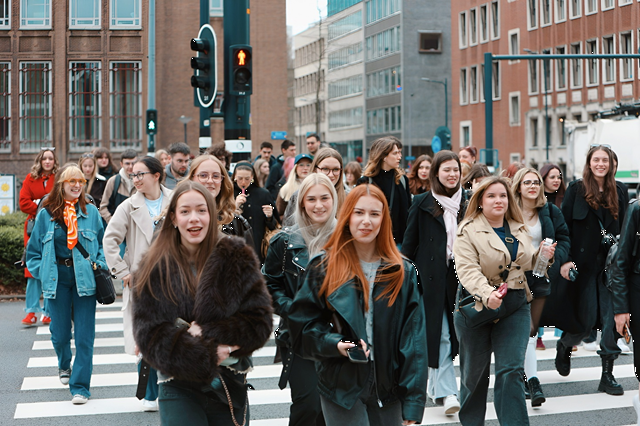
The final day of our trip was marked by a return to Amsterdam, where we had free time that we used in a variety of ways. It was the perfect opportunity to buy souvenirs, try local specialities in restaurants, cycle through the city streets and simply take in everyday life in this unique metropolis. In the early evening, we took a boat ride through the city’s canals, which for many proved to be the most memorable experience of the entire trip. Viewing the city from a different perspective, during a peaceful ride and in a special atmosphere, gave us the opportunity to bring together all the impressions the trip had given us. Our day in Amsterdam was further enriched by an unplanned but interesting situation. Due to sudden traffic restrictions in the city centre, access for buses was prohibited, so we had to adapt and organise our return using the city metro. This spontaneous turn of events became a small adventure of its own – at one point, it seemed as though the entire metro had been taken over by our students. Although unexpected, the experience added to the dynamics of the day and demonstrated our resourcefulness in unforeseen circumstances.
We concluded our journey with an overnight drive back to Osijek, arriving the following evening. For many students, this trip represented an ideal combination of educational content and a short break from everyday obligations – a kind of springtime respite that further contributed to their motivation to continue with their academic activities. Over the course of a week, we visited numerous cities and cultural and historical sites, became acquainted with different ways of life and encountered a range of planned and unexpected situations. Nevertheless, what proved most valuable was the connection between students – the creation of new acquaintances and friendships in an environment that enables a different form of socialising and cooperation from that usually found in everyday academic life. This is precisely why trips of this kind have particular value – not only as a form of field-based learning, but also as an opportunity for personal development, building connections and creating lasting memories.
Stefan Zundanović