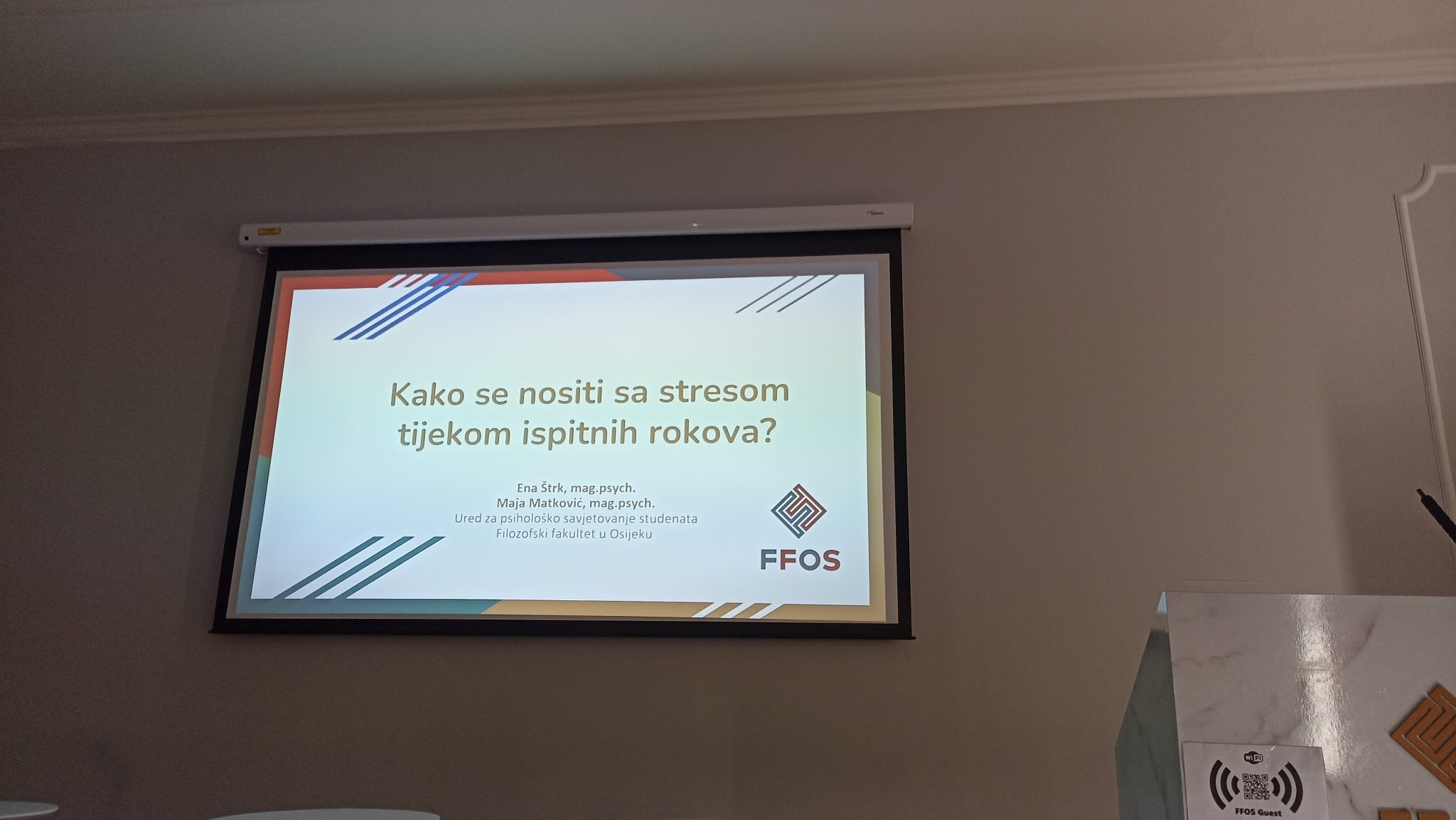
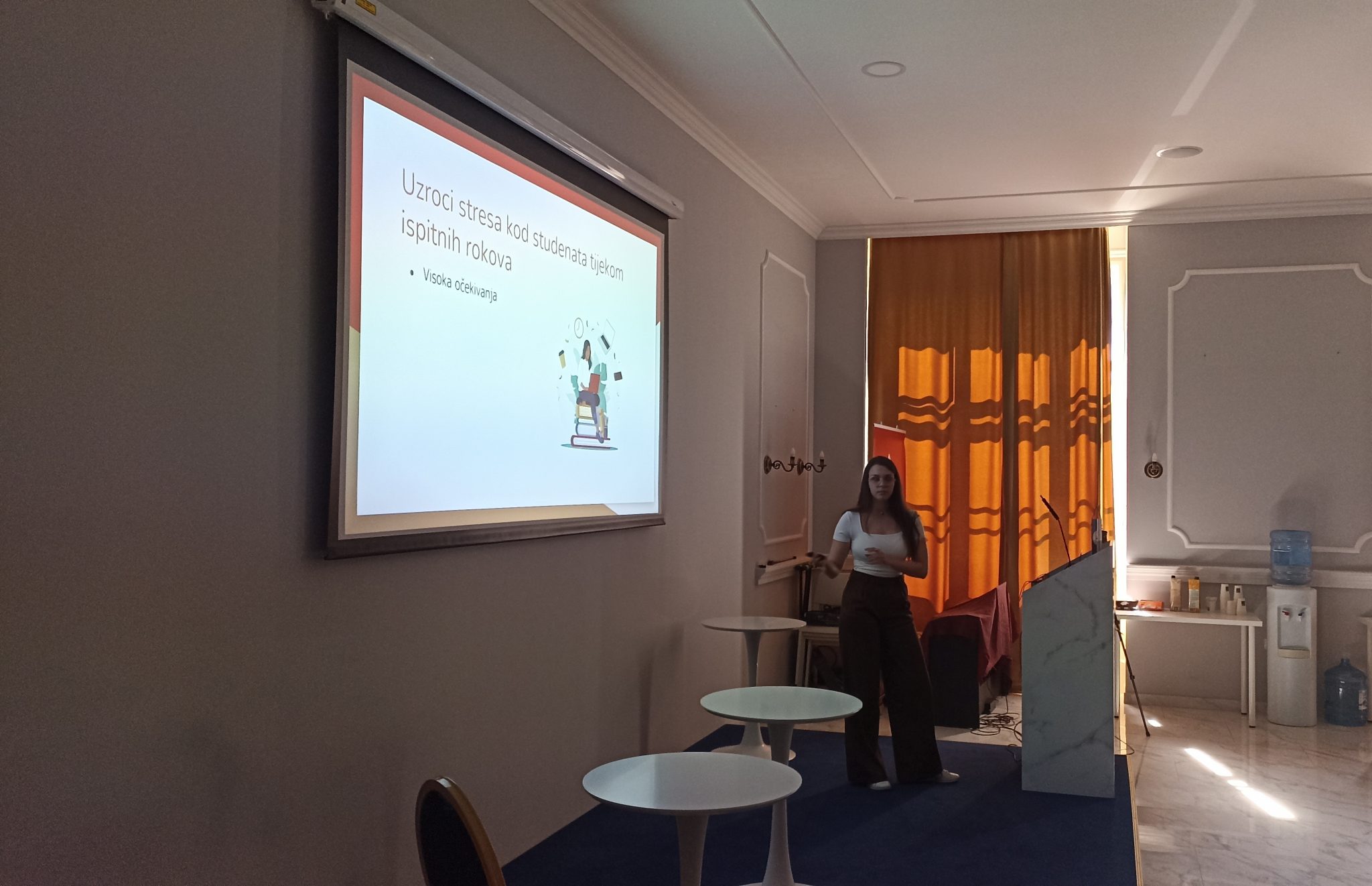
On Tuesday, 28 May 2024, psychologists Ena Štrk and Maja Matković, staff members of the Office for Psychological Counselling of Students, delivered another lecture in a series intended for students of Josip Juraj Strossmayer University of Osijek. The lecture, entitled “How to Cope with Stress During Examination Periods?”, was held in the Small Ceremonial Hall of the Faculty of Humanities and Social Sciences in Osijek. Its aim was to educate students about stress associated with student life and provide advice on coping with it more effectively, particularly during examination periods.
The first part of the lecture focused on the concept of stress, its causes and different responses to it. The cognitive behavioural triangle, which connects thoughts, emotions and behaviour, was presented, along with the most common thinking errors that occur during examination periods. Psychologist Štrk emphasised the importance of realistically assessing stressful situations and explained how to avoid catastrophic and unrealistic predictions that increase anxiety. She suggested developing more balanced expectations as a way of reducing stress.
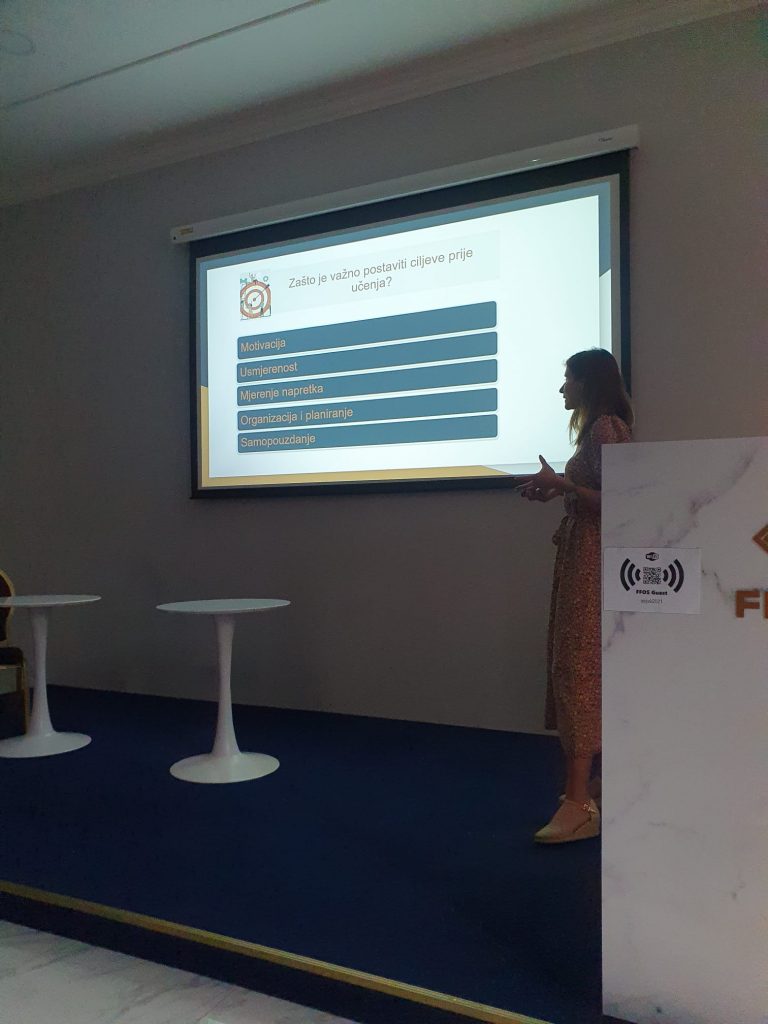
The second part of the lecture addressed factors that increase student stress, such as procrastination, poor time management, a lack of goals and insufficient motivation. Psychologist Matković explained how to set goals appropriately, organise one’s time and avoid procrastination. She stressed that students often postpone studying because of fear of failure, perfectionism, low self-esteem and anxiety, rather than laziness. She also discussed methods of self-motivation through self-reinforcement.
The final part of the lecture was devoted to answering questions submitted by students during registration.
The Office staff announced further lectures and workshops for students beginning in the next academic year and invited students to submit topic suggestions to the Office by email at savjetovaliste@ffos.hr, so that future activities could better respond to their needs.