
On 12 October 2023, Sanja Diósy, MA in Psychology, and Maja Matković, MA in Psychology, staff members of the Office for Psychological Counselling of Students, delivered a lecture for students entitled The Importance of Mental Health for Academic Success in the Small Ceremonial Hall of the Faculty of Humanities and Social Sciences. The event also marked World Mental Health Day at the beginning of the new academic year.
Sanja Diósy opened the lecture with an overview of the challenges of student life that can cause stress. The period of study brings new opportunities and experiences that are both positive and challenging. Some of these challenges include forming relationships in a new social environment, practising self-regulation and self-discipline in order to meet academic obligations, developing academic and life skills, and maintaining existing relationships while forming new ones. Combined with an awareness of one’s own psychological processes, these challenges may create additional pressure. It is therefore important for students to care for their mental, physical and social health so that they can regulate it successfully and maintain it at a satisfactory level. Academic success depends not only on intellectual and cognitive factors but also on psychological ones. It is therefore essential that students become aware of their emotions, validate them and take time for themselves when they need to rest. Diósy identified the most common sources of stress among students as a decline in motivation following an initial failure, difficulty balancing obligations, the challenges of examination periods, difficulties with concentration and studying, problems in close relationships, financial difficulties, dissatisfaction or disappointment with their studies, and traumatic experiences. Social support is one way of reducing stress, and the power of listening is often underestimated. When we do not have specific advice for solving a problem, it may be enough simply to act as an empathetic listener. Diósy then explained the connection between thoughts, feelings and behaviour using the cognitive triangle, one of the tools applied within cognitive behavioural therapy at the psychological counselling office. We are often unaware of the power of automatic thoughts, particularly negative automatic thoughts, which can become decisive factors in emotional regulation and everyday behaviour. Diósy identified the following psychological difficulties related to academic life: test anxiety, to a certain degree, fear of failure, perfectionism, fear of oral examinations and public speaking, difficulties with studying and passing examinations, concentration difficulties, lack of motivation, and insufficient study and time-management skills. The first part of the lecture concluded with an overview of psychological difficulties in the social and economic sphere, including loneliness and social isolation, insufficient social skills, social anxiety, depression, low self-confidence and self-esteem, establishing new social contacts, separation from one’s family and moving to a new place of residence.

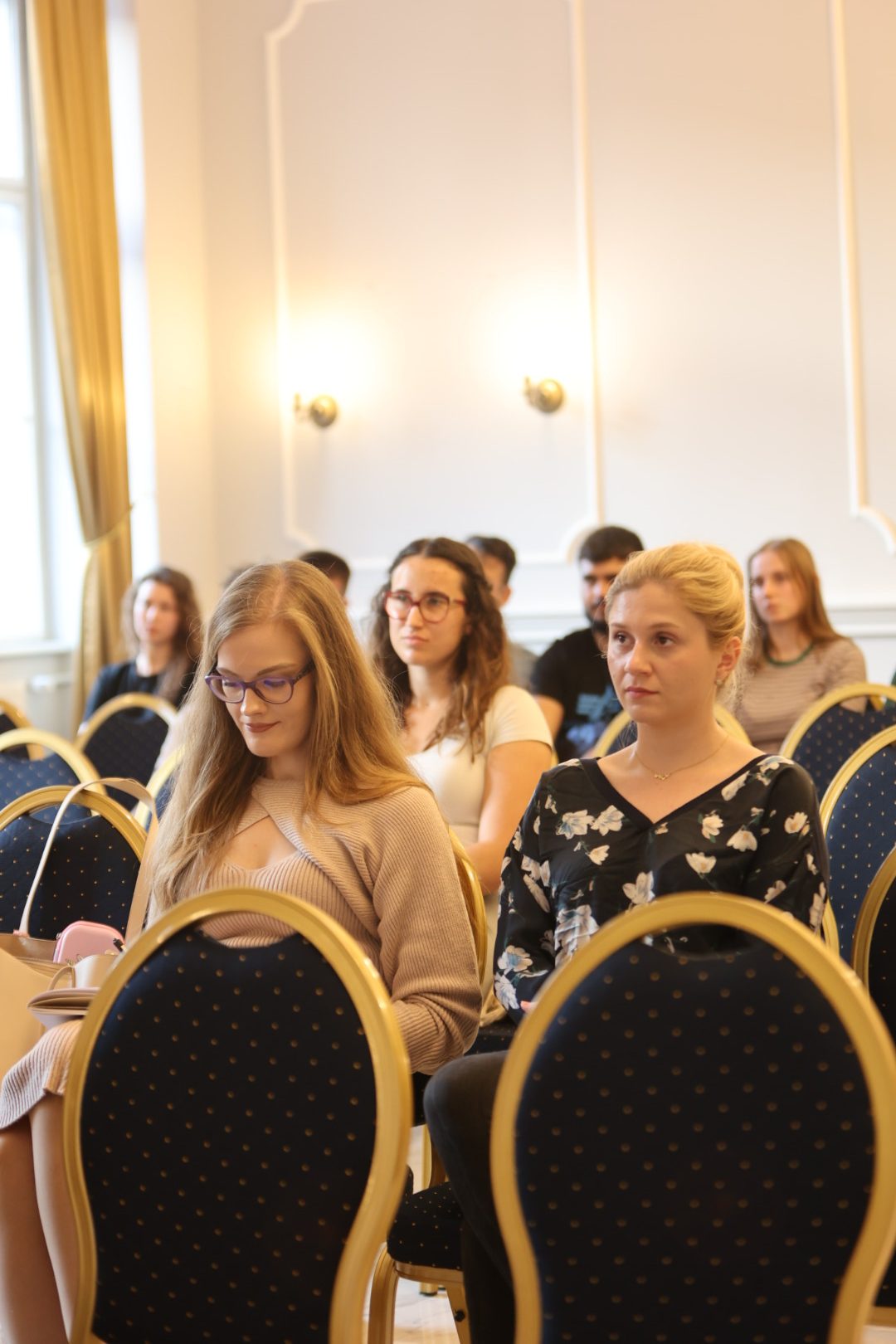
After reviewing the possible causes of stress among students and the areas of life they may affect, Maja Matković presented ways in which students can cope with mental health challenges in the second part of the lecture. Warning signs indicating that help should be sought include withdrawing from usual activities, a low mood lasting longer than two to four weeks, academic difficulties, feelings of hopelessness and helplessness, neglecting oneself and increased substance use. Matković then presented protective factors that can counteract negative influences. Particular emphasis was placed on setting realistic and achievable academic expectations in accordance with one’s current circumstances, as well as practising self-care through physical activity, a healthy diet, adequate sleep and social support. Even when professional help is unavailable, students can still support themselves by exploring resources such as progressive muscle relaxation, mental health tracking applications, reliable and useful social media content, self-help books and yoga. Working on oneself is a lifelong process, and there is no final point at which the journey of personal growth and development ends. Matković noted that it is extremely important to work continuously on one’s self-esteem, set boundaries and care for one’s own needs. One of the most important practical questions addressed during the lecture was how can we help ourselves? In addition to confiding in someone close and engaging in social interaction, it is important to find activities that can serve as hobbies and recreation during breaks from academic obligations. The importance of organisation, realistic goal-setting and adapting one’s schedule to personal circumstances is emphasised for good reason. The goals students set for themselves should be SMART—specific, measurable, achievable, relevant and time-bound. Matković added that socialising can make a significant contribution to mental health and academic success. In addition to reducing stress, an active social life provides a source of peer support and solidarity and improves social skills that can later be applied in teamwork. Matković also answered another important question: how should we organise our time? Years of study do not necessarily result in the automatic acquisition of organisational skills, so it is always useful to revisit how to manage the time available to us. Matković summarised time-management skills in seven steps: create a schedule or activity plan, estimate the amount of time required for studying, assign a specific number of hours to it, define priorities, include breaks for rest, monitor task completion and eliminate distractions.

The final part of the lecture was devoted to questions from students and discussion. The lecture was marked by a pleasant atmosphere and the openness of students, who shared their own experiences and useful methods for coping with stress and other challenges. Diósy and Matković noted that they planned to continue organising lectures on topics of interest to University students, including another lecture on coping with stress during examination periods.
Finally, Diósy and Matković provided their recommendations for resources that may help students regulate their mental health and improve their effectiveness in meeting academic obligations:
kakosi.hr
Panic Attack or a Serious Illness – How to Recognise a Panic Attack and Help Yourself Using Cognitive Behavioural Therapy.
How Are You? Scientifically Based Lessons on Systematically Improving Psychological Well-Being.
Worrytime – an application for tracking worries
Headspace – mindfulness
Youper – CBT principles
What’s Up? – CBT and ACT principles
No Zero Days – an application for setting and tracking goals