
On Tuesday, 10 March 2026, first- and second-year students of the undergraduate single-major and double-major study programmes in Croatian Language and Literature participated in a one-day field trip to Zagreb. The field trip was attended by students enrolled in the compulsory and elective courses Old Church Slavonic 2, History of the Croatian Literary Language and Slavonic Scripts, taught by Professor Milica Lukić, PhD, and Assistant Professor Vera Blažević Krezić, PhD, from the Chair of Croatian Language History and Croatian Dialectology. The field trip focused on three principal locations: the Greek Catholic Co-Cathedral of Saints Cyril and Methodius in Zagreb, the exhibition “In the Beginning Was the Kingdom” at the Klovićevi Dvori Gallery, and the headquarters of the Province of the Glagolitic Third Order Franciscans—the Monastery and Church of Saint Francis Xavier in Zagreb.
The professors and students were generously welcomed by the Provincial Secretary, Friar Mirko Mišković, who is also a doctoral student enrolled in the postgraduate university study programme Linguistics at the Faculty of Humanities and Social Sciences in Osijek. Friar Mirko Mišković accompanied the students and professors to Ćirilometodska Street in the Upper Town, where the Neo-Byzantine Greek Catholic Co-Cathedral of Saints Cyril and Methodius is located. The church acquired its present appearance at the end of the nineteenth century at the initiative of Ilija Hranilović, the Greek Catholic Bishop of Križevci at the time. The works began in 1885 as part of the programme commemorating the thousandth anniversary of the death of Saint Methodius, while the restored church was consecrated on 12 December 1886. The project was overseen by the renowned architect Herman Bollé. The Holy Brothers adorn both the church’s exterior façade and its interior, particularly the impressive wooden iconostasis. In 1910 and 1911, the distinguished Croatian painter of Slavonian origin Ivan Tišov created several large compositions decorating the church’s interior walls, some of which feature various stylisations of the Glagolitic script (The Nativity of Jesus, The Last Judgement, The Resurrection of Christ and Christ’s Entry into Jerusalem). An engaging lecture on church history was held in the church, with particular emphasis on the use of Glagolitic and Cyrillic scripts and the Old Church Slavonic language in Roman Catholic and Greek Catholic liturgy.
On their way to the exhibition at the Klovićevi Dvori Gallery, the students viewed landmarks of the Upper Town, including the courtyard of the Old Church Slavonic Institute. As the Škrlec-Balbi Palace, the Institute’s permanent home, was damaged in the earthquake and has not yet been fully restored, its staff are temporarily housed in the building of the Institute of Economics in Zagreb. The students also learned about the establishment of this institution dedicated to the scholarly study of the Cyrillo-Methodian heritage and the Croatian Glagolitic tradition. In 1902, Bishop Antun Mahnić founded the Old Church Slavonic Academy on the island of Krk. Its activities were revived in Zagreb in 1948, while its name was changed to the Old Church Slavonic Institute in 1952.
The group was guided through the exhibition “In the Beginning Was the Kingdom” at the Klovićevi Dvori Gallery—organised to commemorate the 1100th anniversary of the Croatian Kingdom—by one of its authors, Professor Tomislav Galović from the Faculty of Humanities and Social Sciences in Zagreb. The exhibits represented key elements of Croatian statehood from the earliest medieval Croatian rulers to 1918. Among the exhibits illustrating the legal and symbolic continuity of the kingdom, the students were able to view various forms of Glagolitic heritage, highlighting its exceptional contribution to the formation of Croatian cultural and national identity. The exhibition presented the centuries-old phenomenon of the Croatian Cyrillo-Methodian heritage: from the earliest documented mention of the Croatian Glagolitic tradition in the letters of Pope John X, preserved in the material contained in Historia Salonitana Maior, through Croatian Glagolitic epigraphy, to major manuscript and printed monuments such as the Vinodol Code of 1288, the Istrian Demarcation from the fourteenth century and the Missal by the Law of the Roman Court of 1483. The Baška Tablet from the eleventh century must also be mentioned. It commemorates King Zvonimir’s donation to the Benedictine Abbey of Saint Lucy in Jurandvor near Baška on the island of Krk. In addition to exhibits important to the history of the Croatian Glagolitic tradition, the exhibition presented major works and figures from the modern history of the Croatian literary language: from Marko Marulić, Faust Vrančić, Brne Karnarutić, Bartol Kašić, Katarina Zrinski and Nikola Zrinski to Novine horvatzke and Danicza, the well-known works of Ljudevit Gaj and other members of the Croatian National Revival. It also featured prominent authors, politicians and the first university professors of the modern University of Zagreb who, each in their own way, shaped Croatian historical, literary and linguistic identity. The exhibition therefore encompassed various perspectives on cultural and historical heritage through the lenses of history, art history, and literary and linguistic history.
After the engaging and educational exhibition, the students visited the headquarters of the Province of the Glagolitic Third Order Franciscans, namely the Monastery and Church of Saint Francis Xavier in Zagreb. Friar Mirko Mišković and Friar Patrik Mežnarić guided the group through the Baroque Xavier complex, and the visit concluded with lunch in the monastery refectory. Before the meal, the students took part in a prayer in Croatian New Church Slavonic. Following lunch and a period of socialising, Friar Mirko Mišković delivered an impressive lecture on Xavier’s Glagolitic heritage. He devoted particular attention to Glagolitic manuscripts (the Ivančić Miscellany from the fourteenth or fifteenth century and the Klimantović Miscellany from the sixteenth century), incunabula (the Xavier copy of the missal Editio Princeps was exhibited at the Klovićevi Dvori Gallery, so only the General Confession of 1496 was viewed), post-incunabula (the Missal of Pavao of Modruš, 1528, Naručnik plebanušev, 1507, and the Senj Lenten Book, 1508), as well as Croatian (New) Church Slavonic liturgical books printed in Rome between the seventeenth and twentieth centuries and preserved at Xavier. Xavier also houses the oldest text written in the Latin script in Old Croatian (Chakavian) and Gothic script: The Rule and Order of the Dominican Sisters (1345).
During the field trip, the students acquired a wealth of useful knowledge and returned home after their visit to Xavier enriched by new experiences. The visit provided a unique opportunity to become better acquainted with the cultural and spiritual heritage, expanding their knowledge of Croatian literary and linguistic history and the Glagolitic tradition.
Text written by student Klara Bilić
Photographs taken by student Iva Markanović
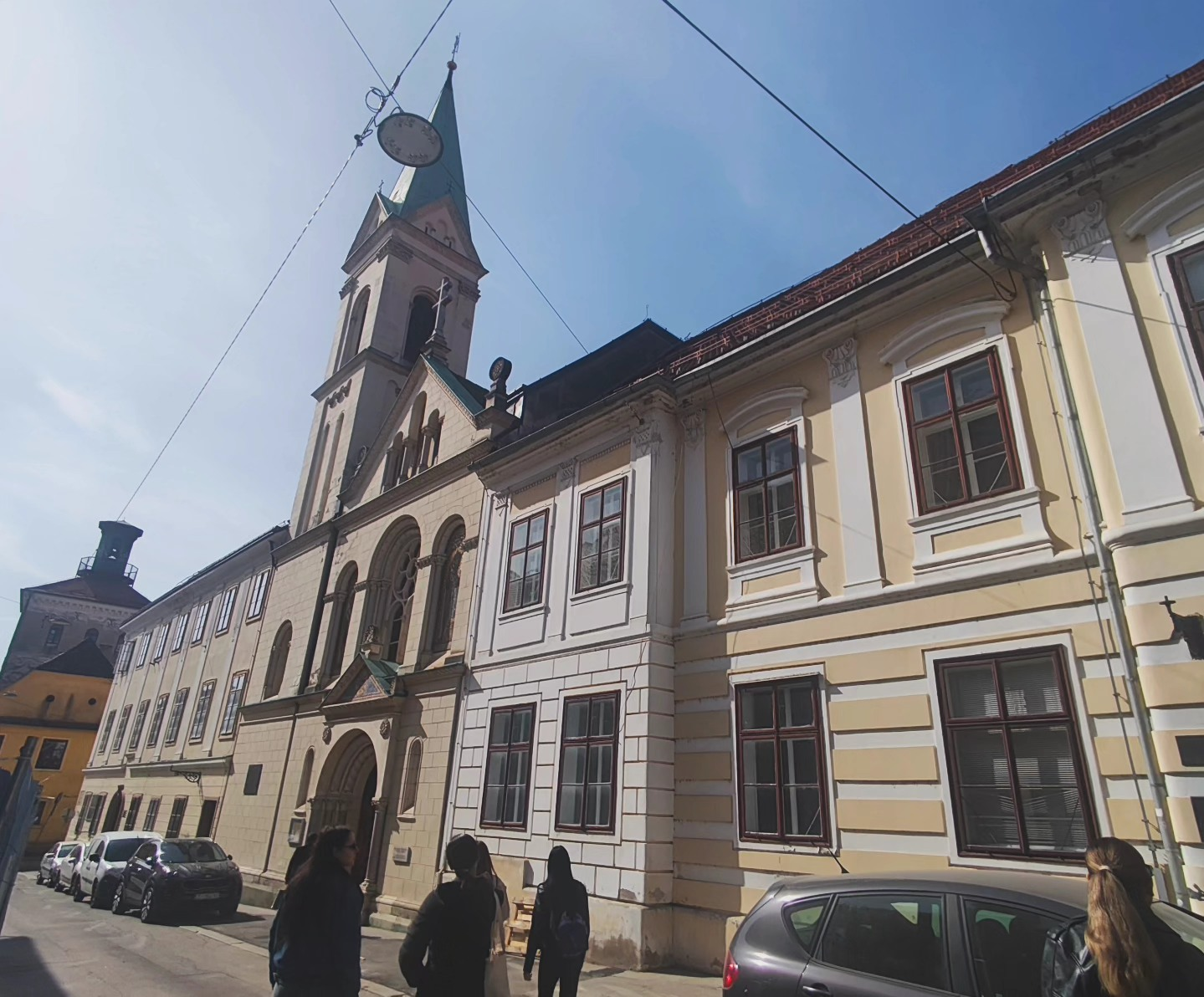
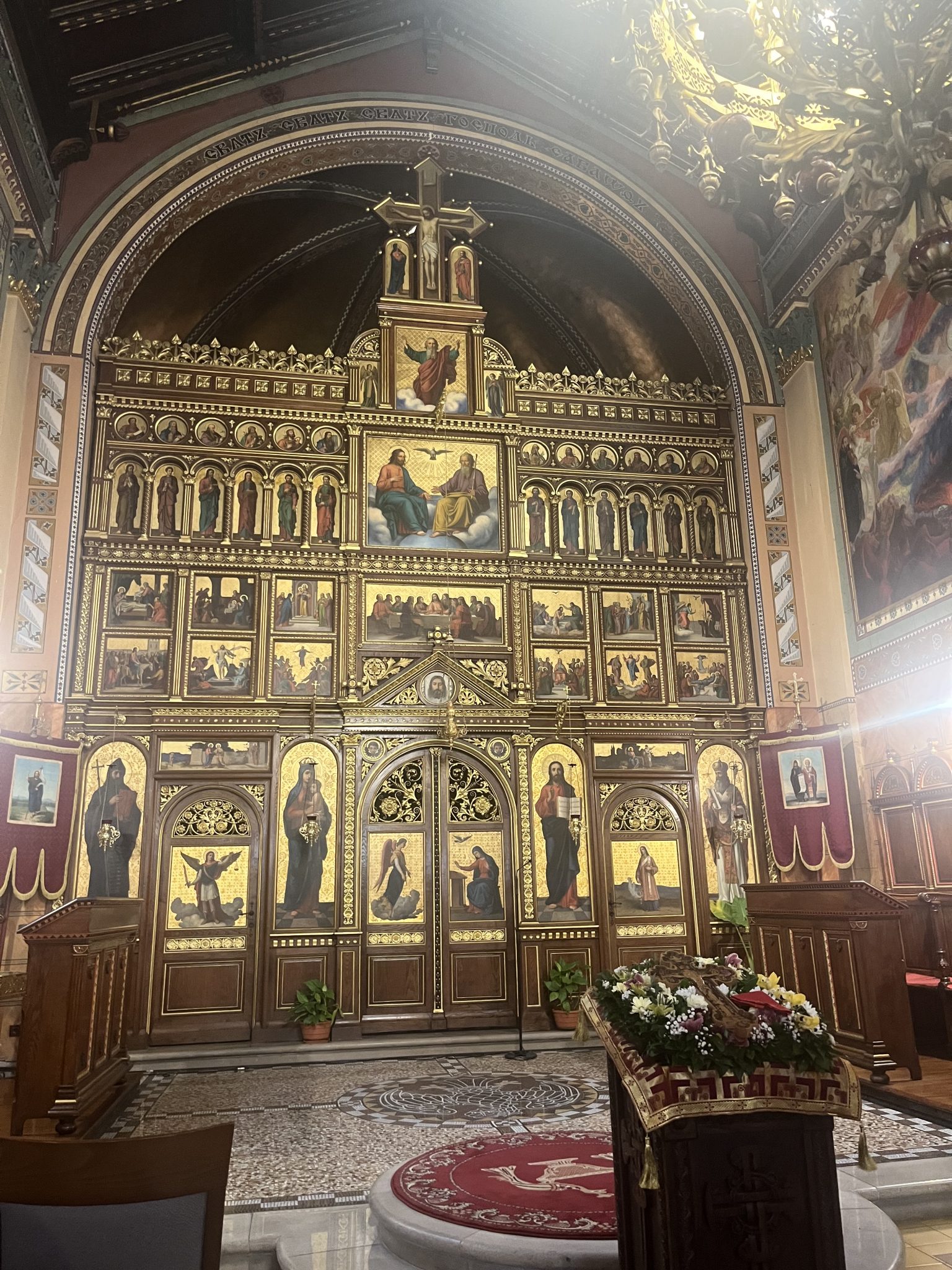
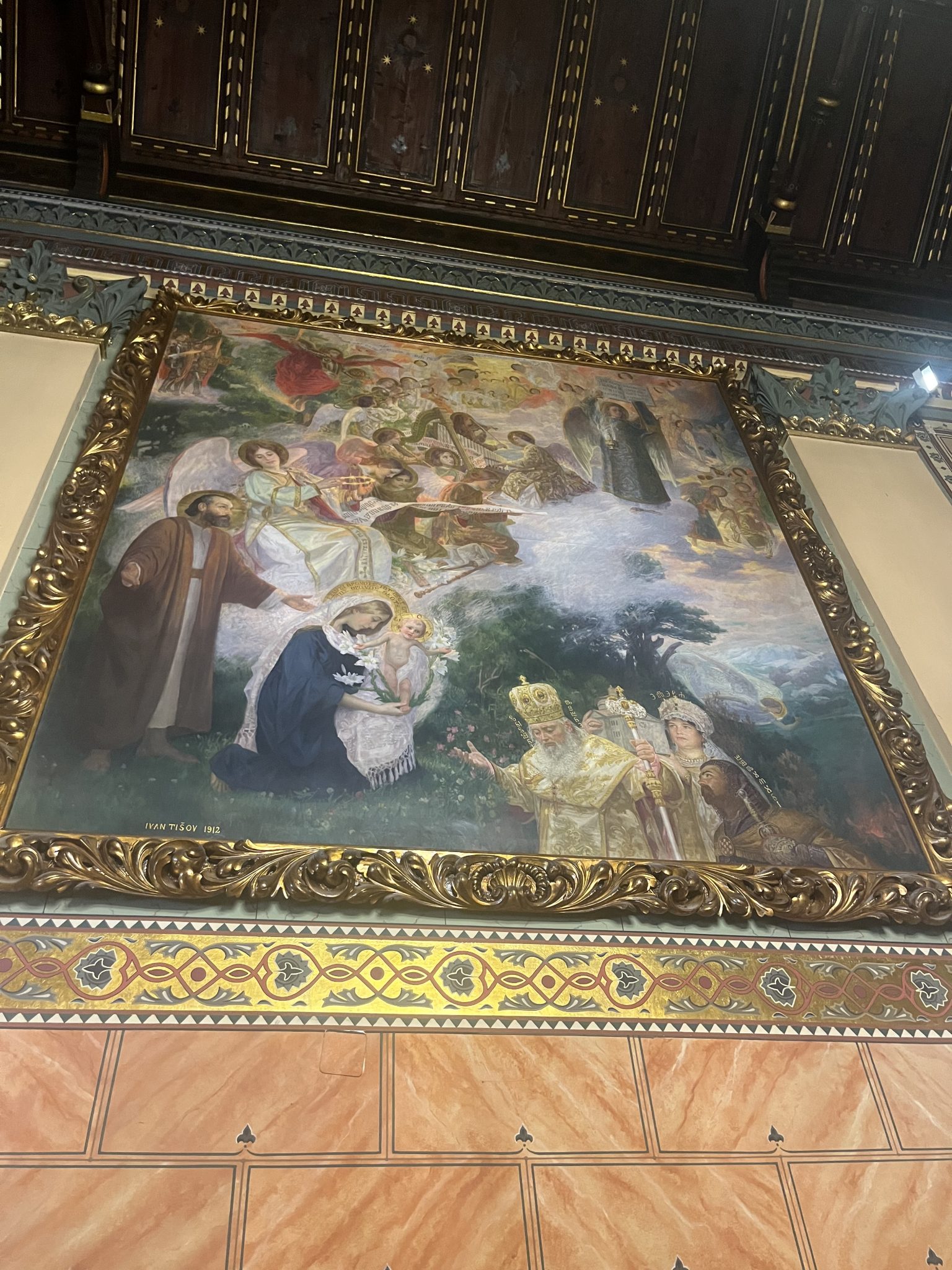
Greek Catholic Cathedral of Saints Cyril and Methodius in Zagreb
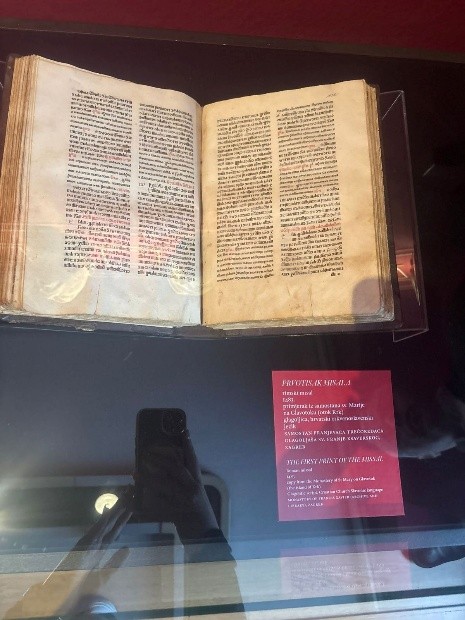
Missal by the Law of the Roman Court of 1483 (Klovićevi Dvori Gallery)
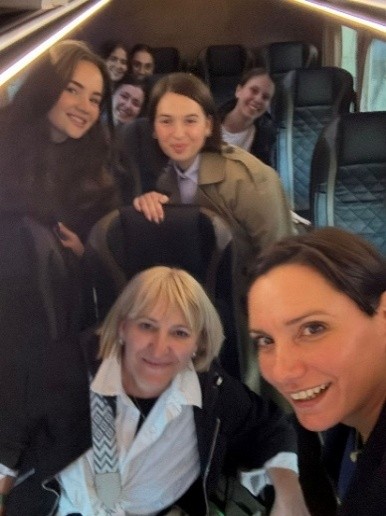
Professors and students on their way to Zagreb
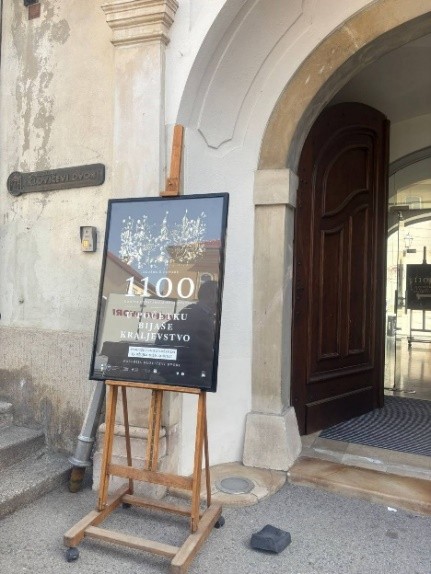 Exhibition “In the Beginning Was the Kingdom” at the Klovićevi Dvori Gallery
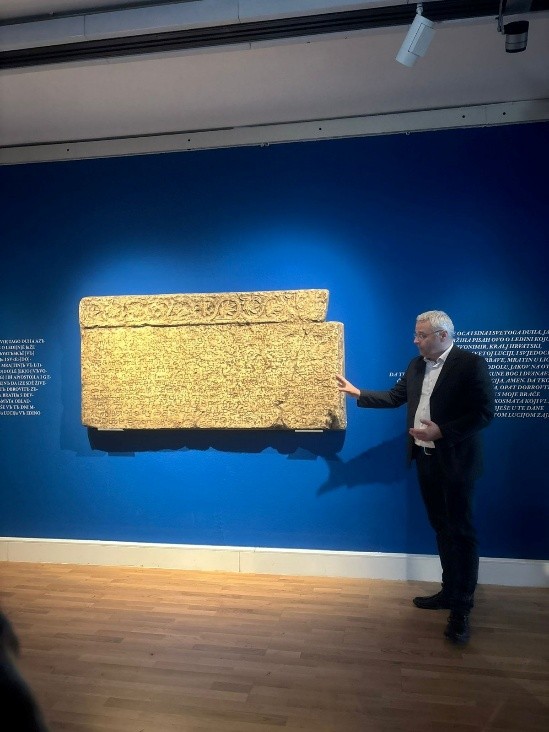
Replica of the Baška Tablet of 1100 and Professor Tomislav Galović (Klovićevi Dvori Gallery)
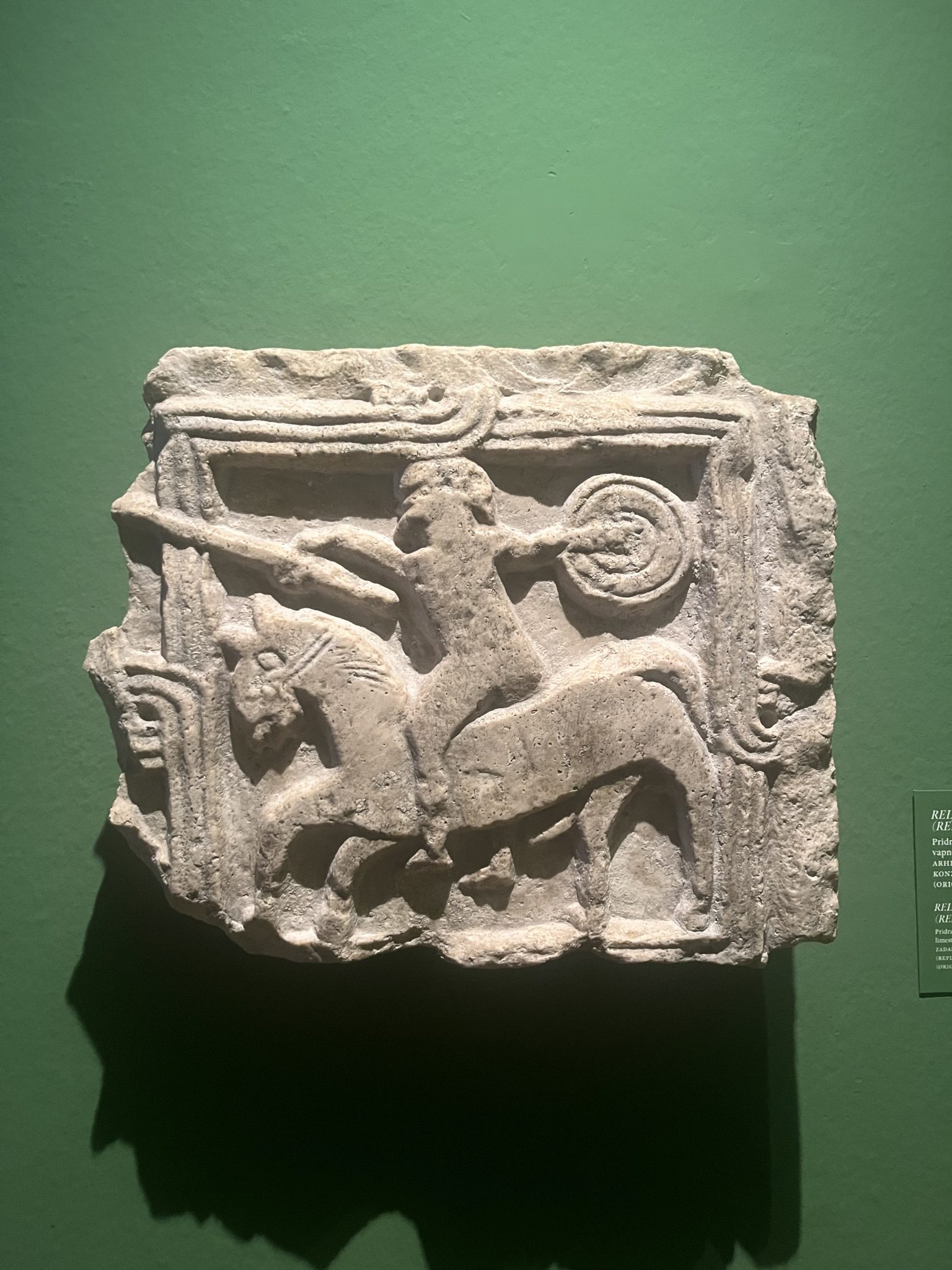
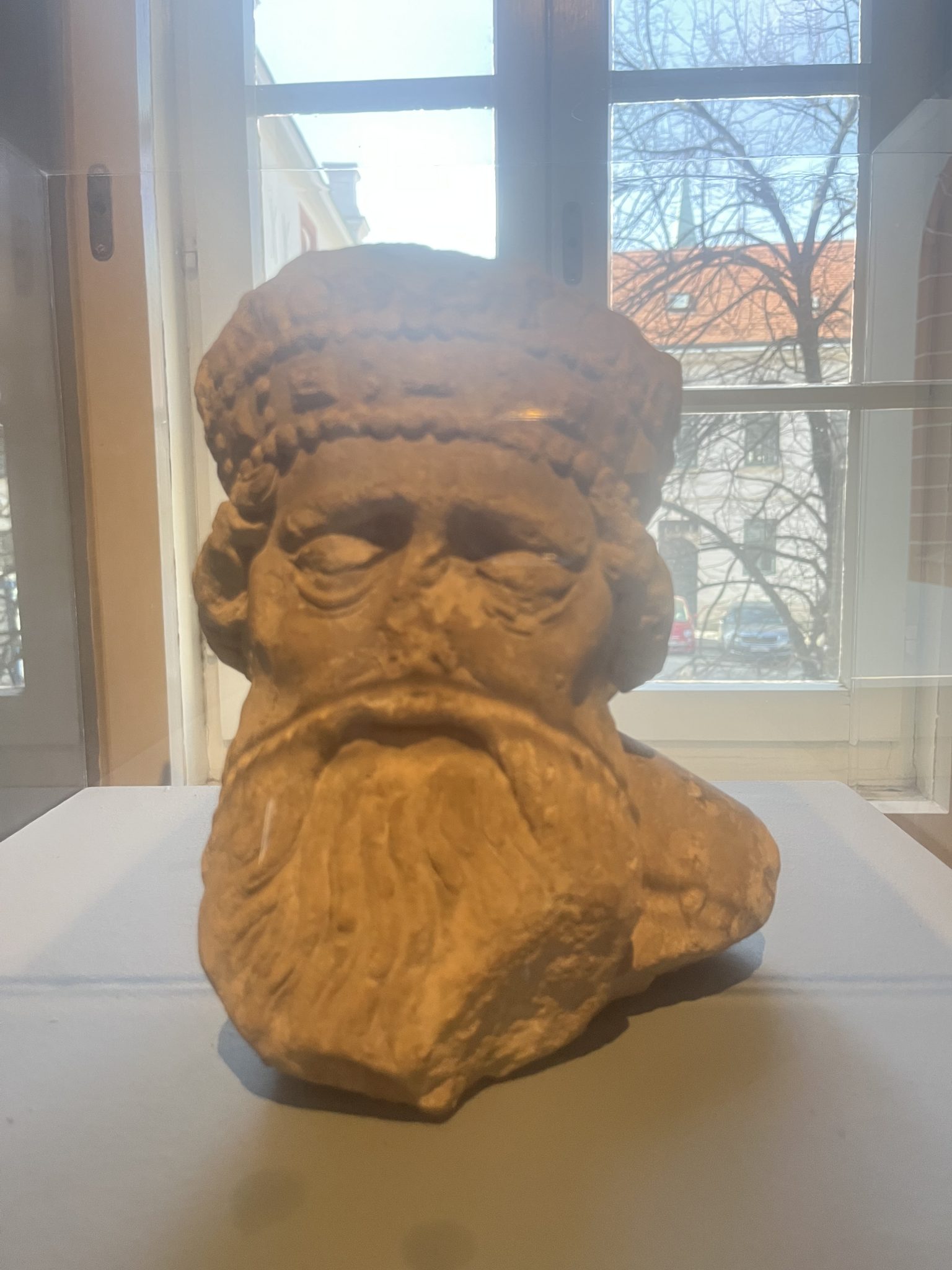
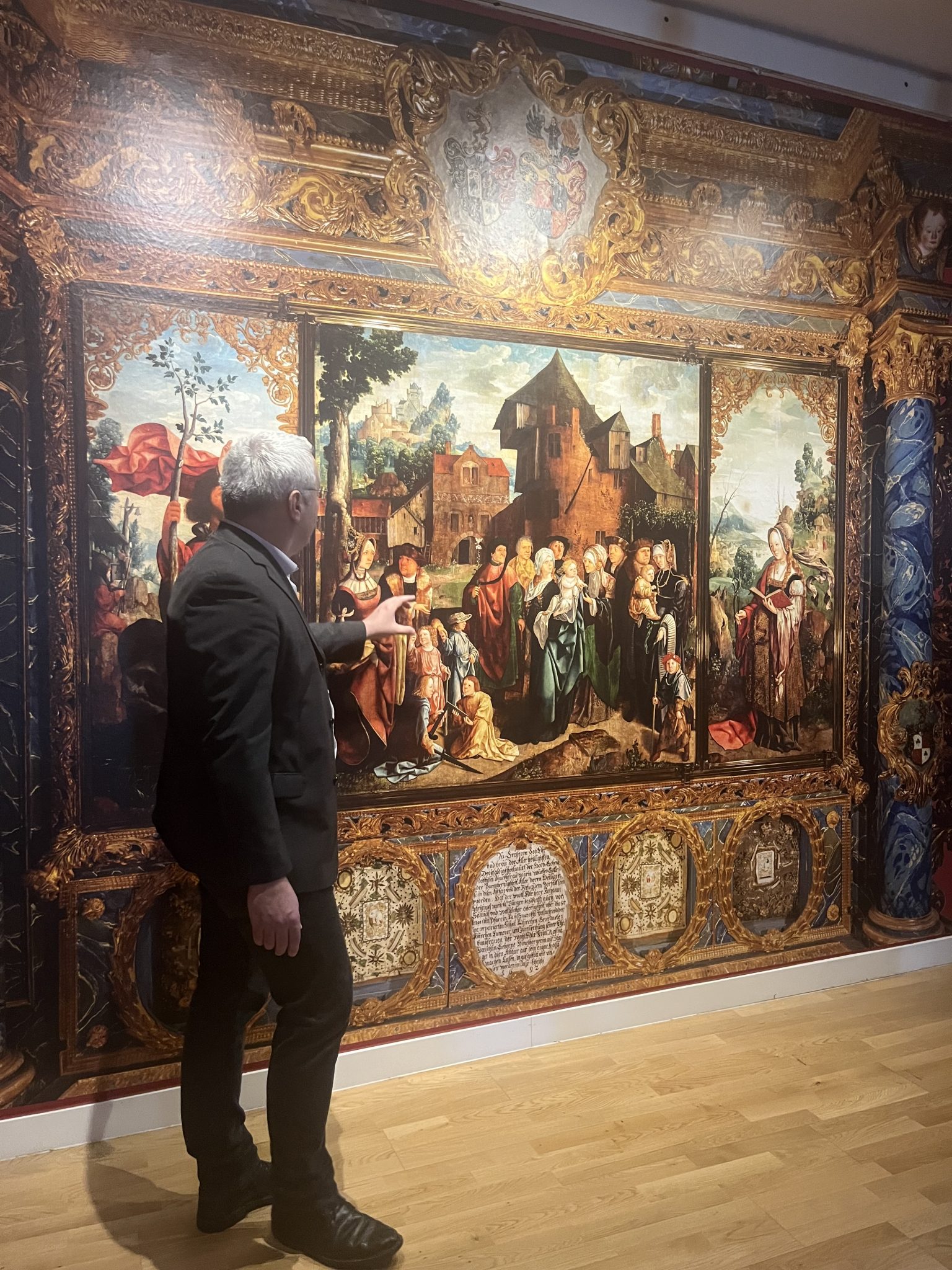
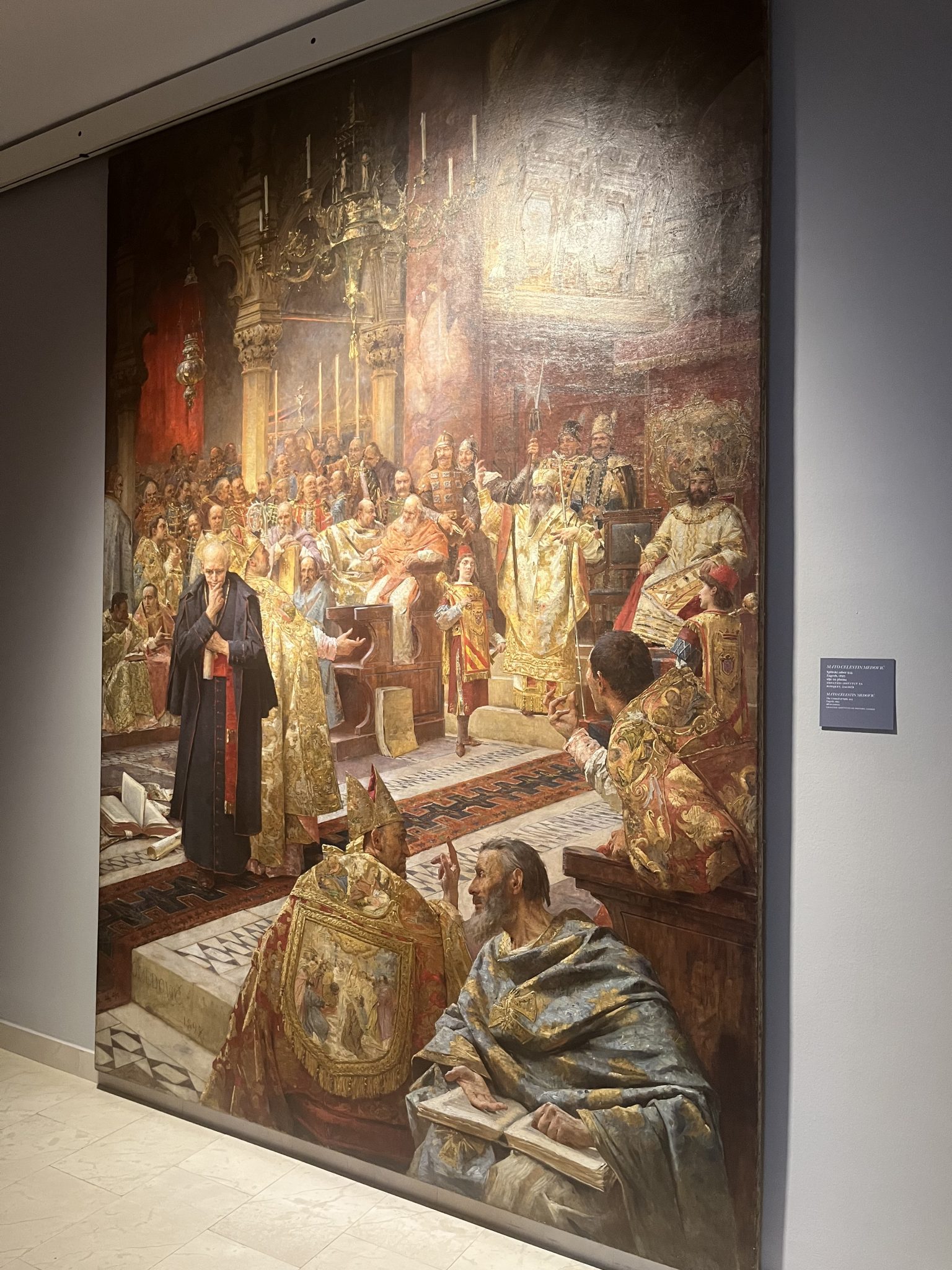
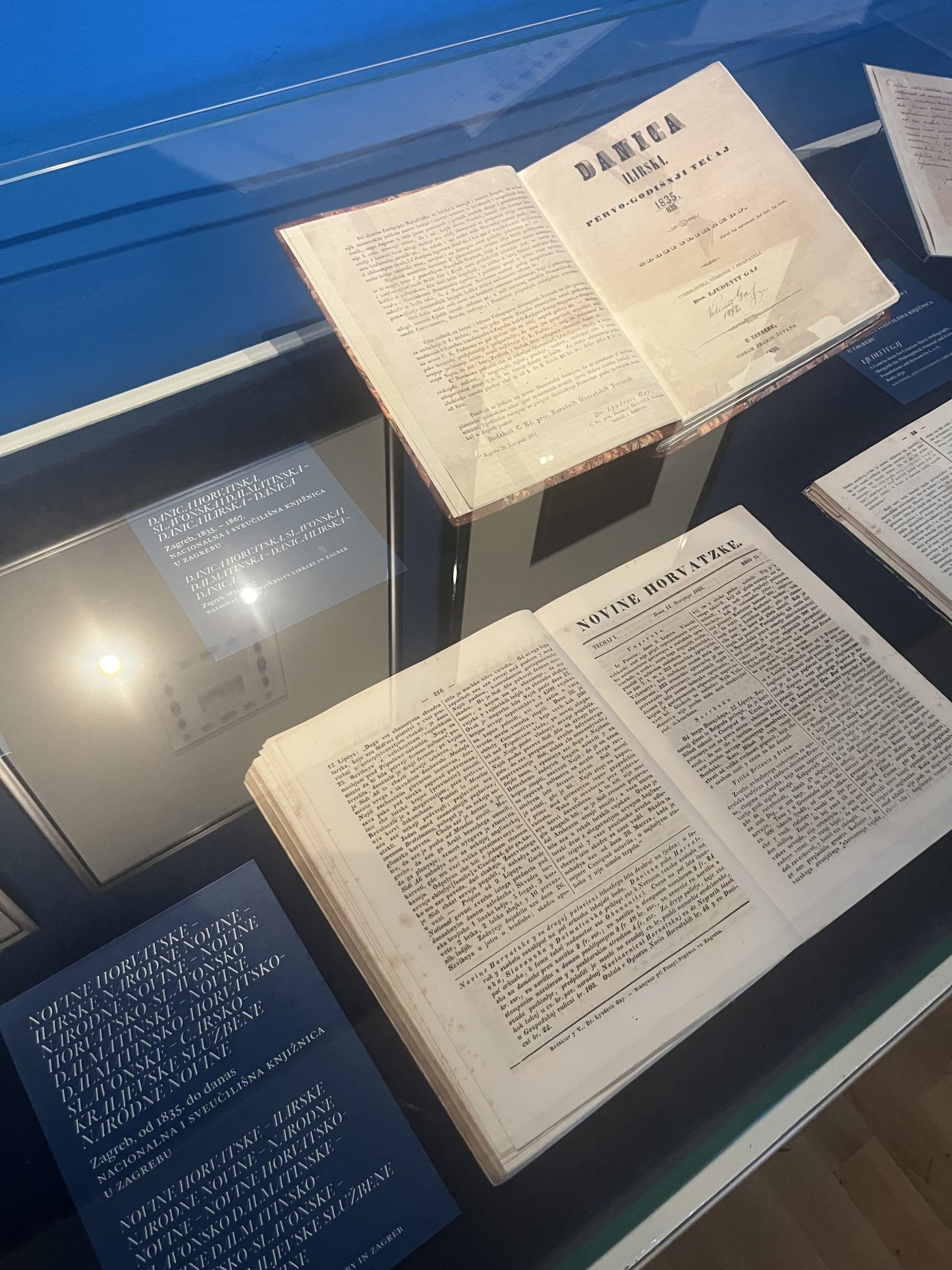
Motifs from the exhibition “In the Beginning Was the Kingdom” at the Klovićevi Dvori Gallery
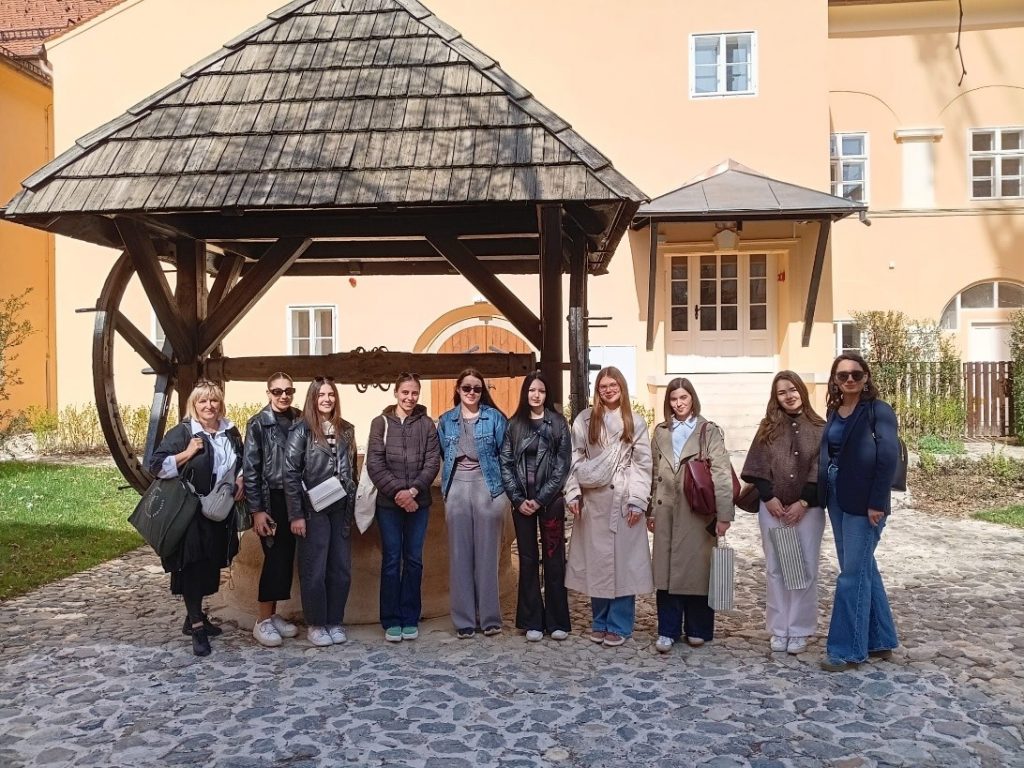
Professors and students in front of the well with a Baroque stone crown in the courtyard of the Škrlec-Balbi Palace, the permanent home of the Old Church Slavonic Institute
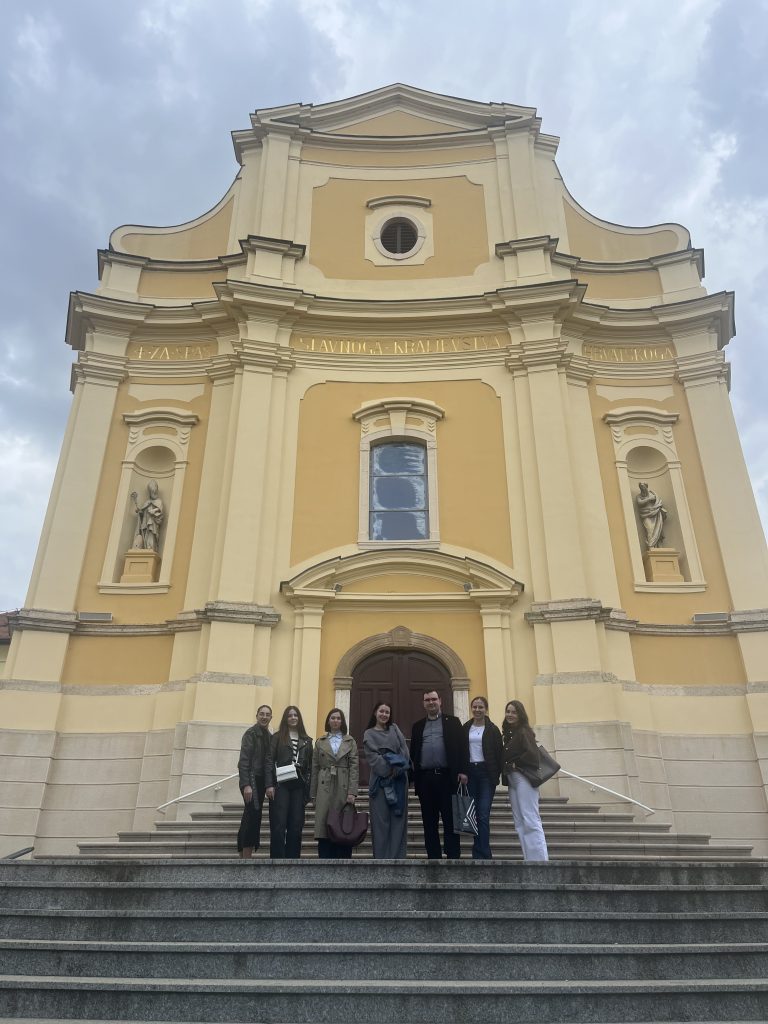
Friar Mirko Mišković and the students in front of the Church of Saint Francis Xavier
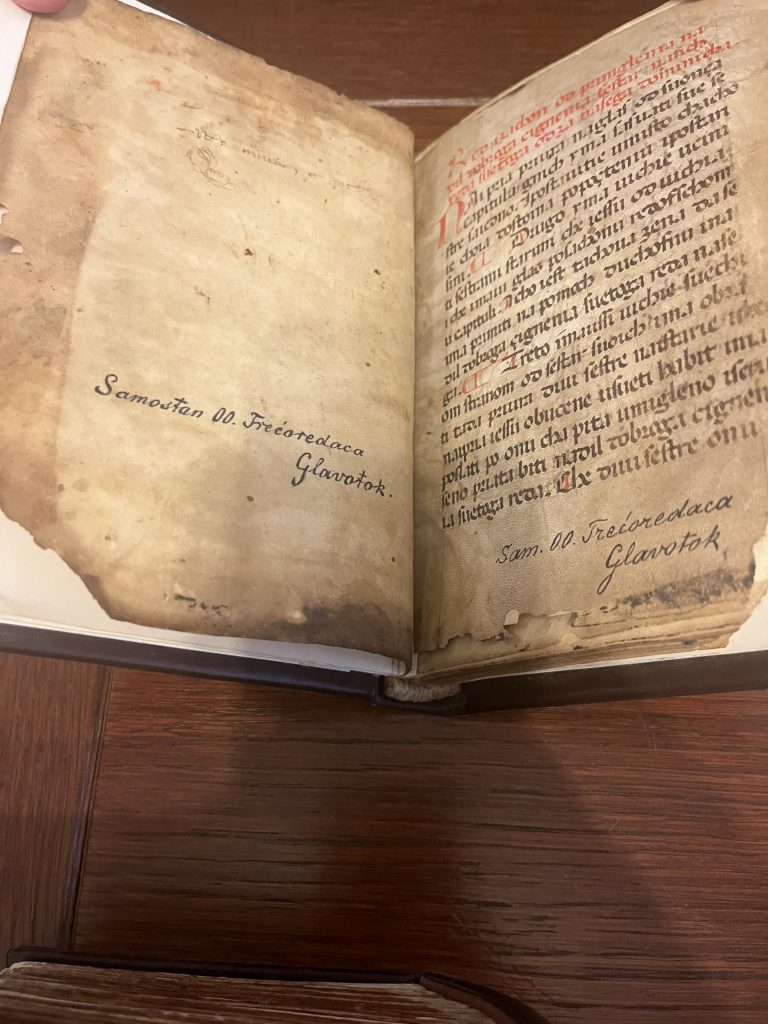
The Rule and Order of the Dominican Sisters (1345), Monastery of Saint Francis Xavier