
On 25 May 2026, a round table entitled “Just a Teacher” was held at the Faculty of Humanities and Social Sciences in Osijek. It was organised by project leader Asst. Prof. Ivana Perkušić, PhD, with the support of the organising committee. The event was held as part of the project of the same name, which seeks to systematically examine the role, position and social status of teachers in the contemporary education system. The “Just a Teacher” project was designed to open up, from a student perspective, the question of who a teacher is today, what teachers do and what it means to “be a teacher” in the context of rapid social change. Through a series of activities – an interview, a debate, workshops in secondary schools and a podcast – students connected theoretical knowledge with concrete experiences from school practice, while developing communication, research and argumentation skills and strengthening cooperation between the Faculty and schools.
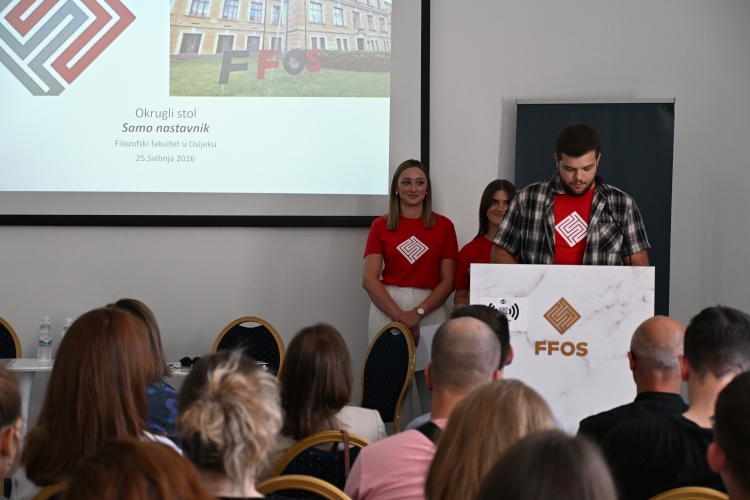
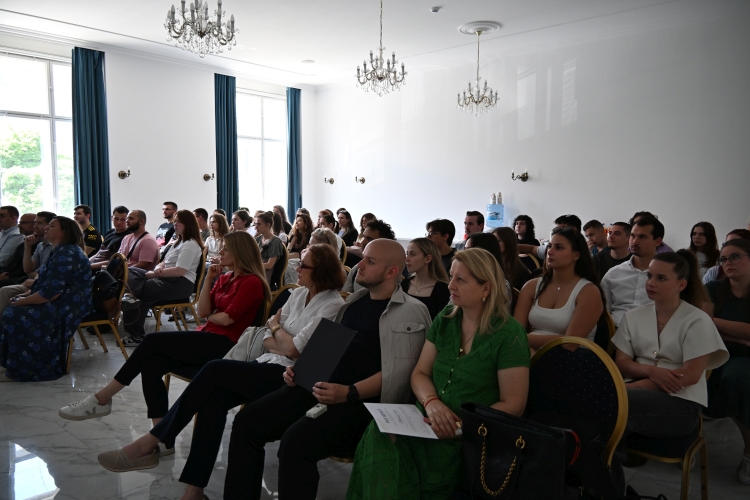
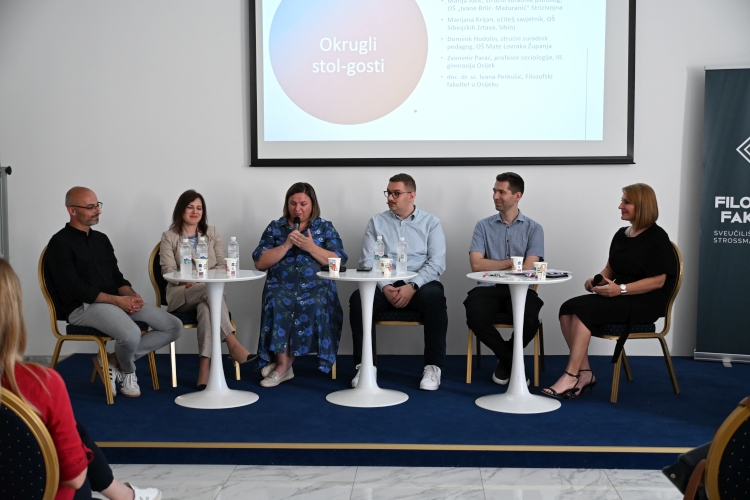
The round table was moderated by sociology students Fran Kolenić, Vlera Temaj and Marijana Vincetić. The discussion included Marijana Krijan, teacher adviser at Sibinjske žrtve Primary School in Sibinj; Ivan Čelebić, Headteacher of the First Grammar School in Osijek; Zvonimir Parać, sociology teacher at the Third Grammar School in Osijek; Marija Jurić, school psychologist at Ivana Brlić-Mažuranić Primary School in Strizivojna; Dominik Hudolin, school pedagogue at Mate Lovrak Primary School in Županja; and Asst. Prof. Ivana Perkušić, PhD, from the Faculty of Humanities and Social Sciences in Osijek. The discussion was structured around several thematic areas covering key issues related to the teaching profession: the meaning of the teaching vocation, the relationship between parents and schools, changes in the perception of teachers as figures of authority, and the social perception and public discourse surrounding teachers. From the perspectives of different professional roles – headteachers, teachers, school support professionals and secondary school teachers – the participants analysed how changing relationships with parents and students, as well as the way teachers are discussed in public, affect teachers’ professional identity, mental health and motivation, and influence young people’s decisions to pursue a teaching career.
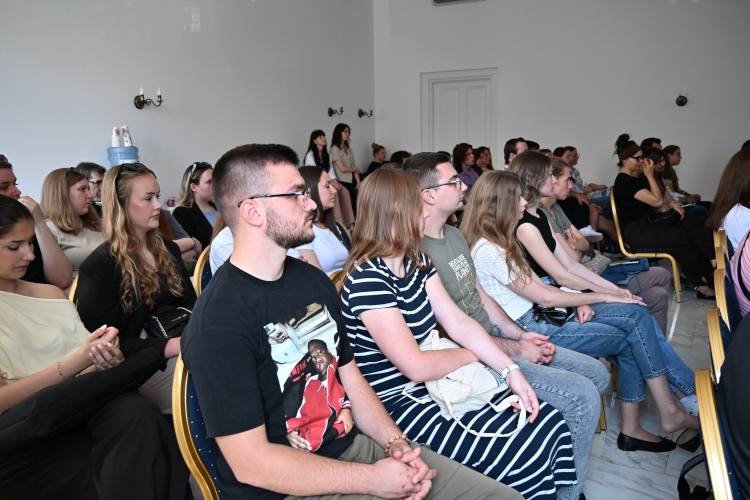
The “Just a Teacher” round table confirmed the importance of creating professional and public space for discussion about the teaching profession, especially at a time when teachers are expected to teach, provide educational support, perform emotional labour and adapt to complex social circumstances at the same time. In this way, the “Just a Teacher” project further highlighted that a teacher is not “just” a teacher, but a key stakeholder in the educational process and an important contributor to society’s future.