
Organised by the Faculty of Humanities and Social Sciences at Josip Juraj Strossmayer University of Osijek and the Doctoral Programme in Modern and Contemporary Croatian History in a European and Global Context at the Faculty of Humanities and Social Sciences, University of Zagreb, the second Sociohistorical Workshop, entitled “Why Theory?”, was held on 23 May 2026. This year’s workshop examined the extent to which a theoretical framework is necessary for historical research and how it influences the formulation of research questions and the interpretation of historical sources.
At the beginning of the programme, Asst. Prof. Luka Pejić, PhD, welcomed the participants and emphasised that the aim of the Sociohistorical Workshop was to create an institutional platform for young historians interested in social history. He highlighted the importance of presenting current research, networking and exchanging research experiences among young historians, particularly noting that this year, thanks to the co-organisation, the workshop had moved beyond its local scope and included doctoral students from other universities. He especially stressed the importance of theoretical literacy among historians for producing high-quality historiographical work. As Chair of the Programme and Organising Committee, he also thanked his colleagues Valentina Kezić, MA, Franka Maslov, MA, Nikola Tomašegović, PhD, and Veronika Završki, MA.
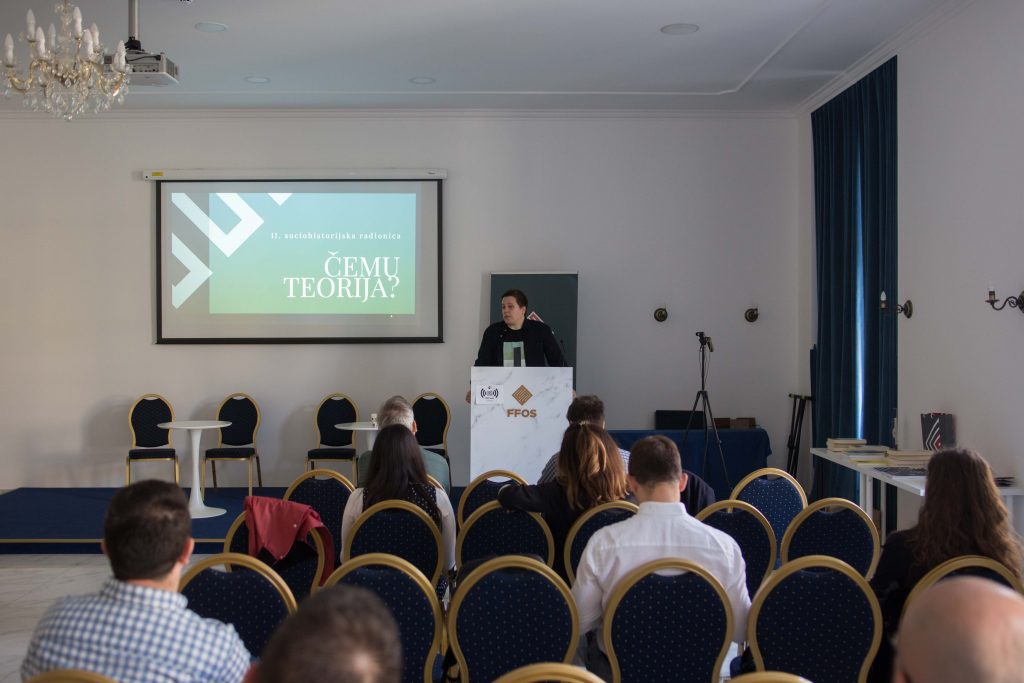
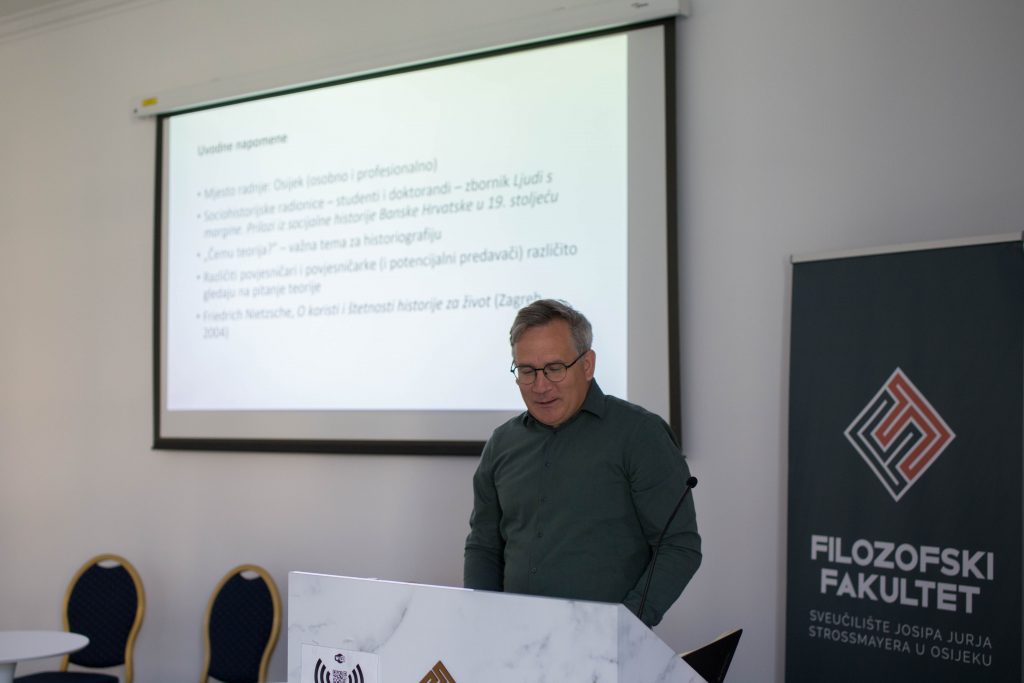
The workshop opened with a keynote lecture by Assoc. Prof. Branimir Janković, PhD, from the Faculty of Humanities and Social Sciences in Zagreb, entitled “On the Uses and Disadvantages of Theory for the Life of a Historian”. The lecture provided a valuable introduction to the theoretical and methodological issues that were further explored throughout the workshop. The keynote was followed by a highly engaging discussion on the state of contemporary Croatian and regional historiography.
The programme was divided into three thematic sessions. In the first session, Franka Maslov presented the theoretical and methodological approaches used in her doctoral research on male and female homosexuality in Croatian society from the late nineteenth to the early twentieth century. Doctoral student Marko Kolić discussed gender history through the study of the role and position of women in medicine in Croatia between the two world wars, while Perica Vujić presented on the language of historiographical discourse using history textbook discourse as an example.
The second session opened with Nina Gagulić’s presentation on the theory and methodology of oral history and contemporary perspectives and challenges associated with this research method. Doctoral student Dora Tomljanović examined the issue of economic nationalism “from below”, while Martin Zelić used the example of the Croatian National Theatre in Osijek during the First World War to illustrate the theoretical and methodological challenges of new cultural history.
In the final session, Rebeka Puhalo discussed the role of theory in military history research, using the 761st Tank Battalion during the Second World War as an example. Ilija Šušak emphasised the necessity of interdisciplinarity in contemporary historical scholarship, while Luka Vrbanić concluded the workshop with a presentation devoted to the archival arrangement of records and the role of archivists in shaping future historiography and collective memory.
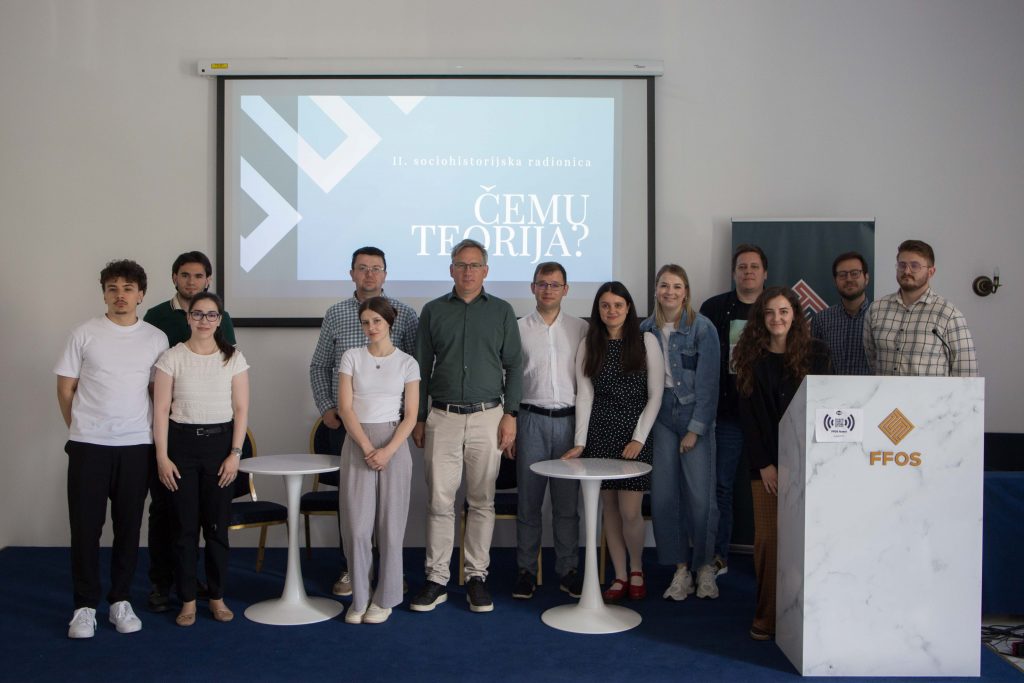
Each session was followed by a discussion during which participants and members of the audience asked questions, shared comments and exchanged research experiences, further contributing to the workshop’s central purpose.
Through a diverse range of presentations and stimulating discussions, the workshop once again raised important questions concerning established theoretical and methodological models and historiographical paradigms. Ultimately, the latest edition of the Sociohistorical Workshop reaffirmed the essential role of theoretical literacy and constructive discussion in producing high-quality historical scholarship.
Text: Lana Trabak
Photographs: Danijel Jelaš