
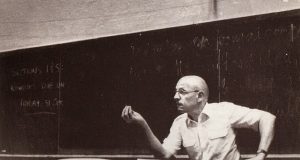
 “The space in which we live, which draws us out of ourselves, in which the erosion of our lives, our time and our history takes place, the space that wears us down and consumes us, is itself heterogeneous. In other words, we do not live in some kind of void within which individuals and things may be located. We do not live inside a void coloured by various shades of light; we live within a set of relations that define sites which are irreducible to one another and absolutely cannot be superimposed upon one another.” (M. Foucault)
EVENTS
28 April 2026
Comrade Katarina in Conversation with EstLab
 How and why is capitalism destructive? Is capitalism merely a particular socio-economic-political regime, or is it perhaps a “religion” (W. Benjamin)? And finally… when will we (and will we ever) witness the “end of capitalism”?
These questions – along with many others – were raised during that afternoon in Room 54 at FFOS. Why? Naturally, because the guest of the cooperative known as EstLab was Katarina Peović! This remarkable woman, a member of Radnička Fronta as well as the band FRONTA, and a professor of Cultural Studies in Rijeka… simply, Comrade Kate… spoke with philosophy students, visitors from Osijek, and the author of these lines.
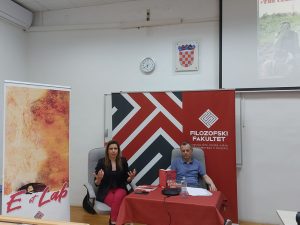 Can material analysis be returned to the public sphere? Why should the proletariat establish itself as a nation? What is “protagonistic democracy”? Through inspiring articulations, Katarina attempted – to the best of her ability – to respond to the numerous controversies of the world we inhabit. Furthermore, the conversation inevitably touched upon the neuralgic point of “Our Beautiful Homeland”… namely, the inability to articulate “left-wing thought” in Croatia. No, our people are not stupid(?); rather, the structural necessity of the power of Capital makes it appear unavoidable. (However, one cannot excuse the total lack of awareness and the political responsibility of political elites in the EU and Croatia regarding the condemnation of the genocide against Palestinians, for example.)
Ultimately, the questions of LABOUR and SOLIDARITY emerged as crucial. Let us become aware and finally “awaken” from this “nightmare weighing on the brains of the living” (Marx)! Una mattina mi son svegliato… https://www.youtube.com/watch?v=oZfuAUyCU90 and https://www.youtube.com/watch?v=dMqiw4Ibo_s
mk
Recording of the event: EstLab – The End of Capitalism? – guest Katarina Peović
21 May 2024
EstLab Colloquium – The Right of Death and Power over Life
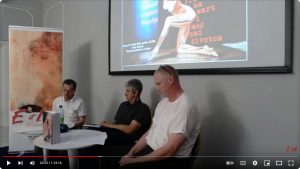 As with everything else that remains even remotely meaningful today, the question of “life and death” remains a neuralgic one. This also applies to philosophy itself. What is the condition of its survival? Where lies the thin boundary of its continued existence… once again, its life and death? The philosopher who most persistently dealt with this question was certainly Michel FOUCAULT. The concluding text of the first volume of his planned six-volume work, provocatively entitled The History of Sexuality – The Will to Knowledge (1976), bears the title “Right of Death and Power over Life”. Here, Foucault exposes a permanent secret of modernity. It is the mystery of the relationship between knowledge and power. How is the contemporary capitalist world structured? The “archaeology of knowledge” develops into a distinctive “genealogy of power”, while the administration of life becomes the fundamental means of subjugating individuals exposed to technologies of knowledge and strategies of power. Toward the end of his life, Foucault attempted to find “salvation” from this through the hermeneutics of the “care of the self” (epimeleia heautou). After brutal sovereign power – most graphically and drastically described at the beginning of his book Discipline and Punish (1975) – the body is increasingly less subjected to cruel punishment and killing and increasingly… disciplined. It becomes the object of Capital’s “care” for a workforce that is healthy and compliant with the production process. Foucault also raises the entire subject to the level of the so-called history of sexuality. Power over life – at least since the 18th century – develops in two directions. The first is the so-called “anatomo-politics of the human body”, which becomes a murderous death machine (or a war machine, as Gilles Deleuze and Félix Guattari would later call it). The second is the “biopolitics of the population”, regulating the hygiene of populations. And not only that… also “at play” here are demography, housing policy, health policy and epidemiology – the science of the “proper shaping of the social body”. The path from sovereign power – governed by the principle “Make die and let live” – through the disciplining of bodies within enclosed spaces – schools, factories, hospitals, barracks… and the prison itself – culminates in biopower as the driving force of contemporary capitalism. Its principle, therefore, is “Make live and… let die”. What does Foucault tell us about all this? What is the power of LIFE as RESISTANCE? And where can we find the “strength of resistance/rebellion of life against the power seeking to control it”? What place remains for LIFE within the all-encompassing biopolitics of today’s war machine? Furthermore, how did the “symbolics of blood” transform into an “analytics of sexuality”, as the fundamental apparatus of surveillance over individual life within “networked societies of control” (Deleuze)? THE RIGHT TO LIFE… Can human beings still be what they are (Who They Are!) beyond all oppression and alienation? Is the “law of the sword” the fateful and unavoidable destiny of the individual, both in Foucault’s time and today? Do we still possess any power to resist that – power? We attempted to answer these and other questions at the EstLab academic colloquium held on Tuesday, 21 May, from 6:30 p.m. at the Faculty of Humanities and Social Sciences in Osijek. Alongside EstLab members – Marijan Krivak, Željko Senković, Daniel Horvat, Mislav Uzunić and Boris Bosančić – philosophy students from our Faculty also joined us at the event. mk
16 April 2024
EstLab Forum: What Is the Post-Marxist Condition, or… What Is Theory For?
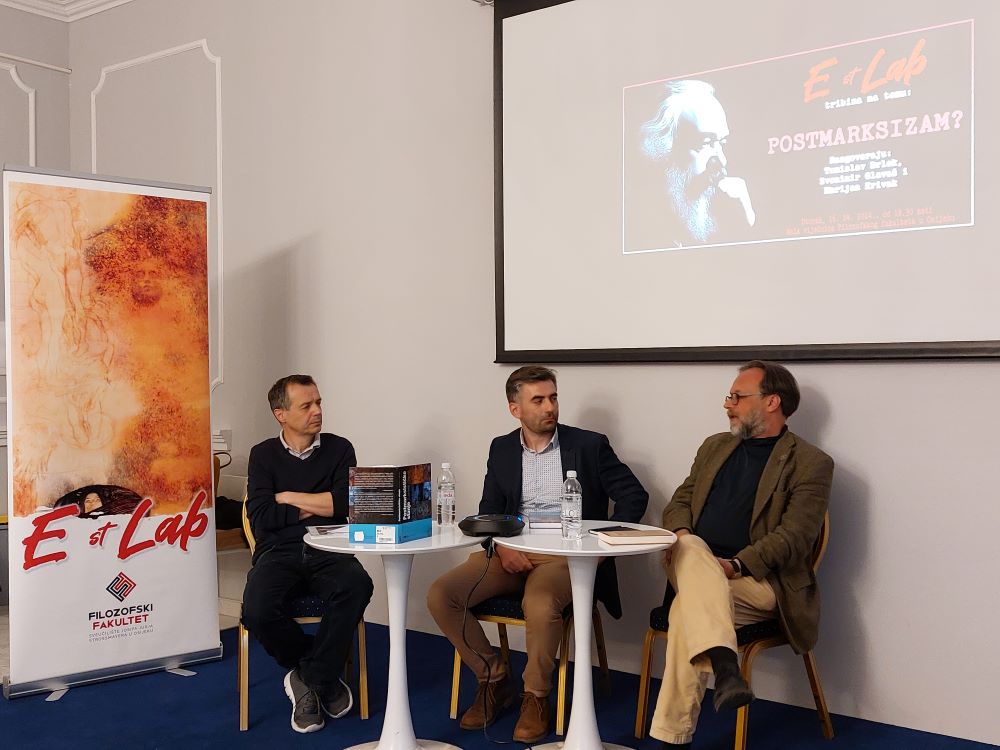 The Aesthetic Laboratory of FFOS (the well-known EstLab) marked three years of continuous activities and initiatives concerning books, film, music and… philosophy. And it did so, in its own spirit, in the best possible way! Its jubilee 50th event was held on Tuesday, 16 April 2024, in the nearly full Room 39 at FFOS. Our guest was the “post-Marxist condition”. Joining us from Zagreb were the author of the book of the same title – who was, incidentally, once “our student in Osijek” – Zvonimir Glavaš, as well as the renowned literary theorist and historian Tomislav Brlek. In conversation with the author of these lines, numerous topics related to literary theory and political theory were discussed, all within the context of a theme that has been present in the humanities for more than a quarter of a century – post-Marxism.
First, the question arose as to what the so-called “theory” (Why Theory?) means today, following the declaratively proclaimed “end of philosophy”. Theory – both in literary and political terms – responds to many neuralgic questions that keep the very “matter of thinking” (Heidegger) alive. Following its initial “appearance” in the classic Laclau-Mouffe volume Hegemony and Socialist Strategy (1985), post-Marxism established itself as a cultural phenomenon through two books by Stuart Sim (1998/2000).
Tomislav Brlek explained many of the links between various “post-isms”. Both postmodernism and poststructuralism are, in part, theoretical legacies invoked by nominal “post-Marxists”. The author of The Post-Marxist Condition, Zvonimir Glavaš, explained his motivation for writing the book (which is itself the published version of his dissertation). Through the conversation among the three speakers, examples of some of the most important literary-political theories were brought into focus, especially those of the most significant French philosophers of the second half of the 20th century.
The discussion addressed Jacques Rancière and his phrase “zoon politikon as a literary animal”; Deleuze and Guattari’s famous book on Kafka and minor literature was also discussed, while the provocative work Specters of Marx (1993) by Derrida represented a kind of “crescendo” of the entire debate. This book – somewhat heretical in relation to Marxist orthodoxy – interpretatively elevated the entire issue of “post-Marxism” to the highest achievements of so-called “deconstruction”. Derrida’s idea of justice as the only human category that cannot be deconstructed is deeply inspired by the spirit/spectre of Marx’s thought. As, incidentally, was the music of the band GANG OF FOUR, which framed the entire event in a danceable yet intelligent way! mk
6 June 2023
Postscript on the Societies of Control by Gilles Deleuze
“Perhaps one day, this century will be known as Deleuzian,” Michel Foucault wrote in his Theatrum Philosophicum, to which Gilles Deleuze characteristically responded by saying that it was “a joke meant to make people like us laugh and make everyone else turn pale”. When we speak with Foucault and Deleuze today, we most often do so by identifying the transition from historical “disciplinary societies” to the so-called “society of control”. According to Deleuze, the general crisis affecting all enclosed environments – the prison, hospital, army, factory, school and family – produced a new historical constellation. What is the so-called “society of control” (la société de contrôle)? It is something arising from the general reorientation from an analogue experience of reality toward the digital. It is also a consequence of the disappearance of social relations and the transition to the paradigm of so-called “communication networks”. For what constitutes the “new spirit of Capitalism”? … A Kafkaesque Metamorphosis into the “Demon of the Corporation as Network”. According to Deleuze, the contemporaneity we inhabit can be described as an “entropic order of networked societies of control”. Yet this is something Étienne de La Boétie, much earlier, would call… “voluntary servitude”. “Many young people strangely boast of being ‘motivated’; they ask for more training and permanent education.” This is obvious to anyone who today attempts to revive some traditional forms of teaching ex cathedra. They encounter a “wall” of incomprehension, indeed, of “dullness”. Nevertheless, Deleuze’s 1990 text, Postscript on the Societies of Control – which received the attention it deserved only after its English translation in 1992 – concludes on a different note. It concerns the evident “task of thinking” with which the aforementioned “young people” might be confronted. Thus: “It is up to them to discover what they are being made to serve, just as their elders discovered, not without difficulty, the telos of discipline. The coils of a serpent are even more complex than the burrows of a mole.” Moles, serpents… what is this about? We attempted to answer this and several other questions in a student seminar, assisted and moderated by EstLab members Boško Pešić, Adrian Buček and Marijan Krivak, with a special guest appearance by Dario Vuger. mk
18 April 2023
Our Everyday “Transition” – EstLab Conversation with Hajrudin Hromadžić
YouTube recording of the event: https://youtu.be/fD0XI6TM48Y
 What is TRANSITION? Why does it still make sense to speak of this phenomenon belonging to the vocabulary of the “semi-peripheral” countries of “our” part of Europe and its civilisational culture? After all, WE here in Croatia have achieved major (magnificent!) accomplishments: accession to the European Union, membership in NATO, and finally entry into the euro area. Yet we still remain in a certain form of “transition”. Why?
These questions, along with many others, were addressed by the guest of the Aesthetic Laboratory at FFOS, Head of the Department of Cultural Studies at the Faculty of Humanities and Social Sciences in Rijeka, Hajrudin Hromadžić, at our relocated “Agora”, before numerous students and a handful of colleagues. Through the conversation between the author of these lines and the guest – conducted in a friendly, yet no less instructive and provocative atmosphere – many local “taboo topics” were “opened”. Following a short introduction to Hromadžić’s operative concept of “culture”, numerous concepts that tend to remain tacitly suppressed in this environment were addressed. All of them were published last year in the book entitled LEKSIKON TRANZICIJE (Lexicon of Transition) (Disput, Zagreb, 2022).
The discussion began – thanks to a fortunate alphabetical coincidence! – with the concept of ANTIFASCISM. Indeed, the entire Lexicon is in a certain sense driven by an engagement with it. It immediately became apparent that what is considered part of a civilised order – a world founded upon modern Enlightenment achievements – is not necessarily something entirely plausible in the territories of the former Yugoslavia, including “Our Beautiful Homeland”. HH suggestively reactivated the legacy of Antifascism, as well as that of so-called TITOISM. The author revealed that, as part of his methodological decision, he placed these terms within the same conceptual framework as what is called the “Enlightenment”. And that is something still worth fighting for! Especially in the local environments of the former state, where historical revisionism prevails and where fascistic tendencies and relics of a dark past are latently encouraged – even by governing structures.
In a somewhat “more relaxed” atmosphere, terms closer to the spirit of our times were also discussed. These included INFLUENCER, SELFIE and EVENT, while particular humour accompanied the discussion of interesting ideological-media constructs such as UHLJEB. Finally, the very “peak” of this “event” (not an “Event”!) was the discussion of FOOTBALL as one of the foundational elements of the local hyper-emotional, almost religiously understood concept of – Statehood. “Football” among Croats is much more than a game; it is a kind of sacred object of identification.
The conversation between HH and the author of these lines was followed by numerous questions revealing great interest in the book LEKSIKON TRANZICIJE, as well as in the author’s views. The subjects ranged from religion and war veterans to the ideological construct of the WEST! This was another in a series of intellectually engaged “events” organised by EstLab. And we, the undersigned, remain convinced that this is the final line of defence protecting the reliquiae reliquiarum of the HUMANITIES, still present only in traces. Dixi et salvavi animam meam!
mk
19 January 2023
Thinking and Listening: Hērakleitos – Parmenides – Platōn – Aristotle – guest Prof. Igor Mikecin, PhD
YouTube recording of the event: https://youtu.be/p0X2khL5laA
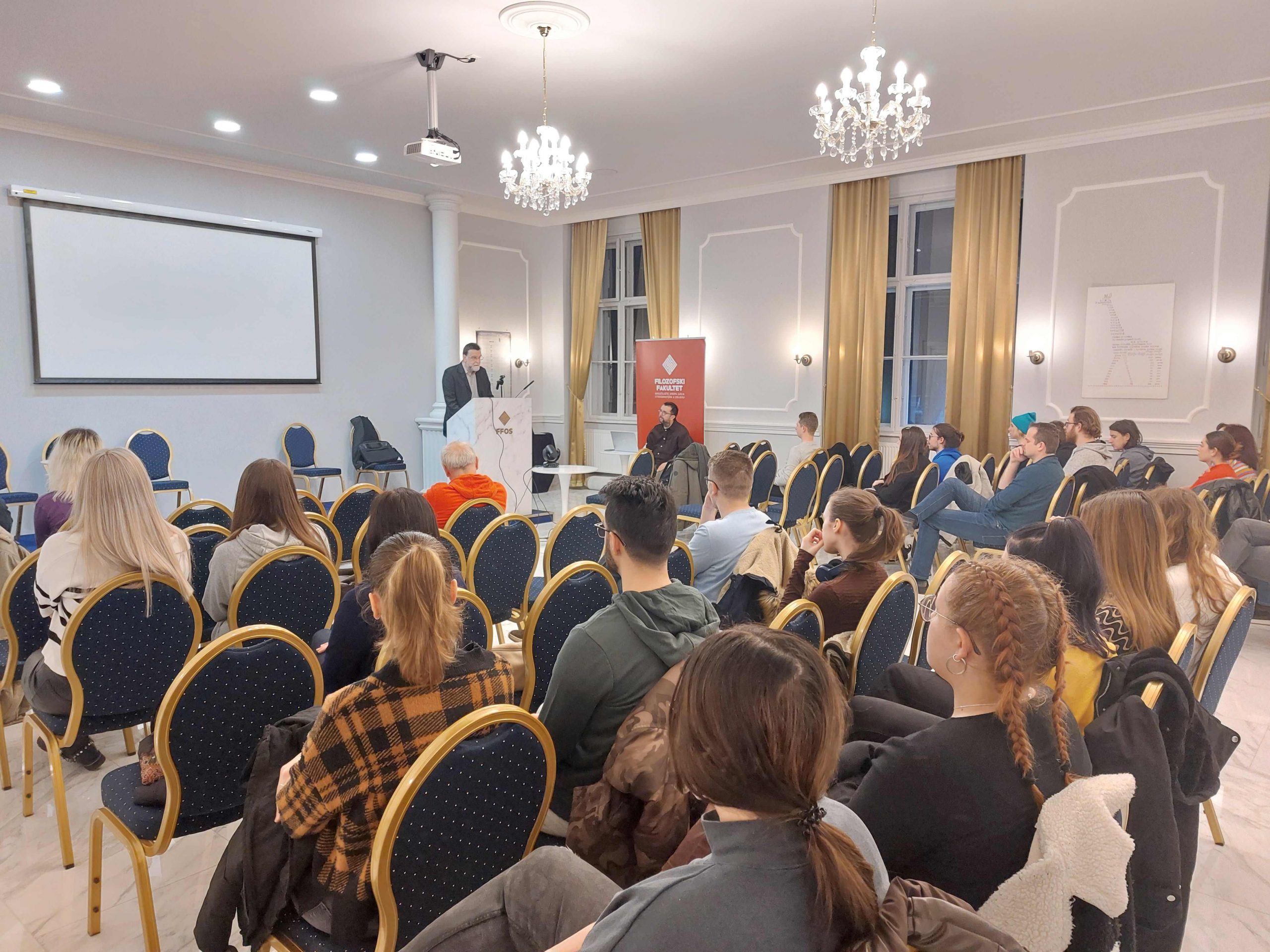 In the Small Council Hall of the Faculty of Humanities and Social Sciences in Osijek, on Thursday, 19 January 2023, Prof. Igor Mikecin, PhD, from the Department of Philosophy at the Faculty of Humanities and Social Sciences in Zagreb, delivered a guest lecture entitled Thinking and Listening: Hērakleitos – Parmenides – Platōn – Aristotle.
Within the inherited philosophical doctrine of the senses, beginning with the Greeks – at the latest with Platōn and Aristotle, but already with Parmenides – thinking and seeing are distinguished as the two most valuable forms of sensory perception in comparison with all others. Among these, sight is assigned an exceptional role, primarily because of its contribution to the cognition of truth and its inner affinity with thinking. Indeed, thinking itself is defined by analogy with seeing as visual, contemplative (theoria) or beholding (thea) thought. At the same time, the sensible and the non-sensible, that is, sensory perception and non-sensory thinking, are opposed to one another and at times even separated. The non-sensible is defined as the only thing that is true, eternal, unchanging and always identical with itself, accessible solely to thought, while the sensible, as something always unequal and continuously changing, perceptible only through the senses, is subordinated to the non-sensible as its appearance. In such an opposition to thinking, sensory perception is therefore not true cognition, but deceptive and merely resembling truth. The analogy between seeing and thinking has consequences not only for understanding the nature of thought, but also for the distinctive givenness of what can be thought and what can be perceived by the senses, that is, for the interpretation of the being of beings in general. The fact that listening is subordinated to seeing reveals the forgetting of hearing in philosophy. Alongside the forgetting of hearing comes the forgetting of the dimension of listening within thinking. The forgetting of hearing further reveals itself as the forgetting of the essence of thought and of that which truly ought to be listened to and heard. The primacy of seeing over listening (videocentrism) is decisive for the entire history of philosophy from Platōn to Hegel. The dismantling of the dominance of vision is now an essential challenge for philosophy. Connected with this is the task of overcoming the separation between the sensible and the non-sensible, as well as between thinking and sensory perception. Behind the opposition between sensory perception and non-sensory thinking, listening must be uncovered as a privileged mode of perceptive attention (noein) and the fundamental character of gathering discernment (legein). This task can truly be undertaken only on the condition of historically recalling, first, the distinction between thought and sensory perception in Platōn and Aristotle, and second, the determination of discernment in Hērakleitos and Parmenides, as well as the origin of this distinction. bp
13 December 2022
EstLab Conversation: “The Necessity of Philosophy” – guest Ivan Milenković
YouTube recording of the event: https://youtu.be/KxtQ3yoMGEE
What is the “necessity of philosophy”? And is philosophy still “necessary” to anyone today? Finally, what could such necessity consist of when everything around us is “programmed”?
The guest who rounded off this year’s season of forums within the DIJA-LOGOS section of the Aesthetic Laboratory, appearing before students and other interested participants on Tuesday, 13 December, was – Ivan Milenković. Anyone even moderately informed about the “matter of thinking” in this region needed no further introduction. A long-standing editor at the Third Programme of Radio Belgrade and an associate of the Institute for Philosophy and Social Theory, he is one of those people who regard their vocation as a rare privilege, but also as a constant task of exposing all the anomalies of this planet, which we still rather unjustly (?) call the “world”. Put simply, Ivan is an indispensable interlocutor in all matters concerning the remaining spaces of FREEDOM around us.
How can the continued existence of philosophy be saved? Or, how can we still save our souls today? “People… write!” And again… “write”. Even when it appears that one is writing against the wind! (S vetrom uz lice, 1986, is one of the most important albums of the cult Belgrade band EKV.) Ivan Milenković therefore devoted his introductory excursus to the necessity of thinking the whole. And that, in fact, is what philosophy IS! Even when it does so from such a provocative position as that embodied in the work of Gilles DELEUZE. Deleuze, Nietzsche, Machiavelli and, last but not least, Hannah Arendt were the principal subjects of the dialogue between Milenković and Boško Pešić, professor of philosophy at FFOS. Through a lively and polemical dialogue, they also arrived at the observation that what is at work today is precisely the “banality of evil” so masterfully described by Arendt. On the other hand, Deleuze’s thinking of “contingency”, as the accidental beginning of thought, emerges as necessary for every possible survival of what we call philosophy! Namely, the art of forming, inventing and fabricating concepts.
What makes a philosopher, according to our friend Ivan? A philosopher must never accept everyone around them simply “patting them on the back” and approving of them. A philosopher must produce discomfort, resistance and intolerance around themselves through their provocative appearance(!?). When others around you feel uncomfortable in your company, then you are – genuinely – a PHILOSOPHER. Refusing to flatter anyone, such a person “forces” others to… think.
Ivan Milenković certainly left no one in the audience indifferent. His commanding presence and the impressive thoughtfulness of the views he expressed were undoubtedly a “protreptic” (Aristotle), an “exhortation to philosophy”.
EstLab sincerely thanks him, and not only for that! mk
6 December 2022
EstLab Conversation: “Croatian Political Aesthetics” – guest Viktor Ivančić
YouTube recording of the event: https://youtu.be/Ru15oQWygHY
On Tuesday, 6 December 2022, “St Nicholas” brought the members and supporters of EstLab – as well as all those interested who may yet become supporters! – a visit from “one of the three” from Feral and their VIvaLUDEŽ studio, Viktor Ivančić. In conversation with this prominent figure of independent journalism, an entire series of elements revealing the distinctive nature of this distinctive journalistic discourse were uncovered. Yet this is not merely about “journalism”, but also something even more important… namely, FREEDOM. It is connected with the very “matter of thinking” advocated by the members of the Aesthetic Laboratory at the Faculty of Humanities and Social Sciences in Osijek since its foundation. Reading, writing… thinking and conversation, especially CRITICAL DISCOURSE, form part of an endeavour that introduces much more into the matter itself. Namely… the remaining meaningfulness of something such as philosophy and the humanities an sich.
Viktor Ivančić is an internationally awarded journalist, essayist, novelist, satirist of the reality around us, and columnist of the cult Bilježnica Robija K. Above all, however, he is a persistent Lucifer (read: light-bearer) exposing every possible manifestation of the “cosmic force of stupidity” (Krleža, On the Edge of Reason), and not only among Croats. Having first emerged as young critics of socialist Yugoslavia, the members of Feral continued this mission, even more visibly in the media and through more detailed analysis, in the sovereign and democratic state of “our Croatia”. While in the SFRY they dealt with Party structures and the petrified “unnatural” system, in the successor states, following Rastko Močnik’s diagnosis, they point to the ominous “natural fascistogenic tendency”. Nota bene, this is also a structural global problem. That Ivančić is also a philosophically conscious author is demonstrated by the title of his novel Vita activa. He also applies literary treatment as a mode of approaching the grotesque “wildernesses of historical reality” in his political study entitled Točka na U. For us, however, he appears above all as an enlightener through the distinctive generic hybrid Radnici i seljaci, subtitled in a “Montaignean” manner – Essays. Recalling the almost forgotten history of the spaces we inhabit could serve as a pedagogical effort aimed at educating “critical consciousness”.
The conversation unfolded in an extremely dynamic atmosphere. FFOS students were able to learn a great deal about journalism, a profession that Ivančić describes today – and not only in the country in which we live – as a “subjugated profession”. His presentation demonstrated that this need by no means be the case and that journalism can appear as a category of the PUBLIC GOOD. In this sense, FREEDOM and CRITICAL THINKING become indispensable, both in the media sphere and in preserving philosophy and the humanities in themselves. A lively and highly engaged discussion followed. Ivančić – himself a highly competent reader of philosophy, particularly Hannah Arendt, Agamben, Foucault and Sloterdijk – proved to be a stimulating interlocutor and a “light-bearer” of courageous and FREE expression concerning all the anomalies of the environment in which we live. mk
8 November 2022
EstLab Conversation: ON THE STATE OF EXCEPTION as a Mode of Governing the Contemporary World
YouTube recording of the event: https://youtu.be/gvZTr2EgmUA
At the event held on Tuesday, 8 November 2022, as befits any philosophical discussion, the EstLab panel considered Agamben’s thought in several distinctive ways, arriving at some thoroughly intriguing conclusions. The concept of the so-called “state of exception” occupies a privileged place in Agamben’s bibliography, and parallels between his perhaps best-known work, namely Homo Sacer, and this concept were drawn conscientiously and successfully, with the aim of presenting and thoroughly analysing its overall significance. If anything, what emerged were creative questions rather than monotonous and repeatedly rehearsed answers attempting to penetrate the refinement of Agamben’s theory. What, in fact, is a state of exception, and why is it so exceptional? How does it arise and why? What conditions are indispensable for its application, and does it also exist within other socio-political frameworks – beyond the state and government? The discussion inevitably abounded in a wealth of perspectives, ranging from modern literature to examples from popular culture, while the insights produced through interaction with an animated audience only confirmed that this kind of academic discourse has its place in the mission of seeking truth and knowledge – perhaps even more than any other?
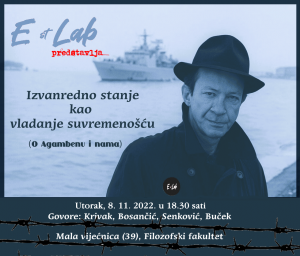
Agamben’s key insight is precisely that states of exception form the foundation of our modern everyday life, manifesting themselves not only at the level of government, but also within other spheres of power: society, religion, even language and human reality in general. Following the same logic, although much earlier, Franz Kafka, in his Metamorphosis, used the term “Ungeziefer” to describe the creature into which Gregor Samsa had transformed, a term denoting a being of such lowly nature that, according to impure beliefs, it was not suitable for ritual sacrifice; something entirely negative, excluded, uncountable and resistant to classification. Is this not Homo sacer in its fundamental form? Is this not contemporary humanity in its (un)natural environment? Is this not the “state of exception” in people’s everyday lives? What matters, however, is that we do not despair when drawn into the entanglements of states of exception, but instead recognise exceptionality precisely within the so-called ordinary. Then we shall perceive new horizons through the cracks of everything old – in the impotence of authority and in the impossibility of tranquillity. Ultimately, we shall understand that everything is, after all, completely exceptional and strange. Unclear and extraordinary, as it must be…
11 October 2022
EstLab Conversation: THE MEANING OF LIFE according to Boran Berčić – philosophy as a possible answer?
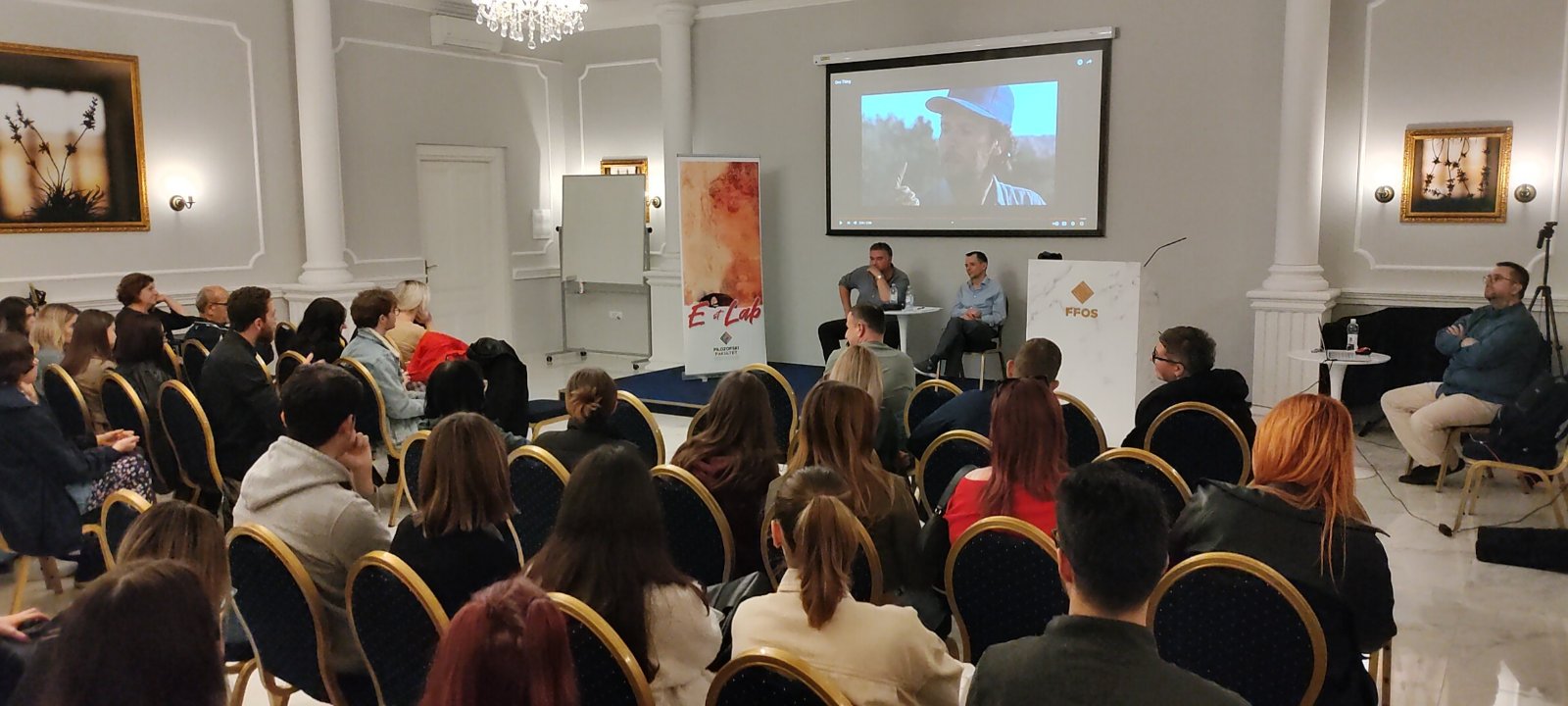 Room 39 at the Faculty of Humanities and Social Sciences in Osijek hosted the first “event” of the new season of EstLab (the already well-known Aesthetic Laboratory of FFOS). The guest of the forum/philosophical conversation was Prof. Boran Berčić, PhD, Full Professor with tenure at the Department of Philosophy of the Faculty of Humanities and Social Sciences in Rijeka. The topic was more than intriguing! The title “The Meaning of Life according to Boran Berčić. Philosophy as a possible answer?” paraphrased the cult film from the 1980s, Monty Python’s The Meaning of Life. The conversation immediately began with a direct question about what constitutes the most important philosophical question, at least for our invited guest in this conversation (or guided lecture, perhaps the most appropriate description of the event). Instead of the almost expected answer that it was the titular inquiry into the “meaning of life”… we were told that it was, in fact, the relationship between FACTS AND VALUES. In this way, Berčić demonstrated his inclination toward the need, so important to analytical philosophers, to “clarify things”. The entire conversation offered a series of interesting and unusual arguments in favour of expressing everything that can be expressed clearly and comprehensibly.
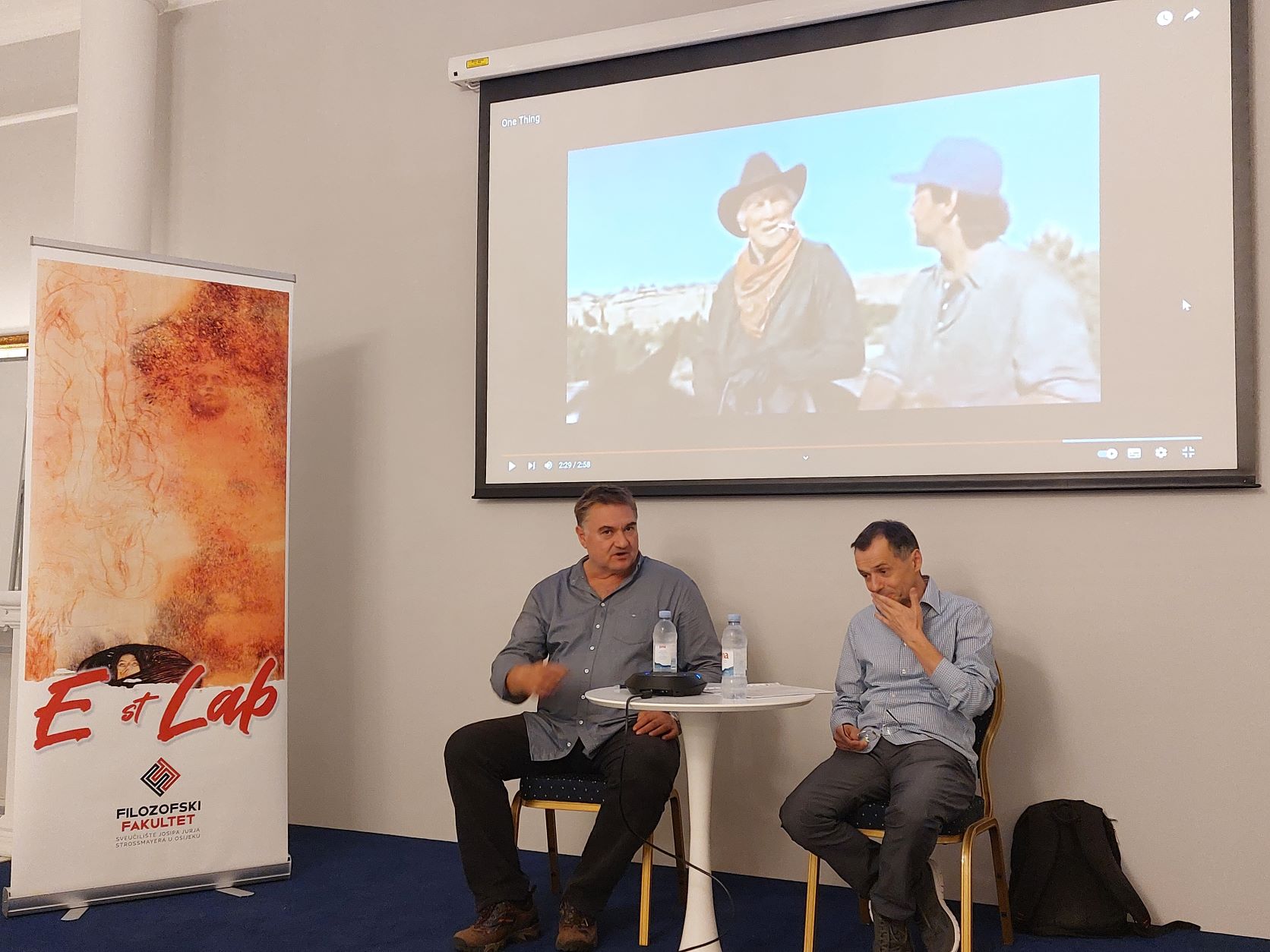 Boran Berčić served for many years as President of the Croatian Society for Analytic Philosophy. From this also follows the mode of his philosophical thinking. His major work, the two-volume book bearing the undisguisedly momentous(!) title Philosophy (2012), reveals this clearly. For an entire decade it has been a textbook that we openly admire, but, even more importantly, continuously question. In the book, Boran Berčić provides “a comprehensive overview of the main themes and currents of philosophical thought”. That is the “textbook description”… Yet through conversation with Berčić, many important questions concerning our everyday but equally decisive PROBLEMS posed by a “philosophy of life” gradually crystallised. Berčić’s approach to philosophy is therefore not historical, but problem-oriented. In the introduction to Philosophy, the author states: “In order to know what we should do, we must know why we live?” And further… “logically speaking, in order to know why we do anything, we would have to know why we live at all… The question of the ‘meaning of life’ is the logical structure of our reasons for action.” Through examining many such and related problems, “the meaning of life according to Boran Berčić” was gradually revealed. In brief, it could be expressed as – DOING PHILOSOPHY. Indeed, in a world in which work is not held in particularly high regard, such an effort of thought becomes all the more precious.
The event attracted a large audience to the Faculty of Humanities and Social Sciences. Following the conversation between Berčić and M. Krivak (his former fellow student at the Faculty of Humanities and Social Sciences in Zagreb during the “happy 1980s”), a discussion followed with numerous questions from the interested audience. And is there any other, more important purpose of philosophical conversation? mk
EstLab Forum: What Does Krleža’s “EUROPE TODAY” (1935/2022) Tell Us?
On Tuesday, 24 May 2022, a forum organised by EstLab was held at the Faculty of Humanities and Social Sciences in Osijek. The title of the forum was What Does Krleža’s “EUROPE TODAY” (1933/2022) Tell Us? The occasion for the topic was Krleža’s essay of the same name, first published in 1935, although its immediate relevance can easily be connected to the Europe in which we find ourselves today. This is particularly evident when considering Europe’s “stumbling” through contemporary global political events. For example, one unavoidable question is: can the “European project” today even be conceived independently of NATO’s billions spent on armaments? Or, is there anything in Krleža’s cynical-critical approach to the existing reality of Europe in his time that is not still relevant to the Europe we “live” TODAY?
Among those discussing these topics were philosopher and sociologist Tonči Valentić from the Faculty of Textile Technology in Zagreb, together with professors from the Faculty of Humanities and Social Sciences in Osijek: poet and theorist Goran Rem, theatre scholar Ivan Trojan, and philosopher Marijan Krivak.
Did Krleža prophetically anticipate our contemporary world? Is he truly, especially through his essays, novellas, dramatic works and novels, a “contemporary of Europe”? Is Krleža significant on a global scale as well? Finally, and no less importantly, what was his relationship with Osijek, particularly in the context of his famous “Osijek Lecture”?
As in Krleža’s own work, many polemical tones prevailed. Likewise, the unquestioned “devotion” of the media culture of spectacle to the actually existing image of Europe appears to be a manipulative illusion, just as it was in Krleža’s time – and perhaps even more so today. Realistically, nobody today would be prepared to die on the barricades for the European Constitution! (Something still advocated, for example, by the living philosopher Jürgen Habermas.)
In an interesting discussion before a well-filled university auditorium, numerous questions were raised and several answers offered. One of them was that Europe must follow its philosophical idea and foundation. Thus, as in Krleža’s time, and even more so today, Europe remains our permanent destiny and… task.
mk
From the Tractatus to Language Games: “The Wittgenstein Case” – guest Prof. Kristijan Krkač, PhD
On Tuesday, 15 March 2022, EstLab (the Aesthetic Laboratory of FFOS) organised a forum entitled “From the Tractatus to Language Games: ‘The Wittgenstein Case’”. The invited guest was Kristijan Krkač, Prof. PhD at the Zagreb School of Economics and Management (ZŠEM). He was joined in conversation by Boris Bosančić and Marijan Krivak, professors at the Faculty of Humanities and Social Sciences in Osijek.
The occasion for the conversation was the centenary of the bilingual German/English edition of Tractatus Logico-Philosophicus (1922). At the time, this book completely transformed the “mental map” on which the so-called “history of philosophy” was drawn. Krkač – certainly one of the most diligent and persistent scholars of the life and work of Ludwig Wittgenstein in this region – introduced the discussion provocatively. Namely, he argued that Wittgenstein had, in fact, been an “accidental philosopher”(!?). In a sense, his engagement with this “discipline” of the humanities was the result of numerous upheavals in his life through which this “modern Leonardo” sailed across the turbulent sea of his many intellectual and natural-scientific interests. Wittgenstein was an engineer, an aeronautical designer, an innovator in mechanical engineering… he was a painter, an architect, a passionate lover of music, a capable pianist… and, last but not least, a philosopher!
A lively discussion developed around Wittgenstein’s philosophy, particularly the second phase represented by his Philosophical Investigations. What is LANGUAGE for Wittgenstein? To what extent does his understanding of language differ from the way it was defined/detected by W. Benjamin and M. Heidegger, the most important “philosophers of language” of the 20th century? Can we speak in his work of a prophecy concerning the arrival of “artificial” and “machine” forms and languages of communication? To what extent is Wittgenstein “responsible” for the loss of the “human dimension” of language? Was he in some sense one of the founders of the so-called “philosophy of science”?
These and similar questions gave rise to a highly provocative and inspiring discussion. During the debate – which lasted almost two hours! – numerous problematic areas concerning the concept of language, but also philosophy in general, came to the surface. The forum on Wittgenstein prompted a multitude of questions and comments and demonstrated that the lecturer and guest, Prof. Krkač, succeeded in generating great interest among FFOS students and professors. Ultimately, this was one of the best-attended events organised by EstLab during its first year of activity.
mk
A Conversation on the Occasion – Lino Veljak: Challenges of Our Time (20 January 2022)
On Thursday, 20 January 2022, we hosted Prof. Lino Veljak, PhD, on the occasion of the publication of his book Challenges of Our Time. The event was organised within the Dija-Logos section of the Aesthetic Laboratory. The conversation was moderated by Assoc. Prof. Boško Pešić, PhD.
Lino Veljak was born in Rijeka in 1950. He graduated (1973), received his master’s degree (1976: Philosophical Foundations of the Theory of Reflection) and earned his doctorate (1982: The Philosophy of Praxis of Antonio Gramsci) at the Faculty of Humanities and Social Sciences in Zagreb. From 1974 to 1976, he taught philosophy and logic at the Second Grammar School in Zagreb. In 1976, he became an assistant at the Institute of Philosophy of the University of Zagreb (from 1978, the Department of the History of Philosophy at the Centre for Historical Sciences), where in 1978 he attained the research position of scientific assistant. From 1979, he worked in the same position at the Chair of Theoretical Philosophy of the Department of Philosophy at the Faculty of Humanities and Social Sciences in Zagreb. He was appointed Assistant Professor in 1983, Associate Professor in 1990 and Full Professor in 2002. From 1992, he served as Head of the Chair of Ontology. He temporarily served as Head of the Department in 1982/83. From 1992 to 1994 and again from 2006 to 2010, he served as Head of the Department, after which he became Deputy Head. From 2005 to 2020, he was also Head of the postgraduate doctoral programme in philosophy at the Faculty of Humanities and Social Sciences of the University of Zagreb. During the 1990/91 academic year, he was a Humboldt Fellow at the University of Frankfurt. He has been a guest at numerous universities in Croatia and abroad. He has headed several research projects, is a member of various editorial boards and advisory boards of philosophical journals, and has served several terms as a member of the Executive Board of the Croatian Philosophical Society, serving as its president from 2009 to 2011. He served several terms as a member of the Scientific Field Committee for Philosophy and Theology and was its president from 2017 to 2020.
Round Table The Sociality of Art – The Art of Sociality (16 November 2021)
 The second event organised by the Dija-Logos section of EstLab, in the form of a Round Table, was held on Tuesday, 16 November 2021, as part of Philosophy Week and co-organised with the Faculty of Humanities and Social Sciences in Osijek. The topic of the round table was The Sociality of Art – The Art of Sociality. The participants were sculptor Assoc. Prof. Art. Tihomir Matijević, literary critic PhD Igor Gajin, poet Prof. PhD Goran Rem, and philosopher Prof. PhD Marijan Krivak.
100 Years of Capitalism as Religion (12 October 2021)
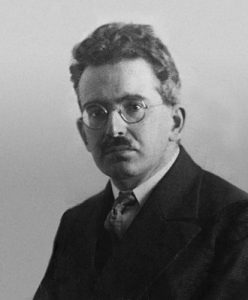 The first event of the Dija-Logos section of EstLab, entitled “100 Years of Capitalism as Religion”, was held on Tuesday, 12 October 2021. The event was moderated by Marijan Krivak.
What is this “everyday capitalism” of ours? What are the premises of the doctrine – although, in fact, it is not a doctrine at all! – that teaches us the “Lord’s Prayer” of eternal acquisition and prestige measurable only through the insane game of profit figures that mean… What exactly do they mean?
Precisely and simply – nothing!
In capitalism, everything is rational except… Capital itself. This insight by Fredric Jameson – often quoted by Slavoj Žižek – reveals the ontological structure of the “thing itself” (τὸ ὄν), which is… nothingness!
Walter BENJAMIN’s fragment from 1921 explicitly deals with “Capitalism as Religion”. What is religion today? What is its credo? To act and make others believe. Believe in what? In the endless cycle of the constantly repeated scheme: Commodity – Money – Capital. Today, however, this has transformed into a circulus vitiosus: Information – Communication – Network. For… we are all entangled in the corporate networks of neoliberal capitalism as a “strategy of managing the world as a market” (Ž. Paić).
What do we believe in? Pardon – what are we taught that we should believe in? What are these “psychotechnologies for controlling our desire”? We believe in the ETERNAL CHRISTMAS OF CAPITAL! The greatest economic achievements of “Our Beautiful Homeland” – up until 2019 and the arrival of the COVID-19 agent, and then again up to the “magnificent tourist summer of 2021” – were linked to… Advent. It is the “COMING” of the “bad infinity” (Hegel) and the corruption of the meaninglessness of Capital, as the sole subject-substance of the contemporary world. A graffiti in Toronto in 2020 read: Corona is the Virus, Capitalism is the Pandemic.
Exactly 100 years ago, W. Benjamin wrote his fragment “Capitalism as Religion”. At the EstLab philosophical session, we discuss the lasting relevance of this insightful proposition. How is it possible for a “cult without (any) dogma” (Benjamin) to so completely occupy our souls and minds? The text announces a moment of complete abolition of our greed and insatiability.
Through conversation, we challenge all our prejudices and opinions about capitalism. And what could thought today address more urgently and necessarily, if not precisely this?