
Prekogranična regija gdje rijeke spajaju
INTERREG VI-A Program prekogranične suradnje Mađarska – Hrvatska 2021.-2027. koji provodi Europska komisija.
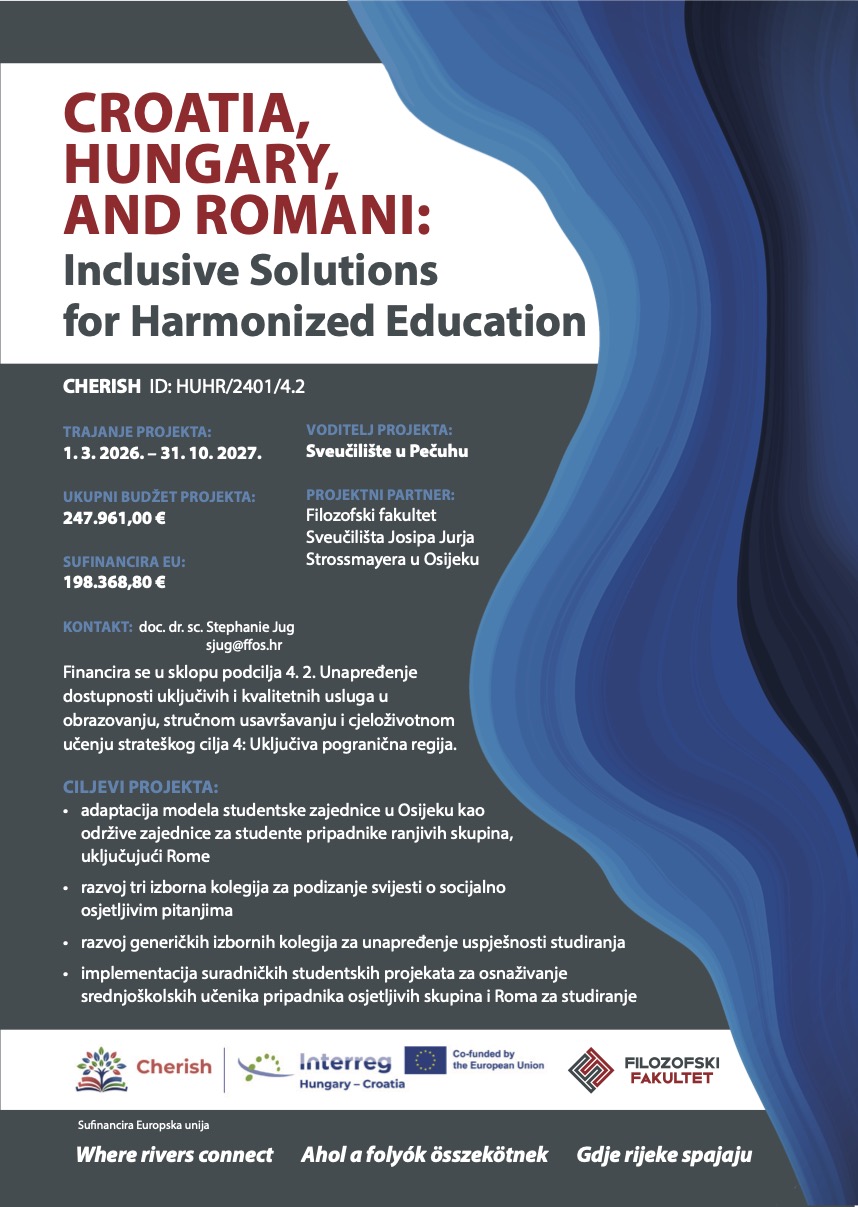
Vodeći partner projekta je Sveučilište u Pečuhu, Mađarskoj.
Trajanje projekta 01.03.2026.-31.10.2027. godine.
Ukupni budžet projekta: 247 961,00 EUR
Sufinancira EU: 198 368,80 EUR
A cross-border region where rivers connect
The project Croatia, Hungary, and Romani: Inclusive Solutions for Harmonized Education is managed under the acronym CHERISH and the identification number HUHR/2401/4.2/087. It is co-financed by the EU funds within the First Call Interreg VI-A Hungary-Croatia Programme 2021-2027 through priority P4 – Inclusive border region and specific objective: 4.2. Improving access to inclusive and quality services in education, training and lifelong learning
INTERREG VI-A Cross-border Cooperation Programme Hungary – Croatia 2021-2027. implemented by the European Commission.
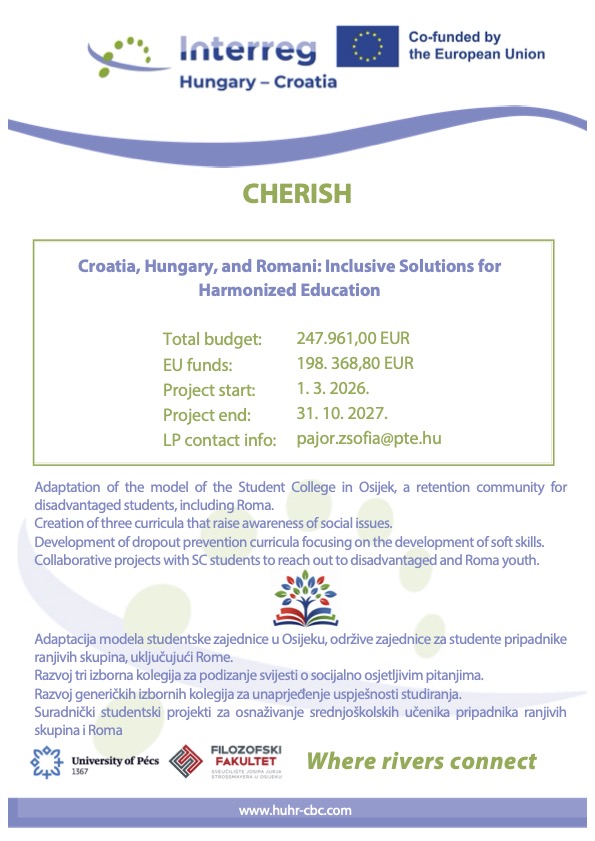
The lead partner of the project is the University of Pécs, Hungary.
Project duration 01.03.2026.-31.10.2027. year.
Total project budget: 247 961,00 EUR
EU co-financed: 198 368,80 EUR
Ova stranica nastala je uz financijsku podršku Europske unije kroz Interreg VI-A program Mađarska-Hrvatska. Za sadržaj ove stranice odgovoran je isključivo Filozofski fakultet u Osijeku i ona ne odražava službeno stajalište Europske unije i/ili Upravljačkog tijela programa.
This website has been produced with the financial assistance of the European Union through the Interreg VI-A Hungary-Croatia Programme. The content of the website is the sole responsibility of The Faculty of Humanities and Social Sciences in Osijek and can under no circumstances be regarded as reflecting the position of the European Union and/or the Managing Authority of the Programme.